We're loading the full news article for you. This includes the article content, images, author information, and related articles.
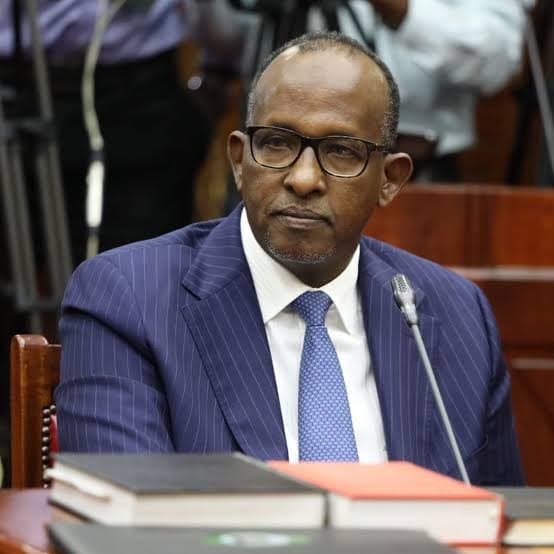
Cabinet Secretary Aden Duale is pushing to unlock trillions in pension assets to fund infrastructure, sparking a debate on development versus retiree risk.

A colossal reservoir of domestic capital sits relatively idle in Kenya’s financial system: the hard-earned retirement savings of millions of workers. Cabinet Secretary Aden Duale is now leading a pointed government push to unlock this liquidity, advocating for a strategic pivot that would channel pension funds directly into large-scale infrastructure projects.
The proposal marks a fundamental shift in Kenya’s financial architecture. With the national budget increasingly constrained by heavy debt-servicing obligations, the State is seeking alternative avenues to finance the massive capital requirements of the Vision 2030 roadmap and subsequent development agendas. However, the move has ignited a fierce debate in Nairobi’s financial circles, pitting the urgent need for national development against the sacrosanct fiduciary duty of pension trustees to protect the financial future of retirees.
The Kenyan retirement benefits industry, overseen by the Retirement Benefits Authority, has grown into a formidable economic force. Recent data indicates that the sector manages assets exceeding KES 2 trillion. Historically, these funds have been concentrated in low-risk, guaranteed-return instruments, primarily government securities like Treasury bonds and bills.
For the State, this concentration is a missed opportunity. The government argues that by diversifying into infrastructure—such as toll roads, energy projects, and water utilities—pension funds could secure long-term, inflation-adjusted returns that outperform traditional debt instruments. The government’s thesis is that infrastructure is the bedrock of economic growth, and by investing in it, pension funds would essentially be investing in the very economy that provides their members with employment and income.
However, analysts at the Nairobi Securities Exchange warn that the transition is fraught with complexity. Unlike government bonds, which are backed by the sovereign guarantee, direct infrastructure investment carries execution and operational risks. If a toll road fails to meet projected traffic volumes or an energy project encounters massive cost overruns, the pension funds—and by extension, the retirees—bear the brunt of the loss.
The current regulatory environment provides a framework for alternative investments, but it sets strict ceilings. Trustees are governed by the principle of the "prudent person rule," which mandates that investment decisions must prioritize the safety of capital and consistent liquidity. Critics of the Duale-led push argue that political pressure could compromise these safeguards.
The concern is that infrastructure projects often become political footballs, susceptible to delays, corruption, and mismanagement. If the state exerts influence over pension funds to prioritize projects that may not be commercially viable, it threatens the solvency of the schemes. The debate centers on the mechanism of participation. Will funds be invited to invest in commercially bankable Public-Private Partnerships (PPPs), or will they be coerced into funding projects that struggle to attract private capital?
Kenya is not the first nation to grapple with this dilemma. The "Canadian Model," pioneered by the Canada Pension Plan Investment Board, is often cited by proponents. Canadian pension funds have become global leaders in investing directly into airports, toll roads, and energy grids, leveraging their massive scale to generate superior returns. However, the Canadian system operates under strict independence, insulated from political cycles and government interference.
In contrast, Kenya’s financial market lacks the depth of institutional safeguards found in mature economies. Local experts, including those from the Institute of Economic Affairs, suggest that before pension funds can safely venture into direct infrastructure equity, the country must first standardize the "Infrastructure Bond" market. These vehicles would allow pension funds to participate in projects without taking on the operational risks of project development or construction management.
A civil servant in Nairobi, who manages a mid-sized scheme, noted that the skepticism among trustees is not about the asset class itself, but about the governance of the projects. If the government can demonstrate transparent project selection, clear tolling mechanisms, and rigorous independent audits, then pension funds may well become the willing partners the State is looking for.
Ultimately, the numbers behind these investments represent the livelihoods of nurses, teachers, and factory workers. For a pensioner relying on a monthly annuity, the difference between a secure bond yield and a volatile infrastructure equity return is significant. The government’s task is to prove that this shift is not merely a mechanism to plug a fiscal gap, but a sound investment strategy that secures higher yields for future generations.
As the conversation moves from policy rhetoric to legislative drafting, the administration must navigate a narrow path. The success of this initiative will depend on whether it can foster a culture of transparent, project-based financing that places the interests of the saver at the heart of the national infrastructure agenda. Whether this move transforms Kenya’s economic landscape or creates a new set of risks for retirees remains the defining question of the coming fiscal year.
Keep the conversation in one place—threads here stay linked to the story and in the forums.
Sign in to start a discussion
Start a conversation about this story and keep it linked here.
Other hot threads
E-sports and Gaming Community in Kenya
Active 9 months ago
The Role of Technology in Modern Agriculture (AgriTech)
Active 9 months ago
Popular Recreational Activities Across Counties
Active 9 months ago
Investing in Youth Sports Development Programs
Active 9 months ago
Key figures and persons of interest featured in this article