We're loading the full news article for you. This includes the article content, images, author information, and related articles.
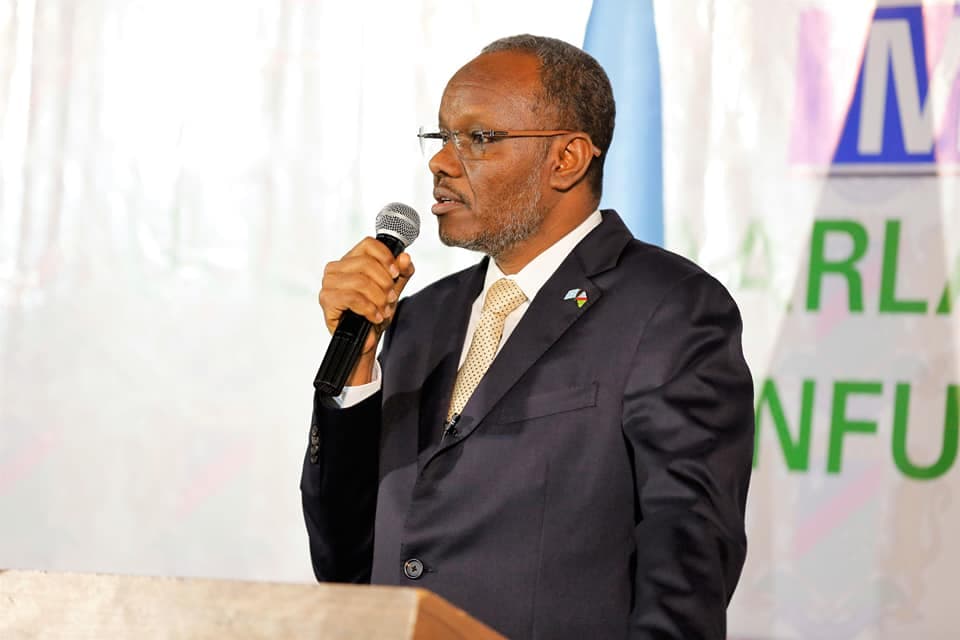
Speaker Ali Said Fiqi accuses Somalia`s federal authorities of misusing foreign military aid to fuel political instability within the Southwest State.

In the administrative hub of Baidoa, the political temperature is rising as the speaker of the Southwest State parliament, Ali Said Fiqi, has launched a blistering public indictment against the Federal Government of Somalia. The accusation is specific and alarming: Fiqi claims that the federal authorities are misusing foreign-supplied weaponry—intended for the existential fight against Al-Shabaab—to wage a localized political war against the regional administration.
This development signals a dangerous escalation in the deepening rift between Mogadishu and the federal member states. For a nation already navigating a fragile recovery, the diversion of military hardware to settle domestic political scores represents a critical failure of oversight. It threatens not only the administrative stability of the Southwest State but also the broader operational coherence of the national security apparatus at a time when the threat from insurgent groups remains persistent.
The core of the controversy centers on recent arms shipments provided by Egypt, which were ostensibly designated to bolster the Somali National Army in its counter-insurgency operations. According to Speaker Fiqi, these arms have been bypassed from their intended deployment and redirected to local militias operating within the Buurhakaba district. The allegation is that these groups are being weaponized to undermine the local Southwest State administration and pressure its president, Abdiaziz Laftagareen.
Fiqi’s statements have reverberated across the Horn of Africa, raising uncomfortable questions for international partners. When foreign powers contribute military aid, they do so under the assumption that the equipment will be used exclusively for national defense. The prospect that such support is being repurposed for internal partisan conflict risks not only creating a security vacuum but also eroding the trust of international donors who provide the bedrock of Somalia’s military budget.
The standoff in Southwest State is not an isolated incident it is a manifestation of a systemic struggle over the nature of Somali federalism. Relations between Mogadishu and several federal member states—most notably Jubaland and Puntland—have soured over the past year. Disagreements regarding constitutional amendments, the centralization of political power, and the extension of executive terms have transformed the federal architecture into a site of constant friction.
From the perspective of Mogadishu, centralized command is often framed as a necessity for streamlined military operations and national cohesion. However, regional leaders, including those in Baidoa, view these moves as a thinly veiled attempt to erode the autonomy guaranteed to states under the federal model. The tension is amplified by the presence of federal security forces in regions where the state governments have already moved to cut ties with the capital, creating a high-risk environment for miscalculation.
Experts in regional security warn that such intra-state hostility is precisely the environment that extremist groups exploit. When regional security forces are preoccupied with defending against federal-backed militias, the surveillance and pressure on insurgent positions naturally diminish. This internal distraction creates a strategic opening for Al-Shabaab to regroup and reclaim territory in the rural hinterlands of the Southwest.
The humanitarian and economic costs of this political impasse are substantial. The Southwest State is a critical region for agricultural productivity and population movement insecurity here impacts the entire national supply chain. The suspension of cooperation means that coordinated administrative services, tax collection, and security management have stalled, leaving the civilian population to bear the brunt of the disruption.
Furthermore, the international community’s investments in Somali institutions over the past two decades are now being stressed by these domestic power struggles. The reliance on foreign aid for military survival means that every diversion of gear is, effectively, a diversion of international goodwill. There is a palpable fear that if the trend of utilizing state assets for political brinkmanship continues, the appetite for sustained external security backing may diminish, leaving Somalia to face its internal threats with significantly reduced resources.
The situation remains volatile, with both sides entrenched in their positions. For the federal government, the challenge is to demonstrate that its security operations are truly national in scope and free from political manipulation. For the regional administrations, the goal is to secure a consultative process that respects the federal consensus that the country has fought so hard to establish.
As diplomatic efforts to bridge the divide continue, the question of what happens to the weapons—and who controls them—remains the most immediate security concern. Whether this escalation is resolved through urgent political negotiation or descends into a more prolonged and violent confrontation will determine the stability of the entire Horn of Africa region for the coming year. The eyes of the region remain fixed on Baidoa, waiting to see if common sense can prevail over the weaponization of state power.
Keep the conversation in one place—threads here stay linked to the story and in the forums.
Sign in to start a discussion
Start a conversation about this story and keep it linked here.
Other hot threads
E-sports and Gaming Community in Kenya
Active 10 months ago
Popular Recreational Activities Across Counties
Active 10 months ago
The Role of Technology in Modern Agriculture (AgriTech)
Active 10 months ago
Investing in Youth Sports Development Programs
Active 10 months ago
Key figures and persons of interest featured in this article