We're loading the full news article for you. This includes the article content, images, author information, and related articles.
**India's new solar mission, Aditya-L1, is set to monitor a period of intense solar activity, offering a critical early warning for potential disruptions to Kenya's vital digital and power infrastructure as the sun's 11-year cycle peaks.**
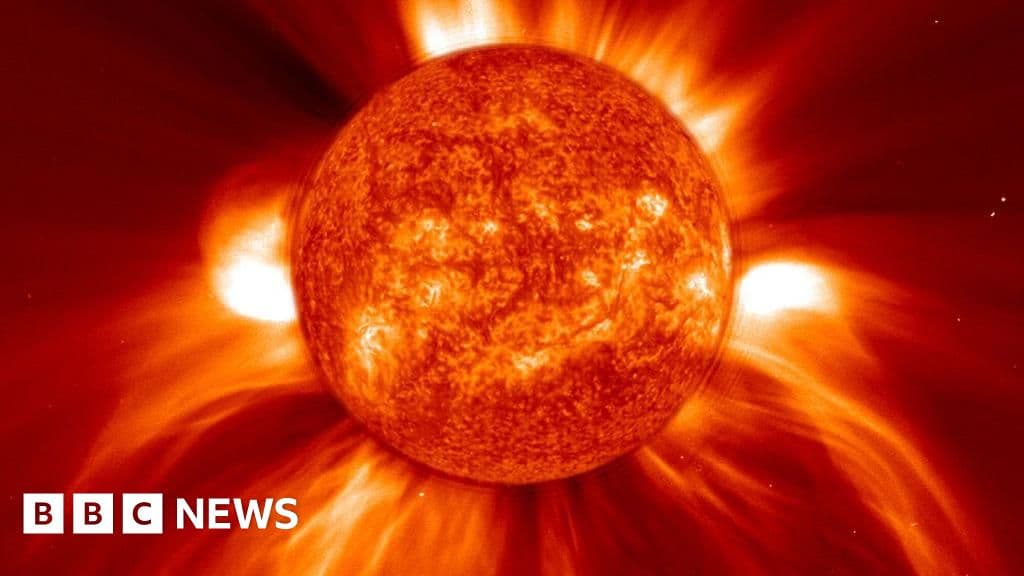
A brewing solar tempest, predicted to reach its ferocious peak in 2026, poses a direct threat to Kenya’s increasingly digital economy. This period of heightened solar activity could disrupt everything from the national power grid to the M-Pesa network that forms the backbone of daily commerce.
This is not a distant astronomical event; it is a clear and present challenge to our infrastructure. The threat comes from a surge in solar storms and coronal mass ejections (CMEs)—massive eruptions of charged particles from the sun. As the sun enters its most active phase, known as the solar maximum, the frequency of these events is expected to jump from two or three a day to more than ten, scientists warn.
For Kenya, a nation reliant on technology, the stakes are high. Severe geomagnetic storms can induce powerful electrical currents in long conductors like power lines, potentially overwhelming transformers and triggering grid instability or collapse. While Kenya has not yet suffered a catastrophic outage, research has already inferred the flow of these disruptive currents through Nairobi's grid during past storms. Events in other parts of the world serve as a stark warning; a 1989 storm left six million people in Quebec, Canada, without power for nine hours, and the "Halloween Storms" of 2003 damaged power infrastructure in South Africa.
The vulnerability extends deep into the digital realm. These storms can interfere with satellite signals, which are critical for GPS, aviation, and internet services. This poses a significant risk to the mobile communication networks that underpin Kenya's world-leading mobile money ecosystem.
In this high-stakes environment, India's Aditya-L1 solar observatory emerges as a crucial tool for global preparedness. Positioned 1.5 million kilometres from Earth, the spacecraft has an uninterrupted view of the sun, allowing it to monitor solar activity and provide real-time data on potentially hazardous events. "The solar mission, Aditya-L1 is for the whole of the world, not for India alone," noted ISRO chief S. Somanath, emphasizing its role in global safety.
This data is vital for understanding and predicting space weather. For Kenya, this translates into a potential early warning system. The Kenya Space Agency (KSA) has been actively working to establish a national space weather monitoring centre to protect the nation's technological systems. Key objectives for the KSA include:
While details on direct data-sharing between India's mission and the KSA remain to be formalized, the public availability of such information is a step toward mitigating the worst impacts of the coming solar maximum. As Prof R Ramesh of the Indian Institute of Astrophysics emphasized, studying CMEs is a primary objective, as solar activities "threaten infrastructure on Earth and in space."
With the sun's activity set to intensify, the data from Aditya-L1 will be indispensable. For Kenya, the challenge is now to leverage these global scientific advances to build a resilient infrastructure capable of weathering the coming storm.
Keep the conversation in one place—threads here stay linked to the story and in the forums.
Sign in to start a discussion
Start a conversation about this story and keep it linked here.
Other hot threads
E-sports and Gaming Community in Kenya
Active 9 months ago
The Role of Technology in Modern Agriculture (AgriTech)
Active 9 months ago
Popular Recreational Activities Across Counties
Active 9 months ago
Investing in Youth Sports Development Programs
Active 9 months ago



