We're loading the full news article for you. This includes the article content, images, author information, and related articles.
A charity is giving away packs which they claim could reduce energy bills by up to £800 per year. Citizens Advice Hull and East Riding is running a series of weekly drop in events across the region where they will distribute 1,000 of the energy-saving packs.
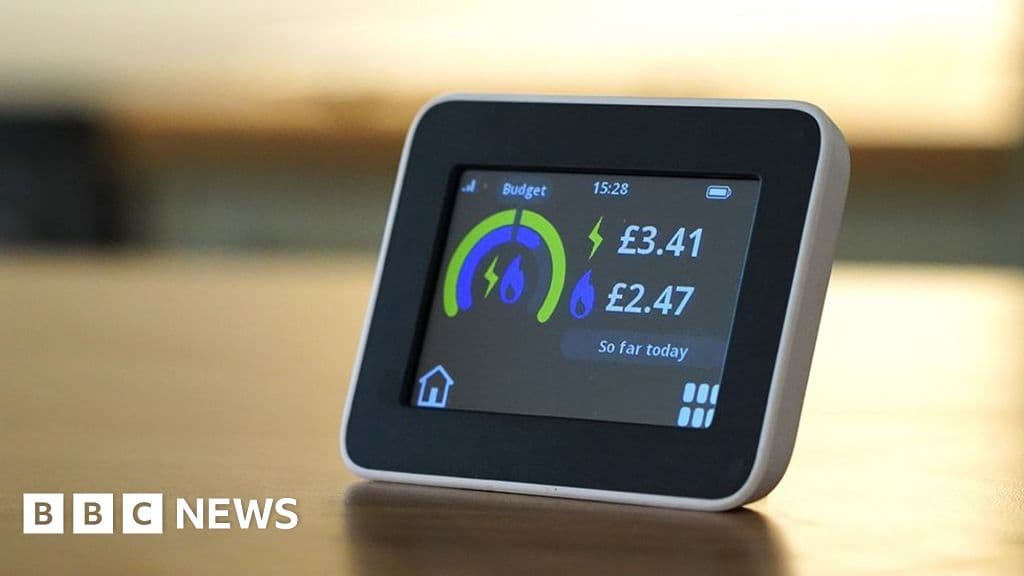
In the quiet residential pockets of Hull and East Riding, a quiet revolution is happening—one defined not by major policy shifts, but by rolls of draught-proofing tape and room thermometers. Citizens Advice, a prominent UK charitable organization, has begun distributing one thousand specialized energy-saving packs, promising to help vulnerable households slash their utility bills by up to £800 (approximately KES 165,000) annually. As global commodity volatility continues to ripple through domestic markets, these small, physical interventions reveal the desperate ingenuity required when the cost of living outpaces the capacity of the average household.
This initiative underscores a harsh reality facing millions of residents: despite minor fluctuations in government energy price caps, the long-term trend of energy inflation remains stubbornly upward. The packs distributed by Citizens Advice are not merely gadgets they represent a frontline response to a systemic failure to protect consumers from the vagaries of global oil and gas markets. For a reader in Nairobi, the struggle may feel distant, yet the underlying friction—the tension between global energy pricing and the survival of the individual household—is a shared challenge that binds economies across continents.
The core of this intervention lies in the humble nature of the equipment provided: window insulation, draught-proofing materials, thermometers, and dehumidifiers. While these items may seem trivial to the affluent, for a household balancing food, rent, and heating, they are critical assets. The charity’s claim that these tools could save a household up to £800 is ambitious, based on the assumption of drastic changes in user behavior and significant improvements in thermal efficiency. However, the true value lies in the advisory component of the program.
Citizens Advice energy advisors are conducting face-to-face sessions in Bridlington, Beverley, and Goole, effectively turning these distribution centers into micro-clinics for financial health. By pairing hardware with professional guidance on benefit eligibility and boiler upgrades, the program attempts to address the two distinct drivers of energy poverty: the physical inefficiency of aging housing stock and the economic exclusion of the most vulnerable citizens. It is a dual approach—technical support combined with fiscal advocacy—that many international development agencies view as the gold standard for immediate crisis response.
While the cold, damp winters of Northern England are a world away from the tropical climate of Kenya, the phenomenon of energy poverty is not geographically bounded. In Nairobi, the energy crisis manifests not as a battle against heating costs, but as a struggle with the high cost of electricity for cooking and refrigeration. The Kenyan experience with off-grid solar technology and the proliferation of M-Kopa and similar pay-as-you-go systems highlights a parallel drive toward energy independence.
The Citizens Advice program offers a blueprint for the "last mile" of energy policy. In Kenya, where the government has ambitious targets for universal clean energy access, the lesson is that access to infrastructure is only half the battle. The other half is ensuring that consumers have the tools and the financial literacy to optimize their usage. Just as a family in Hull uses a dehumidifier to maximize the efficiency of their heating, a family in a peri-urban area of Nairobi benefits from high-efficiency LED lighting and solar-powered appliances that minimize the drain on their limited monthly income.
Despite the success of the Citizens Advice initiative, it remains a symptomatic treatment for a chronic disease. Relying on charitable distribution of draught-proofing tape to solve a national energy crisis is a scathing indictment of the failure of large-scale infrastructure policy. Experts argue that until governments commit to deep, structural retrofitting of aging housing stocks and invest in diverse, stable energy generation, these initiatives will remain temporary plasters on a gaping wound.
As Kirsty Connor of Citizens Advice noted, the sessions are designed to look at the unique situation of every individual. This level of granular, human-centric support is irreplaceable, but it cannot be the only strategy. The transition to a sustainable energy future—whether in the UK or in East Africa—requires a shift from individual survival tactics to collective, state-led investment in efficiency. The families queuing in Hull today are not just looking for a cheaper winter they are seeking a path out of a cycle of constant, crushing uncertainty.
Ultimately, the story of these energy packs is a reminder that in an era of global economic volatility, resilience is often built at the household level. Whether through a draught-proof window in East Yorkshire or a solar panel in rural Kenya, the drive to control one’s own energy consumption is the most direct path to economic stability. The question remains, however, whether policymakers will adopt this lesson, or if they will continue to rely on the charity of others to keep the lights on and the homes warm.
Keep the conversation in one place—threads here stay linked to the story and in the forums.
Sign in to start a discussion
Start a conversation about this story and keep it linked here.
Other hot threads
E-sports and Gaming Community in Kenya
Active 10 months ago
Popular Recreational Activities Across Counties
Active 10 months ago
The Role of Technology in Modern Agriculture (AgriTech)
Active 10 months ago
Investing in Youth Sports Development Programs
Active 10 months ago



