We're loading the full news article for you. This includes the article content, images, author information, and related articles.
The veteran war correspondent warns that escalating conflicts in Sudan, Gaza, and Ukraine are pushing the world—and the Horn of Africa—toward a breaking point.
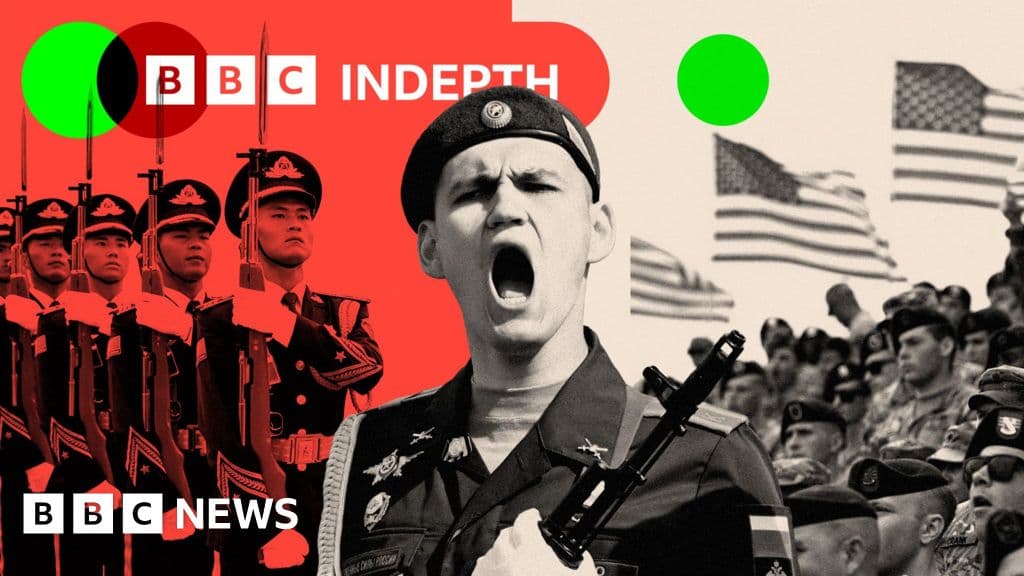
John Simpson has covered more than 40 wars over six decades, watching the Cold War rise, freeze, and eventually evaporate. Yet, the BBC’s World Affairs Editor admits he has never witnessed a year as perilous as 2025.
It is a chilling assessment from a man who has seen history’s darkest chapters firsthand. While global attention often drifts toward the geopolitical chess games of the West, Simpson’s warning resonates with terrifying clarity here in Nairobi. The world is not just fighting; it is unraveling.
The veteran journalist argues that 2025 stands apart not merely because of the number of conflicts, but because of their potential to ignite a global conflagration. In Ukraine, President Volodymyr Zelensky has issued a stark warning that the grinding war against Russia could spiral into a third world war. Simpson, usually a voice of measured analysis, confesses to a "nasty feeling" that Zelensky may be right.
The threat has evolved beyond traditional battlefields. NATO governments are currently on high alert regarding Russian threats to undersea cables—the very arteries of the global internet that connect Kenya’s digital economy to the world. A severance there would not just silence diplomats; it would cripple banking systems and trade in Mombasa and Nairobi instantly.
While the geopolitical maneuvering is complex, the human toll is brutally simple. Simpson highlights three distinct wars that have defined this bloody year:
For the Kenyan reader, the most alarming data point in Simpson’s analysis concerns Sudan. While the world looks to Europe and the Middle East, a catastrophe of biblical proportions is unfolding just across our border.
More than 150,000 people have been killed in the fighting between rival military factions over the past two years. To put the displacement crisis in perspective, around 12 million people have been forced from their homes. That is roughly equivalent to the entire population of Nairobi, Mombasa, and Kisumu combined, wandering without shelter or safety.
This instability is not a distant abstraction; it is a regional emergency. The influx of refugees and the proliferation of illicit arms threaten the security architecture of the entire East African Community. As Simpson notes, the sheer scale of the violence in Sudan rivals any conflict globally, yet it often struggles for the same airtime as wars in the Global North.
"I've reported on 40 wars," Simpson reflected, "but I've never seen a year quite as worrying as 2025." As we look toward 2026, the question for Kenyan policymakers is no longer just about maintaining neutrality, but about surviving the fallout of a world at war.
Keep the conversation in one place—threads here stay linked to the story and in the forums.
Sign in to start a discussion
Start a conversation about this story and keep it linked here.
Other hot threads
E-sports and Gaming Community in Kenya
Active 9 months ago
The Role of Technology in Modern Agriculture (AgriTech)
Active 9 months ago
Popular Recreational Activities Across Counties
Active 9 months ago
Investing in Youth Sports Development Programs
Active 9 months ago



