We're loading the full news article for you. This includes the article content, images, author information, and related articles.
Engineers Board of Kenya CEO Margaret Ogai outlines a bold vision for Africa's economic liberation, drawing inspiration from Singapore's rapid transformation.
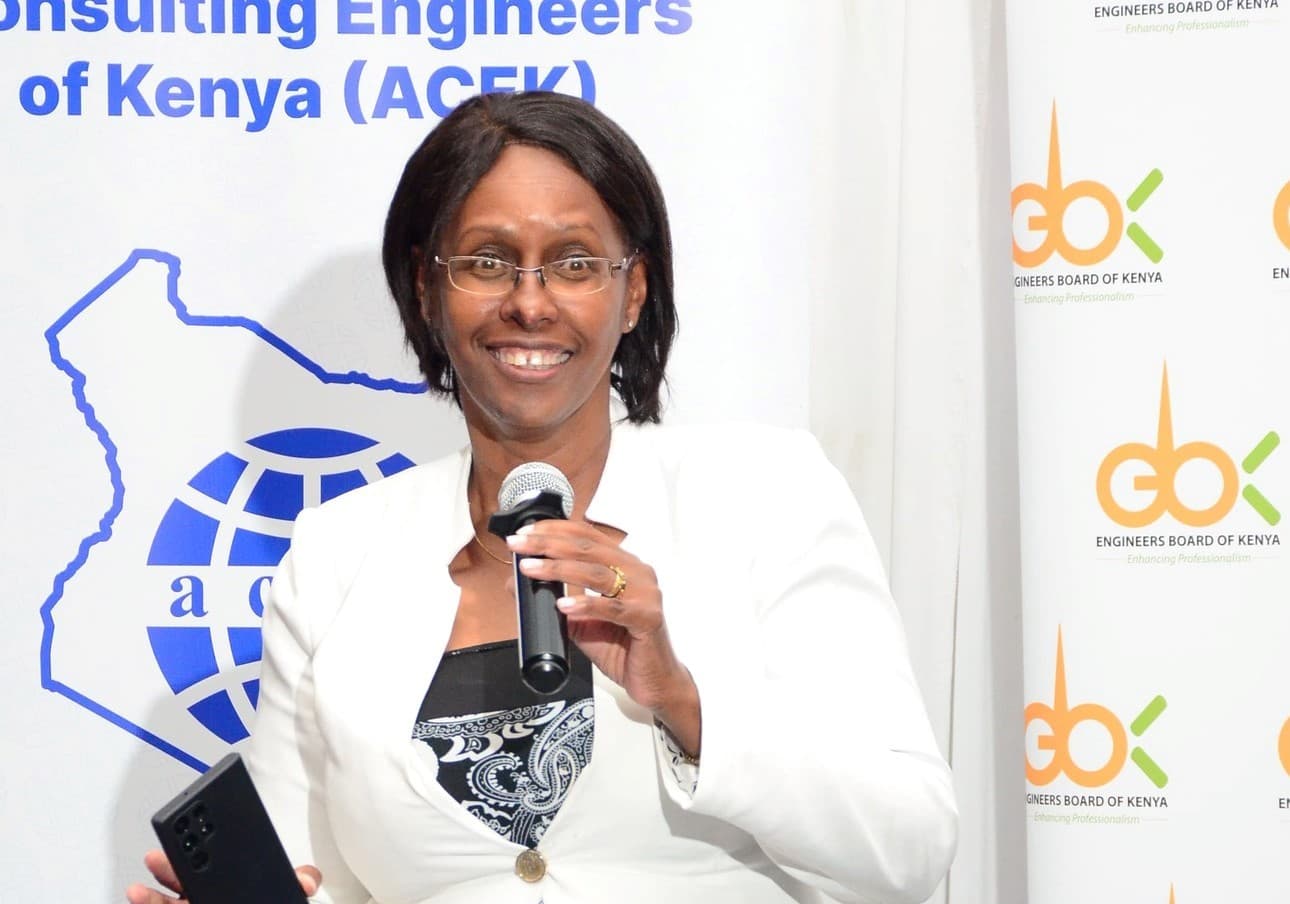
In a candid reflection on her illustrious 30-year career, Engineers Board of Kenya (EBK) Chief Executive Officer Eng. Margaret Ogai outlines a bold, pragmatic vision for Africa's economic liberation, drawing profound inspiration from Singapore's rapid transformation from a developing nation to a global economic powerhouse.
Speaking exclusively about her remarkable transition from the dynamic private sector to the rigorous demands of public service over three decades ago, Eng. Ogai emphasized that true economic freedom for Kenya—and indeed the broader African continent—hinges on the strategic deployment of engineering, robust infrastructure, and uncompromising professional integrity. Her insights arrive at a critical juncture as Kenya grapples with industrialization targets under Vision 2030.
The "Singapore Dream," a concept frequently referenced by policy architects, is not merely an abstract aspiration for the EBK leadership; it is a meticulously studied blueprint. Singapore leveraged targeted infrastructure development, heavy investment in human capital, and zero tolerance for corruption to achieve its economic miracle. Eng. Ogai argues that Kenya possesses the raw potential to replicate this success if systemic inefficiencies are aggressively dismantled.
Eng. Ogai's journey is a testament to the transformative power of dedicated public service. Leaving a lucrative trajectory in the private sector to join the government ranks was driven by a deep-seated conviction that systemic change must be engineered from within. Over the past 30 years, she has witnessed the evolution of Kenya's infrastructural landscape, grappling firsthand with the bureaucratic hurdles that often stifle innovation and delay critical national projects.
Her tenure at the Engineers Board of Kenya has been defined by a relentless push for professional accreditation, quality assurance, and global competitiveness. Recently commending institutions like Meru University for submitting their engineering programs for rigorous evaluation, she continually reinforces that accreditation is an international obligation, not just a local regulatory hurdle. This focus on standard-setting is the foundational bedrock upon which the Singaporean economic model was built.
To achieve economic freedom, human capital must be globally competitive. Eng. Ogai notes that when Kenyan engineers meet international standards, they cease to be just local practitioners and become global assets. This shift in capability directly impacts the country's ability to attract foreign direct investment (FDI), as multinational corporations require top-tier local expertise to execute complex infrastructural and technological projects safely and efficiently.
The parallels drawn between Singapore's historical context and Kenya's current economic trajectory offer a compelling roadmap for development. Singapore transformed itself by prioritizing meritocracy, executing visionary urban planning, and developing world-class logistics hubs. Kenya, strategically positioned as the gateway to East and Central Africa, has the geographic advantage to become a comparable logistics and technological nerve center.
However, the realization of this dream requires moving beyond political rhetoric and implementing hard, often unpopular, infrastructural and regulatory reforms. The EBK CEO highlights that engineering is the silent engine of the economy. Without reliable power grids, efficient transport networks, and sustainable water management systems, economic growth remains stunted, and true financial liberation for the populace remains an illusion.
By focusing on these core pillars, Kenya can begin to build the structural resilience necessary to weather global economic shocks and foster organic, localized industrial growth. The transformation requires a cultural shift toward efficiency and a zero-tolerance policy for professional negligence.
The broader implications of Eng. Ogai's vision extend far beyond Kenya's borders, resonating with the aspirations outlined in the African Union's Agenda 2063. The continent is currently experiencing a massive demographic dividend, boasting the world's youngest population. Harnessing this demographic requires a massive expansion of physical and digital infrastructure to create viable employment opportunities.
Economic freedom, in this context, is defined as the ability of a nation to dictate its own developmental pace, free from the crushing weight of unsustainable foreign debt and the limitations of inadequate infrastructure. Engineers are the architects of this freedom. Their ability to design cost-effective, durable, and sustainable solutions directly correlates with the continent's capacity to industrialize and compete in the global marketplace.
The challenge ahead is immense, requiring a synergy of visionary political leadership and uncompromising technical expertise. Eng. Ogai's narrative serves as a clarion call to professionals across the continent to engage actively in the nation-building process, ensuring that the infrastructure of tomorrow is built on a foundation of excellence today.
"The blueprint for our economic liberation is already drafted in the rigorous disciplines of engineering and infrastructure; we must simply summon the collective national will to build it without compromise."
Keep the conversation in one place—threads here stay linked to the story and in the forums.
Sign in to start a discussion
Start a conversation about this story and keep it linked here.
Other hot threads
E-sports and Gaming Community in Kenya
Active 9 months ago
The Role of Technology in Modern Agriculture (AgriTech)
Active 9 months ago
Popular Recreational Activities Across Counties
Active 9 months ago
Investing in Youth Sports Development Programs
Active 9 months ago