We're loading the full news article for you. This includes the article content, images, author information, and related articles.
While the AGPO pot has grown to nearly Sh57 billion this year, a closer look reveals a widening gap between winning a government contract and actually getting paid.
For thousands of Kenyan entrepreneurs, the government’s promise of a 30 percent procurement quota has often felt like a mirage—visible on paper but elusive in the bank account. Yet, new data suggests the tide may be turning, albeit slowly. In the fiscal year ending June 2025, women, youth, and persons with disabilities (PWDs) secured an additional Sh5.6 billion in state tenders, pushing the total value of awards under the Access to Government Procurement Opportunities (AGPO) framework to Sh56.8 billion.
This rebound, detailed in fresh data from the National Treasury and the Public Procurement Regulatory Authority (PPRA), marks a critical recovery from the austerity-driven slumps of previous years. But while the headline figures paint a picture of progress, the devil remains in the distribution—and the delivery of payments.
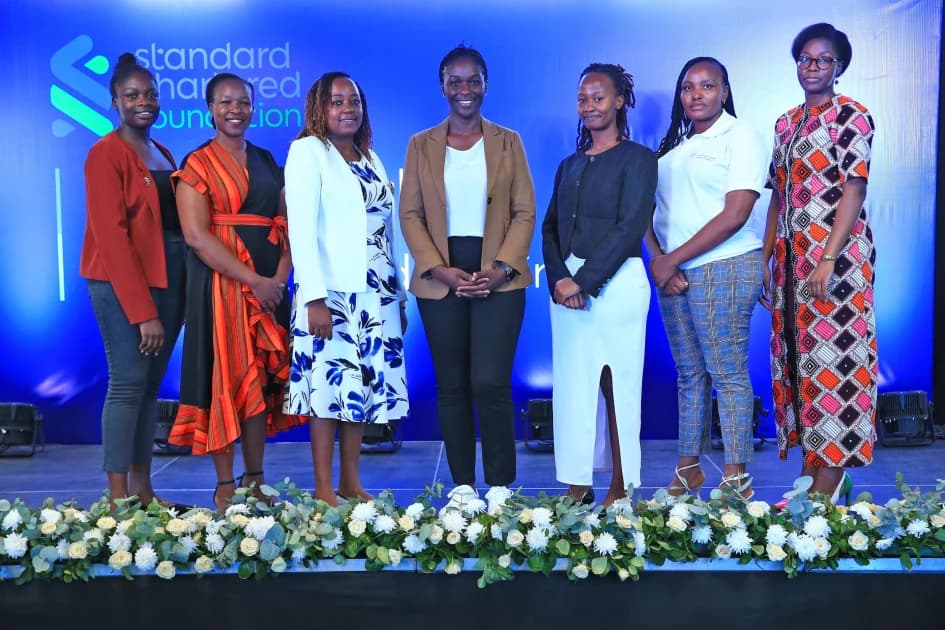
If there is a clear winner in the 2024/2025 procurement cycle, it is the Kenyan woman. Women-owned enterprises scooped the lion’s share of the pie, securing 58.3 percent of the tenders valued at Sh33.1 billion. This dominance suggests that women’s advocacy groups and business networks are effectively cracking the code of state bureaucracy, or at least registering in higher numbers than their counterparts.
In contrast, the youth secured 32.9 percent of the tenders, amounting to Sh18.7 billion. While significant, this figure points to a lingering challenge: the high barrier of entry for young people who often lack the capital or credit history to service government contracts before the first cheque clears.
Where the money comes from matters as much as where it goes. State corporations emerged as the backbone of this growth, awarding the bulk of contracts to women—Sh15.5 billion alone. Ministries followed, offering Sh5 billion in opportunities to women-led firms.
Counties, however, appear to be the preferred playground for the youth. Devolved units awarded young entrepreneurs 3,095 tenders valued at Sh7.7 billion. This localization of opportunity is vital, as it puts money directly into village economies, from Ol Kalou to Kilifi. However, the disparity in PWD inclusion remains stark. Despite recording the fastest growth rate—rising from Sh2.9 billion in 2022/23 to Sh4.95 billion—persons with disabilities still struggle to access even 10 percent of the reserved pot.
Despite the Sh5.6 billion jump, the government is still chasing its own tail regarding the constitutional threshold. The law demands that 30 percent of all annual procurement budgets be reserved for these special groups. Historically, uptake has hovered around a meager 16 percent.
PPRA Director-General Patrick Wanjuki has previously cited "low registration" and "technical barriers" as hurdles. Yet, for the average supplier, the hurdle isn't just winning the tender—it is surviving the waiting game. With pending bills remaining a chronic headache for the National Treasury, a Sh56.8 billion award value is only as good as the speed at which it is paid.
As the government pushes for stricter enforcement—backed by directives from Head of Public Service Felix Koskei—the focus must shift from merely awarding papers to clearing invoices. Until then, these billions remain impressive statistics rather than fed families.
Keep the conversation in one place—threads here stay linked to the story and in the forums.
Sign in to start a discussion
Start a conversation about this story and keep it linked here.
Other hot threads
E-sports and Gaming Community in Kenya
Active 9 months ago
The Role of Technology in Modern Agriculture (AgriTech)
Active 9 months ago
Popular Recreational Activities Across Counties
Active 9 months ago
Investing in Youth Sports Development Programs
Active 9 months ago