We're loading the full news article for you. This includes the article content, images, author information, and related articles.
The Senegalese Football Federation has issued a scathing denunciation of a recent verdict handed down in Morocco against its traveling supporters, igniting a fierce debate over the rights and safety of football fans across the African continent.
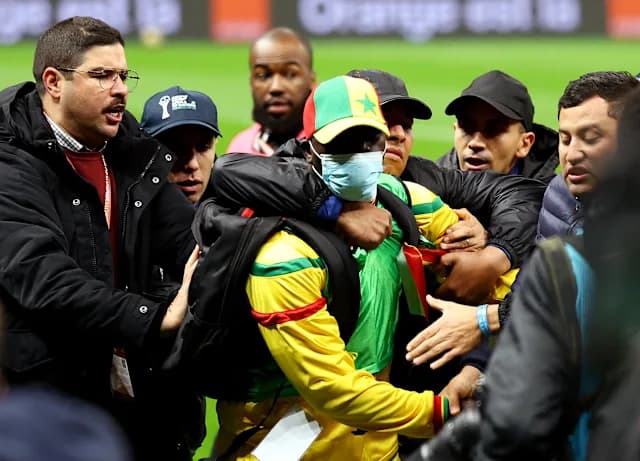
The Senegalese Football Federation has issued a scathing denunciation of a recent verdict handed down in Morocco against its traveling supporters, igniting a fierce debate over the rights and safety of football fans across the African continent.
The beautiful game has once again found itself overshadowed by courtroom drama, as Senegal's football governing body draws a definitive line in the sand regarding the treatment of its passionate fanbase in North Africa.
This escalating diplomatic tension transcends the sport, highlighting systemic flaws in how traveling supporters are protected—or neglected—during high-stakes international fixtures. As nations across the continent, including East African powerhouses, bid to host major tournaments, this incident serves as a stark warning about the urgent need for comprehensive legal and physical safeguards for fans.
The controversy stems from a deeply polarized judicial decision in Morocco, where several Senegalese supporters were subjected to heavy fines and custodial sentences following isolated skirmishes outside the stadium. Sources indicate the cumulative fines levied against the fans amount to roughly $15,000 (approx. KES 1.9m), an exorbitant sum that has triggered immediate outrage back in Dakar.
Senegal's federation has argued that the fans were unfairly targeted and denied adequate legal representation. This sentiment was echoed by civil rights groups across West Africa, who view the verdict as a heavy-handed response designed to intimidate traveling supporters rather than deliver justice.
The proactive defense of their citizens showcases a modern approach to sports administration, one where federations assume holistic responsibility for their contingents, moving beyond mere logistical support to robust legal advocacy.
In a strongly worded press release, the federation condemned the 'disproportionate' nature of the sentences. The leadership has vowed to escalate the matter to the Court of Arbitration for Sport (CAS) if necessary, emphasizing that football cannot thrive in an environment of fear and legal reprisal.
Moreover, the Senegalese officials have called upon the Confederation of African Football (CAF) to establish an independent oversight committee to review the policing tactics employed by host nations during international tournaments.
CAF now finds itself caught in the crossfire of this bilateral dispute. The lack of a uniform fan protection charter means that supporters are subject to the wildly varying legal frameworks of host nations.
To understand the gravity of the situation, consider the following statistics surrounding recent continental fixtures:
For Kenya, a nation eagerly preparing to co-host the 2027 Africa Cup of Nations alongside Uganda and Tanzania, the Senegal-Morocco spat offers critical lessons. As Harambee Stars fans prepare to travel more frequently, their safety must be paramount.
Kenya must spearhead regional initiatives to guarantee safe passage and fair treatment for all traveling East Africans. The economic boost of sports tourism cannot be realized if fans are terrified of legal entanglements abroad. Comprehensive fan-zone policing and transparent legal processes must be at the forefront of Kenya's 2027 hosting preparations.
The time for passive observation has passed. African football federations must unite to draft a comprehensive Fan Bill of Rights that supersedes localized judicial zealotry, ensuring that the stadium remains a sanctuary of joy rather than a trapdoor to incarceration.
"Football must remain a bridge uniting our diverse continent, not a battleground for legal overreach. If we cannot protect the heartbeat of the game—the fans—we risk losing the soul of African football," a prominent sports analyst noted in response to the unfolding crisis.
Keep the conversation in one place—threads here stay linked to the story and in the forums.
Sign in to start a discussion
Start a conversation about this story and keep it linked here.
Other hot threads
E-sports and Gaming Community in Kenya
Active 9 months ago
The Role of Technology in Modern Agriculture (AgriTech)
Active 9 months ago
Popular Recreational Activities Across Counties
Active 9 months ago
Investing in Youth Sports Development Programs
Active 9 months ago