We're loading the full news article for you. This includes the article content, images, author information, and related articles.
Lawmakers’ recess puts critical electoral amendments at risk, sparking fears of a flawed democratic process and a return to legal chaos.
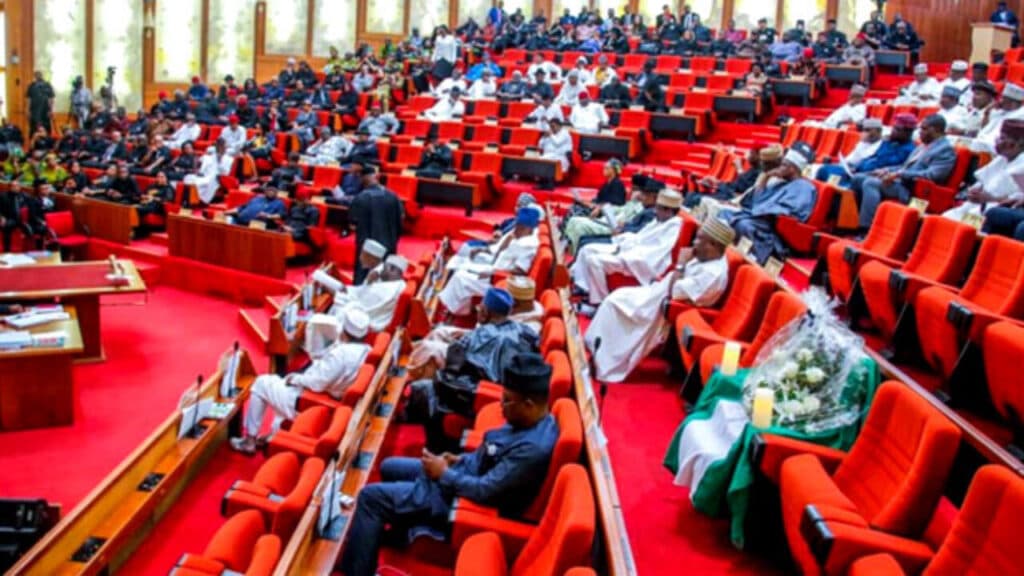
Lawmakers’ recess puts critical electoral amendments at risk, sparking fears of a flawed democratic process and a return to legal chaos.
The clock is ticking on Nigeria’s democracy, but the custodians of its laws seem to be on holiday. In a move that has outraged civil society and political observers alike, the Senate has proceeded on recess at a critical juncture, effectively stalling the passage of vital amendments to the Electoral Act. This delay is not merely administrative; it is a loaded gun pointed at the head of the 2027 general elections.
With the Independent National Electoral Commission (INEC) legally mandated to issue the Notice of Election by February 2025, the window for implementing meaningful reforms is shutting fast. The Senate’s lethargy raises uncomfortable questions: Is this incompetence, or a calculated sabotage designed to retain the loopholes that benefit the political elite?
The proposed reforms are game-changers. They seek to mandate the electronic transmission of results, enforce stricter penalties for electoral violence, and close the legal gaps that allowed for the "go to court" charades of the past. By delaying these bills, the Senate is effectively voting for the status quo—a system where opacity reigns and the people’s will is a suggestion rather than a command.
Advocacy groups like AdvoKC have sounded the alarm, warning that if the amendments are not passed before the statutory deadline, the 2027 elections will be conducted under the same flawed framework that marred previous polls. "The Senate is dragging Nigeria into a trap," warned a coalition statement. "If the rules are not fixed now, the outcome is already compromised."
The "fear" mentioned in political circles is not of the reforms themselves, but of the transparency they would enforce. Electronic transmission of results would strip godfathers of their power to alter figures at collation centers. Stricter audit trails would expose illicit campaign financing.
As Senators enjoy their break, the Nigerian voter is left in a precarious limbo. The refusal to prioritize these reforms is a silent admission that the current crop of leaders prefers a rigged game to a fair fight. The 2027 election is being rigged not at the ballot box, but in the hallowed chambers of the National Assembly, months before a single vote is cast.
Keep the conversation in one place—threads here stay linked to the story and in the forums.
Sign in to start a discussion
Start a conversation about this story and keep it linked here.
Other hot threads
E-sports and Gaming Community in Kenya
Active 9 months ago
The Role of Technology in Modern Agriculture (AgriTech)
Active 9 months ago
Popular Recreational Activities Across Counties
Active 9 months ago
Investing in Youth Sports Development Programs
Active 9 months ago



