We're loading the full news article for you. This includes the article content, images, author information, and related articles.
MP Peter Salasya vows to block the governments sale of 15% of Safaricom to Vodacom, citing undervaluation and the risk of losing control over M-Pesa.
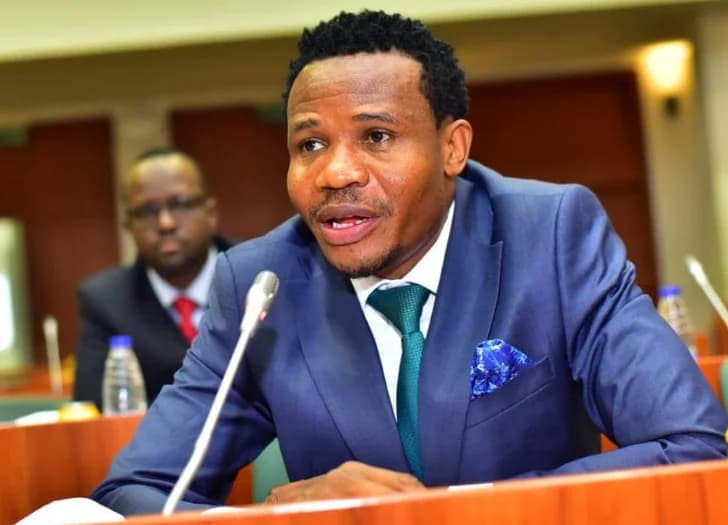
Mumias East MP Peter Salasya has publicly opposed the government’s plan to sell a 15% stake in Safaricom to South Africa’s Vodacom, warning that the transaction could hand majority control of a strategic national company to a foreign investor and weaken Kenya’s influence over a critical piece of its digital economy.
Multiple credible outlets and official statements describe the same core structure:
Seller: Government of Kenya (currently about 35% of Safaricom)
Buyer: Vodafone Kenya / Vodacom (deal would lift effective ownership to 55%)
Size: 15% stake (about 6.0 billion shares)
Price: KSh 34 per share, described as a premium to the then-market price in early December 2025
Headline proceeds: about KSh 204.3 billion for the stake sale
Additional component: an upfront KSh 40.2 billion payment tied to rights to future dividends on the state’s remaining stake (as reported by Reuters)
Parliamentary scrutiny is already underway: the Departmental Committee on Finance and National Planning and the Select Committee on Public Debt and Privatisation are conducting hearings and inviting submissions on the proposed divestiture.
Salasya’s objections—shared publicly on X and reported by People Daily—frame the proposal as a sovereignty and economic-security risk, anchored on Safaricom’s centrality to Kenya’s innovation story and M-Pesa’s role in daily economic life. He argues that allowing any foreign entity to take majority control of Safaricom would be a “monumental mistake” and a threat to Kenya’s economic independence.
The KSh 34 price point is being debated from two angles:
Government / proponents’ argument: the negotiated block price was a premium over the prevailing market price at the time the deal was announced (Reuters and local reporting both describe it that way).
Critics’ argument: some lawmakers and professional bodies say the price may still undervalue the company, especially when compared with past highs—Safaricom’s share previously reached about KSh 45.25 in August 2021 (as cited by Kenyan Wall Street).
ICPAK, in a parliamentary session, raised concerns about the valuation methodology and the long-term fiscal trade-off of exchanging a dividend-generating asset for one-off cash.
It is accurate that M-Pesa is a major pillar of Kenya’s economy. However, the specific claim in the draft you shared—“processes nearly half of Kenya’s GDP”—is not consistently supported by reliable evidence, and prominent versions of the “GDP flows through M-Pesa” statistic have been flagged as unverifiable by Africa Check.
What can be stated credibly from Safaricom’s own published figures is that M-Pesa transaction value is enormous in absolute terms: Safaricom reported KSh 38.29 trillion in M-Pesa transaction value for FY25.
Separately, KNCCI told MPs that M-Pesa processes over KSh 25 trillion annually and supports over 1 million MSMEs, and urged “cautious” handling of any ownership change because of potential impacts on business continuity, transaction costs, and national security.
Parliament has opened a window for stakeholder submissions and hearings (reported as running January 13–21, 2026 by Kenyan Wall Street).
Regulators and government-linked stakeholders, including the Communications Authority, have appeared before the joint committees as the scrutiny process proceeds.
Keep the conversation in one place—threads here stay linked to the story and in the forums.
Sign in to start a discussion
Start a conversation about this story and keep it linked here.
Other hot threads
E-sports and Gaming Community in Kenya
Active 9 months ago
The Role of Technology in Modern Agriculture (AgriTech)
Active 9 months ago
Popular Recreational Activities Across Counties
Active 9 months ago
Investing in Youth Sports Development Programs
Active 9 months ago
Key figures and persons of interest featured in this article