We're loading the full news article for you. This includes the article content, images, author information, and related articles.
German police arrest a Romanian and a Greek national for a coordinated attempt to destroy naval engines in Hamburg, fueling fears of a widening Russian sabotage campaign across Europe.
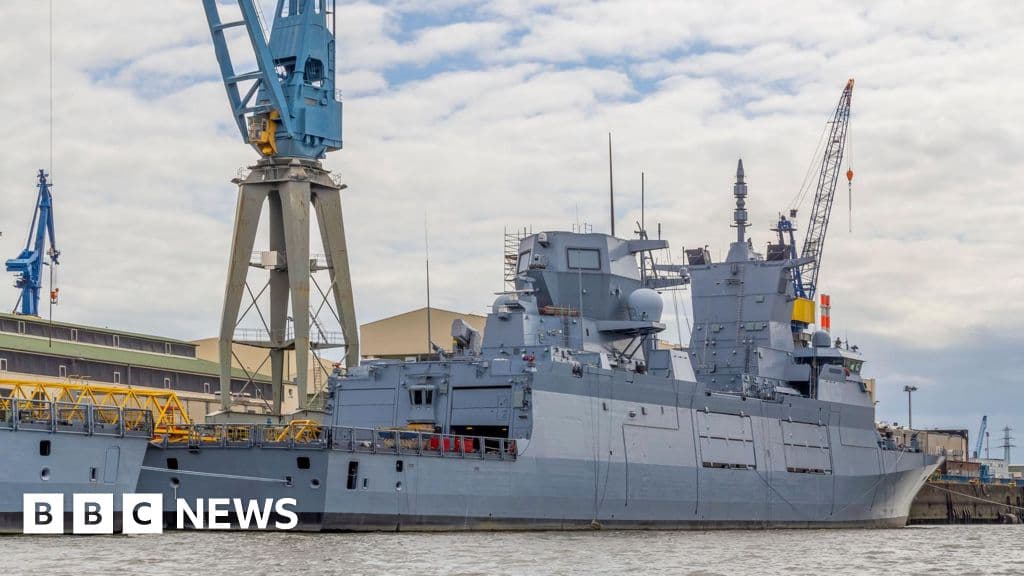
A covert operation to cripple NATO’s naval capabilities has been thwarted in Hamburg, exposing the terrifying vulnerability of Europe’s critical defence infrastructure to foreign agents embedded within its own workforce.
The shadow war has reached the docks of Hamburg. German authorities have tightened the net around a suspected sabotage cell, arresting two foreign nationals accused of a calculated attempt to incapacitate naval vessels destined for NATO missions. The suspects, a 37-year-old Romanian and a 54-year-old Greek, are not just vandals; they are alleged operatives who used their positions as port insiders to wage war on the machinery of the German Navy.
The details of the sabotage are chilling in their precision. Investigators reveal that the pair did not merely tamper with the ships; they executed a systematic "kill list" of mechanical assaults. They deactivated electronic safety switches, removed fuel tank caps to invite contamination, punctured vital water supply lines, and, in a final act of malice, dumped over 20 kilograms of abrasive gravel directly into the engine blocks.
This was not a random act of chaos. It was a surgical strike designed to keep these vessels anchored and useless. "If gone undetected, the acts would have caused major damage... endangering the operations of the German Navy," warned the EU's Eurojust crime agency. The implications are grave: a compromised engine at sea is not just a mechanical failure; it is a death trap for the crew.
The arrests, coordinated between German, Greek, and Romanian authorities, signal a rare victory in the murky world of counter-espionage. But for every cell disrupted, the fear is that others lie dormant, waiting for the signal to strike. The "Port of Hamburg" incident serves as a wake-up call: the frontline is no longer just in Eastern Ukraine; it is in the supply lines, the power grids, and the dockyards of the West.
As forensic teams comb through the seized evidence from homes in three countries, the message to NATO is clear. The enemy is already inside the gates, and they are armed not with missiles, but with gravel, wire cutters, and the element of surprise.
Keep the conversation in one place—threads here stay linked to the story and in the forums.
Sign in to start a discussion
Start a conversation about this story and keep it linked here.
Other hot threads
E-sports and Gaming Community in Kenya
Active 10 months ago
Popular Recreational Activities Across Counties
Active 10 months ago
The Role of Technology in Modern Agriculture (AgriTech)
Active 10 months ago
Investing in Youth Sports Development Programs
Active 10 months ago

