We're loading the full news article for you. This includes the article content, images, author information, and related articles.
President William Ruto's signature Affordable Housing Programme is delivering tangible units and creating jobs, but faces significant headwinds from funding gaps, implementation delays, and intense public scrutiny over its mandatory levy.
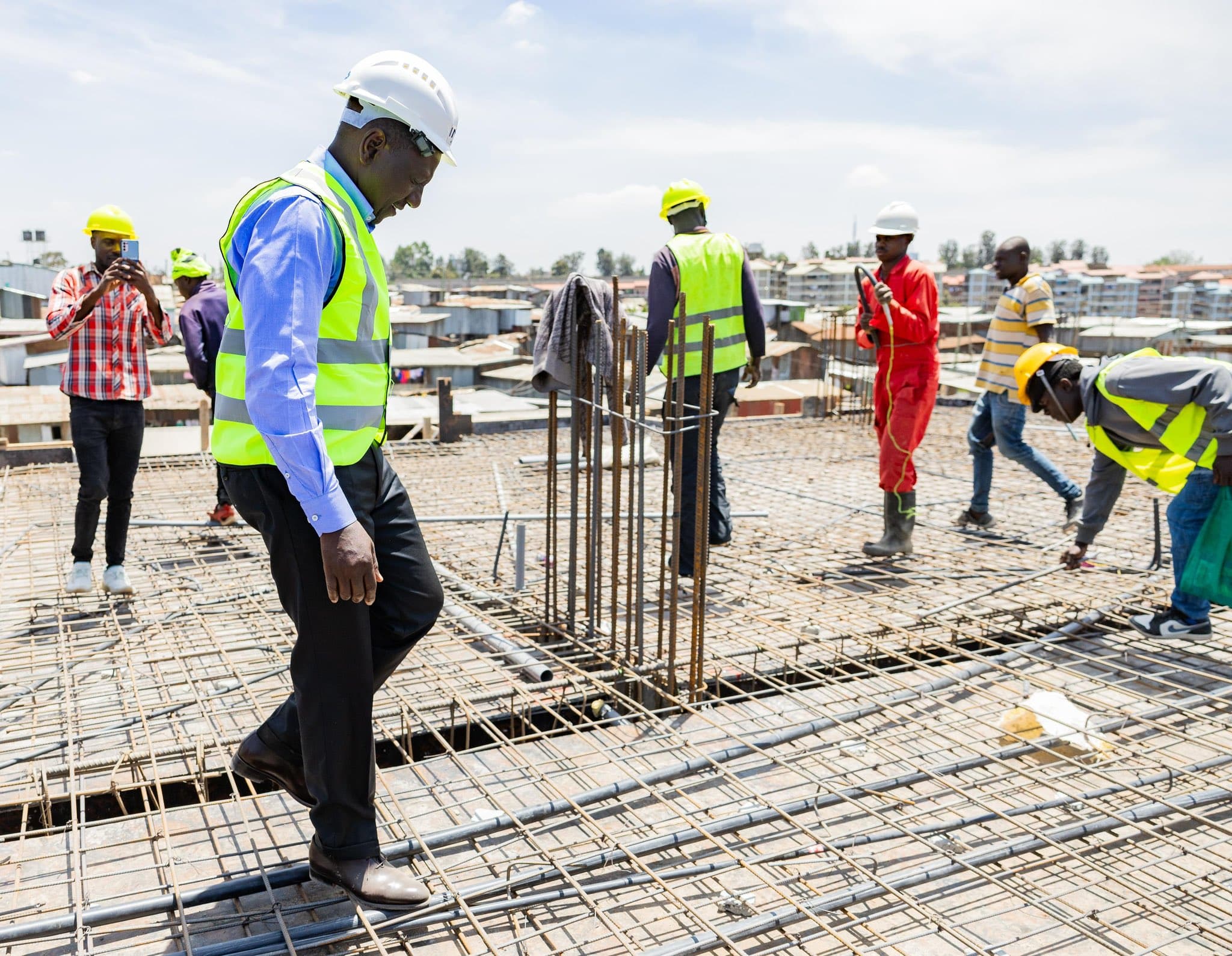
President William Ruto's Affordable Housing Programme (AHP), a central pillar of the Bottom-Up Economic Transformation Agenda (BETA), is showing mixed results as it moves deeper into its implementation phase. While thousands of housing units have been completed and handed over to beneficiaries, the ambitious plan to deliver 200,000 units annually faces considerable challenges, including funding shortfalls, construction delays, and persistent questions over affordability and transparency.
As of mid-2025, official government reports indicate that approximately 140,000 units are in various stages of construction across 44 counties. Of these, 3,171 units were reported as complete by July 2025, with over 11,000 nearing completion. Recent handovers include 220 units at the Boma Yangu Elburgon Estate in Nakuru County on Monday, October 27, 2025. Projects are also underway in major urban and peri-urban areas such as Nairobi's Mukuru and Kibra, Ruiru, Thika, and Mavoko. Demand appears robust, with over 800,000 Kenyans registered on the Boma Yangu portal by June 2025. In a notable sign of this demand, all 1,050 units of the Ruiru project were sold out two months before their scheduled completion, as confirmed by the Parliamentary Committee on Housing on Thursday, October 30, 2025.
A key justification for the AHP has been its potential to stimulate the economy and create mass employment. Government statements on job creation have varied. In March 2025, Government Spokesman Isaac Mwaura stated the programme had created 244,232 jobs. By September, the Ministry of Lands and Housing updated this figure to over 330,000 direct and indirect jobs. The government also reports that KSh 11 billion has been channeled to Jua Kali artisans and Micro, Small, and Medium Enterprises (MSMEs) supplying materials and services.
However, these figures have faced scrutiny. The 2025 Economic Survey released by the Kenya National Bureau of Statistics (KNBS) indicated that the private construction sector actually shed 2,900 jobs in 2024, while the sector as a whole contracted by 0.7%. This data appears to contradict the high job creation numbers cited by the administration, leading to questions about the methodology and accuracy of the figures provided.
The programme's funding mechanism, a mandatory 1.5% housing levy on gross salaries matched by employers, has been its most contentious aspect. After legal challenges which saw the levy declared unconstitutional in late 2023, the government passed the Affordable Housing Act in March 2024 to provide a stronger legal framework. Collections have since been robust, with the Kenya Revenue Authority (KRA) collecting KSh 73.2 billion in the fiscal year ending June 2025, surpassing its target by KSh 10 billion.
Despite these collections, a significant financing gap remains. Reports in September 2025 estimated the annual need at KSh 400 billion against levy collections of around KSh 74 billion, leaving a shortfall of KSh 326 billion. Furthermore, implementation has been uneven. A report in August 2025 by the Controller of Budget, Dr. Margaret Nyakang'o, highlighted that the State Department for Housing and Urban Development had the lowest budget absorption rate among government departments. The report cited planning delays, procurement challenges, and poor coordination as key impediments, noting a national completion rate of just 13% against a target of 15% by mid-2025 for an initial 100,000 units. Some projects, like those in Thika and Ruiru, exceeded targets, while others in Starehe and Mavoko lagged significantly.
Concerns have also been raised about the management of collected funds. By May 2025, over KSh 30 billion of the levy funds remained unspent and were invested in short-term government securities. While officials defended this as prudent cash management, the move has drawn criticism given the slow pace of project rollouts.
The Affordable Housing Programme is a complex and ambitious undertaking with the potential to address Kenya's significant housing deficit, estimated at two million units. For beneficiaries in places like Mukuru, the move from informal settlements to modern apartments with reliable utilities has been life-changing. The government continues to launch new projects, including 2,680 units in Elburgon and 382 in Marigat, Baringo County, on Tuesday, October 29, 2025.
However, for the programme to achieve its transformative goals, critical challenges must be addressed. These include bridging the substantial financing gap, streamlining project implementation to avoid delays, ensuring transparency in fund management, and aligning job creation claims with official economic data. Ultimately, the success of President Ruto's housing dream will be measured not just by the number of units built, but by its ability to deliver them affordably and sustainably while demonstrably boosting the wider Kenyan economy.
Keep the conversation in one place—threads here stay linked to the story and in the forums.
Sign in to start a discussion
Start a conversation about this story and keep it linked here.
Other hot threads
E-sports and Gaming Community in Kenya
Active 9 months ago
The Role of Technology in Modern Agriculture (AgriTech)
Active 9 months ago
Popular Recreational Activities Across Counties
Active 9 months ago
Investing in Youth Sports Development Programs
Active 9 months ago



