We're loading the full news article for you. This includes the article content, images, author information, and related articles.
**President defends controversial economic policies, arguing they prevented a financial collapse that has struck five other African nations, even as Kenyans face a crushing cost of living.**
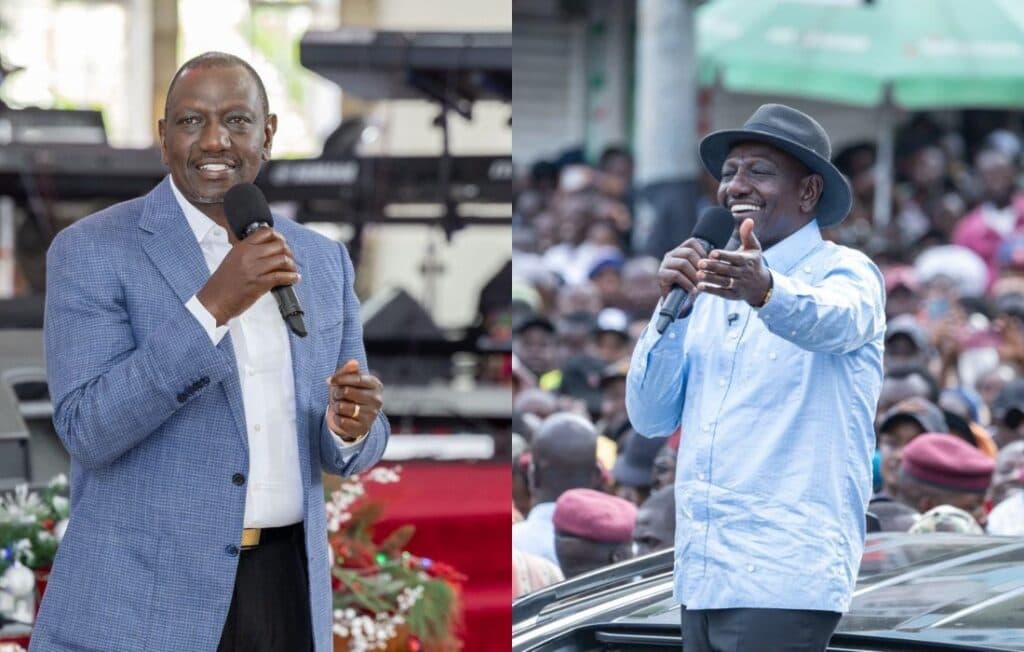
President William Ruto has mounted a staunch defense of his administration's economic strategy, declaring that a series of "difficult and very sad decisions" successfully steered Kenya away from a sovereign default that has plagued five other African countries. Speaking at State House, the President framed the painful fiscal measures as a necessary sacrifice to avert national shame and stabilize an economy he inherited on the brink.
The assertion lands directly in the center of a heated national debate: whether the government's bitter economic medicine is curing the country or killing the patient. For millions of Kenyans, the "tough calls"—including the removal of fuel and food subsidies and the implementation of new taxes under the Finance Act—have translated into a severe cost of living crisis, shrinking household incomes and fueling public discontent.
At the heart of the government's concerns was a formidable wall of debt, particularly a $2 billion (approx. KES 258 billion) Eurobond maturing in June 2024. Failure to honor this payment would have triggered a sovereign default, locking Kenya out of international capital markets and potentially causing catastrophic economic turmoil. Instead, the administration successfully issued a new $1.5 billion (approx. KES 193.8 billion) Eurobond to partially buy back the maturing debt, a move the Treasury noted demonstrated renewed investor confidence. President Ruto emphasized that while international bodies had flagged Kenya as high-risk, it was the only one of six listed African countries to avoid default.
While the government celebrates macroeconomic stability, many citizens are counting the cost. The administration's policies, encouraged by the International Monetary Fund (IMF), have been directly linked to rising prices for essential goods and services. Key measures and their impact include:
Opposition leaders have accused the administration of mismanaging the economy, arguing that wasteful spending and corruption have left Kenyans struggling under harsh conditions while the government focuses on paying foreign creditors.
The President points to positive indicators as proof of his strategy's success, including a stabilizing shilling, increased foreign reserves, and an upgraded growth outlook from the World Bank, which projects the economy to grow by 4.9% in 2025. However, the World Bank also warns that Kenya remains at high risk of debt distress, with public debt climbing to 68.8% of GDP. This creates a tale of two economies: one of improving macroeconomic figures celebrated by the government and international lenders, and another experienced on the ground, defined by financial pressure and uncertainty for ordinary Kenyans.
As the nation navigates this precarious path, the fundamental question remains. While Kenya may have sidestepped the humiliation of a default seen in countries like Ghana and Zambia, the long-term sustainability of its current path is yet to be proven. The ultimate verdict on President Ruto's economic gamble will be written not just in Treasury reports, but in the daily lives of its citizens.
Keep the conversation in one place—threads here stay linked to the story and in the forums.
Sign in to start a discussion
Start a conversation about this story and keep it linked here.
Other hot threads
E-sports and Gaming Community in Kenya
Active 9 months ago
The Role of Technology in Modern Agriculture (AgriTech)
Active 9 months ago
Popular Recreational Activities Across Counties
Active 9 months ago
Investing in Youth Sports Development Programs
Active 9 months ago



