We're loading the full news article for you. This includes the article content, images, author information, and related articles.
President dismisses fears over data sovereignty, insisting the new $1.6 billion partnership empowers counties while cutting out NGO ‘middlemen’.
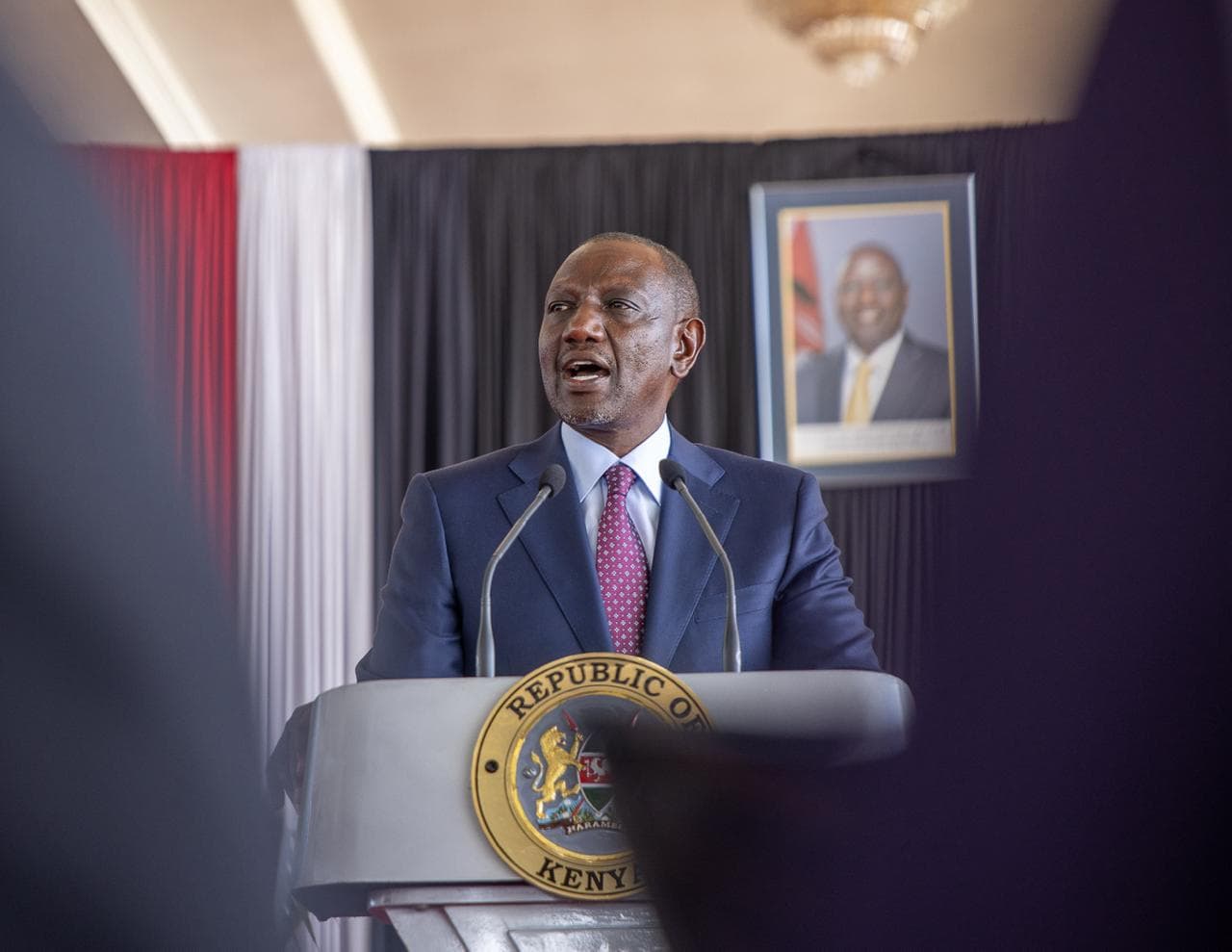
President William Ruto has drawn a line in the sand regarding the country’s digital sovereignty, declaring that his administration will not tolerate any foreign entity exploiting Kenyan citizens. Speaking at State House, Nairobi, on Wednesday, the Head of State mounted a spirited defense of the newly signed Kenya-United States Health Cooperation Framework, a deal worth $1.6 billion (approx. KES 208 billion) that has sparked fierce debate over data privacy and national security.
The President’s remarks come amid growing anxiety that the far-reaching agreement could expose sensitive health data of millions of Kenyans to foreign surveillance. Critics, including civil society groups and opposition figures, have questioned whether the government surrendered too much control in exchange for funding. But Ruto was categorical: the days of Kenya being a passive recipient of aid with strings attached are over.
Addressing the controversy head-on, Ruto revealed that the agreement was subjected to a rigorous legal audit before a single signature was appended. He noted that the Office of the Attorney General had reviewed the document “with a tooth comb” to ensure strict compliance with the Data Protection Act.
“Nobody and no government will take advantage of the people of Kenya as long as I am President,” Ruto asserted, his tone striking a balance between diplomatic assurance and nationalist fervor. “I am clear about what we want and where we must go. There is no way the agreement we signed can undermine the interests of the people of Kenya, including matters related to our health data.”
The President argued that while the United States is a “viciously democratic nation” with its own checks and balances, Kenya is not relying on American goodwill alone. “Much as they will not allow their own officials to take advantage of others, we will not allow ourselves to be taken advantage of by anybody,” he warned.
Beyond the data privacy concerns, the deal represents a significant shift in how donor funds are managed—a move that has likely rattled the NGO sector. For decades, Western health funding has largely been channeled through Non-Governmental Organizations (NGOs), which act as implementing partners. This new framework, however, directs the KES 208 billion straight to the National and County governments.
Ruto did not mince words regarding this structural change, characterizing some NGOs as inefficient intermediaries who absorb resources meant for the grassroots. By cutting out these “middlemen,” the President claims the funds will have a more direct impact on Kenya’s struggling healthcare system, particularly in the devolved units where resources are often scarce.
The assurance comes at a critical time. With the transition to the Social Health Authority (SHA) still facing teething problems, public trust in government handling of medical data is fragile. The administration knows that for the US deal to succeed, it must first win the confidence of the Kenyan public, not just the donors in Washington.
“The law that prevails on data that belongs to the people of Kenya is Kenyan law, and that is with clarity,” Ruto concluded, signaling that while Kenya is open for business, it is not open for exploitation.
Keep the conversation in one place—threads here stay linked to the story and in the forums.
Sign in to start a discussion
Start a conversation about this story and keep it linked here.
Other hot threads
E-sports and Gaming Community in Kenya
Active 9 months ago
The Role of Technology in Modern Agriculture (AgriTech)
Active 9 months ago
Popular Recreational Activities Across Counties
Active 9 months ago
Investing in Youth Sports Development Programs
Active 9 months ago



