We're loading the full news article for you. This includes the article content, images, author information, and related articles.
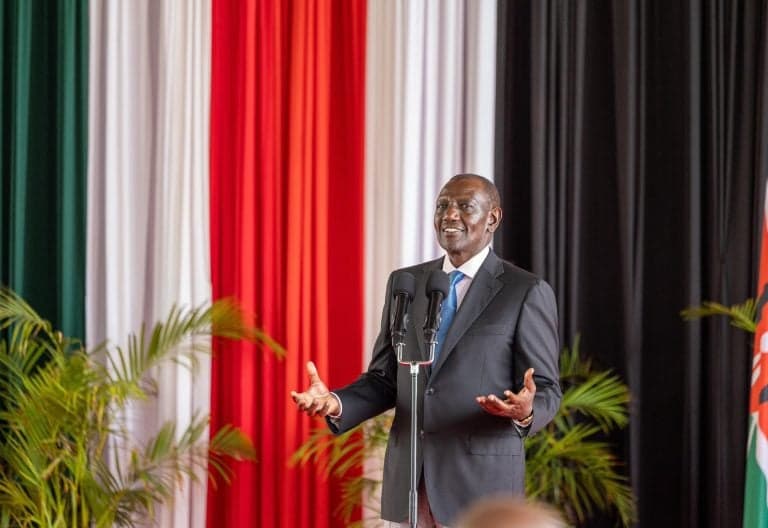
President William Ruto has issued an executive directive mandating the immediate reduction of traffic police officers on Kenyan roads, coupled with a highly anticipated nationwide rollout of smart traffic cameras.

President William Ruto has issued an executive directive mandating the immediate reduction of traffic police officers on Kenyan roads, coupled with a highly anticipated nationwide rollout of smart traffic cameras and an instant fining system.
The sweeping executive order, announced early Monday, aims to fundamentally restructure highway governance and eliminate the rampant, systemic extortion that has long plagued Kenya's transport corridors.
This aggressive policy shift comes as the public outcry over police harassment and arbitrary roadblocks reaches a boiling point. By replacing human enforcement with automated surveillance, the government intends to streamline traffic flow, enhance road safety through data-driven monitoring, and drastically reduce the avenues for bribery that cost the economy billions annually.
The core of the presidential directive revolves around the immediate expansion of the intelligent traffic management system. The National Transport and Safety Authority (NTSA), in collaboration with the Kenya National Highways Authority (KeNHA), has been conducting low-profile tests of this automated system along the Thika Superhighway. The pilot phase utilized advanced automatic number plate recognition (ANPR) cameras to capture speeding violations and unauthorized lane usage.
Following the successful, albeit controversial, pilot program, the government is now scaling the infrastructure to cover all major arteries, beginning with the Northern Corridor linking Mombasa to the Western border. These smart cameras are interconnected with the KRA database and the national citizen registry, allowing for real-time identification of traffic offenders.
Under the new protocol, when an infraction is recorded, the system automatically generates an instant fine notification. This alert is dispatched via SMS directly to the registered owner of the vehicle, complete with photographic evidence of the violation and a secure digital payment link. Failure to settle the fine within the stipulated 48-hour window triggers escalating penalties and potential impounding of the vehicle.
For decades, the presence of traffic police on Kenyan roads has been synonymous with corruption. Matatu (minibus) operators and commercial truck drivers have repeatedly protested against the informal taxation system engineered by rogue officers. The President's decision to withdraw a significant percentage of these officers is a direct strike against this entrenched cartel-like behavior.
The reduction in physical policing does not equate to a suspension of law enforcement. Instead, the remaining specialized traffic units will be repurposed as rapid response teams, focusing exclusively on managing severe accidents, clearing major congestions, and intercepting vehicles flagged by the automated system for serious criminal activity or extreme mechanical unroadworthiness.
The administration has outlined several key operational changes taking effect over the next thirty days:
The transition toward algorithmic policing has elicited mixed reactions from the Kenyan populace. While motorists have broadly welcomed the dismantling of extortion checkpoints, civil rights organizations have raised substantial concerns regarding data privacy and the potential for mass surveillance. The continuous tracking of vehicular movement presents a unique challenge to citizen privacy rights under the Data Protection Act.
Furthermore, the transport sector union has highlighted infrastructural deficits that may undermine the system's fairness. Missing road signage, faded lane markings, and erratic speed limit transitions could result in unjust penalization. The union demands comprehensive road rehabilitation to accompany the camera installations, ensuring that motorists are not trapped by technicalities.
The legal framework surrounding the instant fine system also faces potential judicial hurdles. Previous attempts to enforce similar spot-fines were suspended by the High Court due to a lack of clear procedural guidelines and the denial of the accused's right to a fair hearing. The Attorney General's office insists that the current iteration has been fortified against such legal vulnerabilities.
The economic implications of this modernization are vast. For the logistics sector, the elimination of arbitrary delays at police stops translates to faster turnaround times and reduced operational costs. The movement of freight from the Port of Mombasa to the hinterland is expected to become significantly more efficient, bolstering Kenya's position as a regional logistics hub.
Simultaneously, the Treasury anticipates a massive surge in legitimate revenue collection from traffic fines, funds that were previously lost to the shadow economy. This capital is earmarked for reinvestment into road safety initiatives, trauma centers, and continuous infrastructural maintenance.
"Technology is the ultimate equalizer; it removes the human bias from enforcement and restores dignity to our highways."
Keep the conversation in one place—threads here stay linked to the story and in the forums.
Sign in to start a discussion
Start a conversation about this story and keep it linked here.
Other hot threads
E-sports and Gaming Community in Kenya
Active 9 months ago
The Role of Technology in Modern Agriculture (AgriTech)
Active 9 months ago
Popular Recreational Activities Across Counties
Active 9 months ago
Investing in Youth Sports Development Programs
Active 9 months ago