We're loading the full news article for you. This includes the article content, images, author information, and related articles.
President Ruto defends his controversial education reforms during a visit to Kisumu, claiming his government has rescued a sector he inherited in a state of collapse.
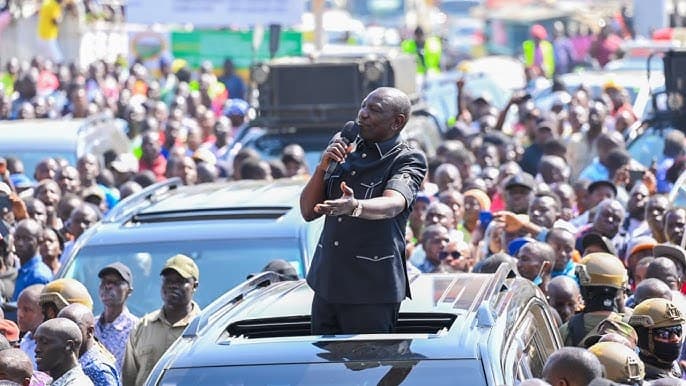
President William Ruto has mounted a spirited defence of his administration’s education reforms, declaring to a sceptical audience in Kisumu that his government has successfully rehabilitated a sector that was on the brink of collapse.
Standing on the podium in the lakeside city—a traditional stronghold of the opposition—the President did not mince his words. He portrayed his administration not as the architects of chaos, as critics allege, but as the salvage crew of a sinking ship. The education sector, particularly the implementation of the Competency-Based Curriculum (CBC) and the new university funding model, has been a lightning rod for public anger, but Ruto insisted the painful surgery was necessary to save the patient.
The President’s rhetoric centered on the "inherited burden." He argued that the previous regime left behind a "broken" system characterized by funding gaps, teacher shortages, and a curriculum that was rolling out without a roadmap. By framing the current challenges as legacy issues, Ruto sought to insulate his government from the immediate frustrations of parents and students.
"We found a system that was insolvent and directionless," Ruto told the gathering. "We have had to make difficult decisions to ensure that our children have a future that is not built on debt and delusion."
Key pillars of the President's defence included:
Delivering this message in Kisumu was a calculated political risk. The region has been vocal in its criticism of the high cost of education and the perceived chaotic rollout of the CBC. Local leaders have frequently pointed out that the burden of purchasing learning materials has shifted unfairly to parents who are already grappling with a high cost of living.
Education experts, however, offer a more nuanced view. While acknowledging the government's efforts in hiring teachers, they point out that the implementation on the ground remains uneven. "The policy papers are sound, but the classroom reality is different," notes one education analyst. "Headteachers are still struggling with capitation delays, and the university funding model has left thousands of students unsure of their financial status."
Ruto’s assertion that the system is "fixed" is likely to be met with cautious optimism at best and outright disbelief at worst. For the parent in Kisumu paying extra for remedial tuition, or the university student in Nairobi deferring studies due to fee arrears, the "fix" feels incomplete.
The President ended his address with a promise of continuity, assuring the nation that the worst is over. "We have laid the foundation," he declared. "Now we build." Whether that building will stand the test of time—and public scrutiny—remains the ultimate examination question for his administration.
Keep the conversation in one place—threads here stay linked to the story and in the forums.
Sign in to start a discussion
Start a conversation about this story and keep it linked here.
Other hot threads
E-sports and Gaming Community in Kenya
Active 10 months ago
The Role of Technology in Modern Agriculture (AgriTech)
Active 10 months ago
Popular Recreational Activities Across Counties
Active 10 months ago
Investing in Youth Sports Development Programs
Active 10 months ago



