We're loading the full news article for you. This includes the article content, images, author information, and related articles.
In a decisive pivot from mass tourism, the President approves five exclusive hotels inside Tsavo West, targeting the global elite to fund conservation and boost local revenue.
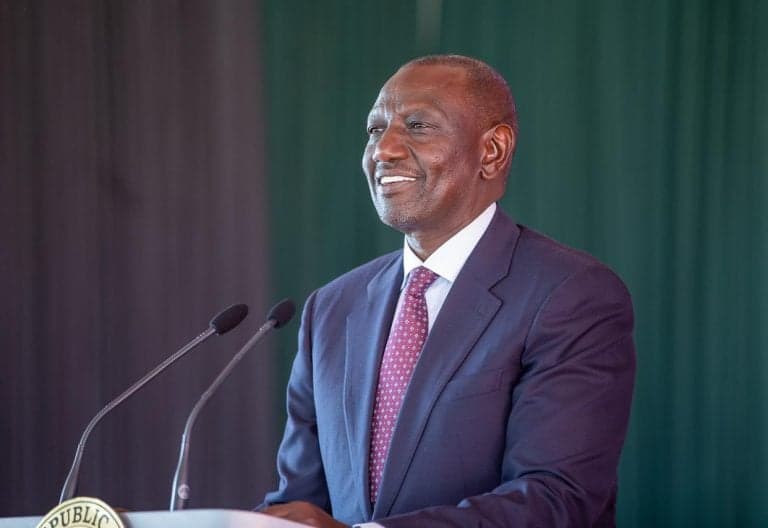
The dusty, red-earth horizons of Tsavo are poised for a glitzy transformation, as President William Ruto signals a decisive shift toward high-yield, low-volume tourism. Speaking from the heart of the wilderness on Tuesday, the Head of State announced the green-lighting of five new ultra-luxury hotels within the park, explicitly targeting travelers willing to part with top dollar for exclusivity.
In a move designed to rival the high-end conservancy models of the Maasai Mara and Botswana’s Okavango Delta, President Ruto directed that these new establishments charge between $500 (approx. KES 65,000) and $1,000 (approx. KES 130,000) per night. The directive marks a significant departure from Kenya’s traditional reliance on volume-driven safari packages, aiming instead to maximize revenue per visitor while theoretically reducing the ecological footprint of mass tourist traffic.
Addressing stakeholders during the launch of the Tsavo West Rhino Sanctuary in Ngulia, Taita Taveta County, the President emphasized that the era of underselling Kenya’s natural assets is over. He revealed that following briefings with the Kenya Wildlife Service (KWS), the state has reached a consensus to prioritize premium investments.
“All tourists will now pay top dollar,” President Ruto asserted, noting that the new facilities would generate critical funds for both the government and the local communities living on the park's periphery. The strategy hinges on the logic that fewer, wealthier tourists can generate equal or greater revenue than busloads of budget travelers, with significantly less wear and tear on the park’s fragile infrastructure.
While the economic logic is clear, the announcement walks a tightrope between development and conservation. Building permanent structures inside a national park—especially one as ecologically sensitive as Tsavo—often draws sharp scrutiny from environmentalists. However, the President defended the move, framing it as a necessary evolution to fund the very protection of wildlife, such as the rhinos in the newly launched sanctuary.
The administration argues that without significant revenue boosts, maintaining anti-poaching units, fencing, and ranger welfare becomes unsustainable. By attracting the global 1%, the state hopes to cross-subsidize the heavy costs of managing Kenya’s largest protected area.
For the residents of Taita Taveta, the news brings a mix of optimism and caution. Local leaders have long agitated for a bigger slice of the tourism pie, with frequent calls for a 50-50 revenue-sharing formula between the national government and the county. The success of this high-end strategy will likely be judged by the mwananchi on the ground: will these KES 130,000-a-night lodges translate into bursaries, water projects, and jobs for the youth in Voi and Mwatate?
“We support the move, but the visitors must get value for money, and the locals must see the benefit,” noted a local tourism stakeholder, echoing the sentiment that high fees must correlate with impeccable service and tangible community upliftment.
As the sun sets on the old model of mass tourism, Kenya is betting its future on quality over quantity. “We must raise our ambition to rival the very best in the world within our lifetime,” Ruto declared, setting a high bar for the investors who will soon break ground in the Tsavo wilderness.
Keep the conversation in one place—threads here stay linked to the story and in the forums.
Sign in to start a discussion
Start a conversation about this story and keep it linked here.
Other hot threads
E-sports and Gaming Community in Kenya
Active 9 months ago
The Role of Technology in Modern Agriculture (AgriTech)
Active 9 months ago
Popular Recreational Activities Across Counties
Active 9 months ago
Investing in Youth Sports Development Programs
Active 9 months ago



