We're loading the full news article for you. This includes the article content, images, author information, and related articles.
A brutal Russian airstrike on a residential building in Kharkiv has left at least seven people dead, including young children.
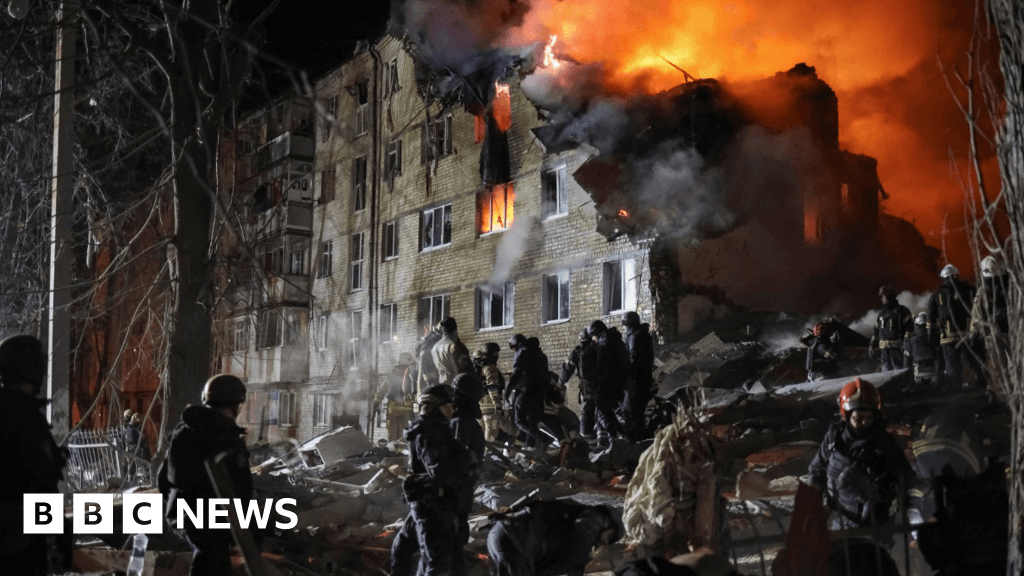
A brutal Russian airstrike on a five-story residential building in the Ukrainian city of Kharkiv has left at least seven people dead, including young children, prompting international condemnation and triggering air alerts across the nation.
The overnight missile attack decimated the civilian structure, burying families beneath tons of concrete and steel. Ukrainian President Volodymyr Zelensky confirmed the tragic toll as rescue workers scrambled through the debris.
This latest escalation underscores the relentless civilian toll of the conflict, echoing globally and causing profound economic ripples that affect food and energy security as far away as East Africa.
According to Regional Governor Oleg Synegubov, the strike occurred in the early hours of Saturday morning, maximizing casualties as residents slept. The precision with which the apartment block was targeted highlights a continuing strategy of striking civilian infrastructure to demoralize the Ukrainian populace. Among the recovered bodies were a 65-year-old woman, a 40-year-old man, a 13-year-old girl, and tragically, a nine-year-old boy. At least ten others sustained severe injuries and remain hospitalized.
The sheer scale of the overnight offensive was massive. President Zelensky reported that Russian forces deployed an overwhelming swarm of 29 missiles and 480 drones across multiple regions, targeting critical energy grids and railway networks in Kyiv, Khmelnytskyi, Chernivtsi, and Zhytomyr. In response to the massive aerial bombardment near its borders, the Polish air force scrambled military jets to secure its airspace, a stark reminder of the war's potential to spill into NATO territory.
While Kharkiv is geographically distant from Nairobi, the geopolitical and economic shockwaves are immediate. The continuation of this intense conflict directly impacts global supply chains. Ukraine and Russia are critical exporters of wheat, fertilizer, and sunflower oil to the African continent. Every escalation threatens to spike global commodity prices, directly inflating the cost of living for the average Kenyan citizen.
Diplomatic pressure is mounting on unaligned nations to take a firmer stance. African leaders, who have previously attempted to broker peace delegations, find themselves navigating a complex web of securing affordable grain imports while responding to glaring violations of international humanitarian law.
The continuous bombardment of energy facilities is a calculated maneuver to freeze the Ukrainian population during the harsh winter months. Emergency services in Kharkiv are stretched beyond capacity, battling not only the physical rubble but the psychological trauma inflicted upon the survivors. The destruction of seven apartment buildings in a single night creates an immediate, acute housing crisis for hundreds of displaced citizens.
International aid organizations are pleading for increased air defense systems to protect civilian centers. Without them, the vulnerability of cities like Kharkiv remains absolute.
"These are not military targets; these are families sleeping in their beds. The world must see this terror for what it is and provide the shield necessary to stop it."
Keep the conversation in one place—threads here stay linked to the story and in the forums.
Sign in to start a discussion
Start a conversation about this story and keep it linked here.
Other hot threads
E-sports and Gaming Community in Kenya
Active 9 months ago
The Role of Technology in Modern Agriculture (AgriTech)
Active 9 months ago
Popular Recreational Activities Across Counties
Active 9 months ago
Investing in Youth Sports Development Programs
Active 9 months ago