We're loading the full news article for you. This includes the article content, images, author information, and related articles.
A Ukrainian court's unprecedented life sentence for a Russian soldier over the execution of a prisoner of war sets a crucial international precedent as Kenya's own judiciary advocates for stronger mechanisms to prosecute international crimes.
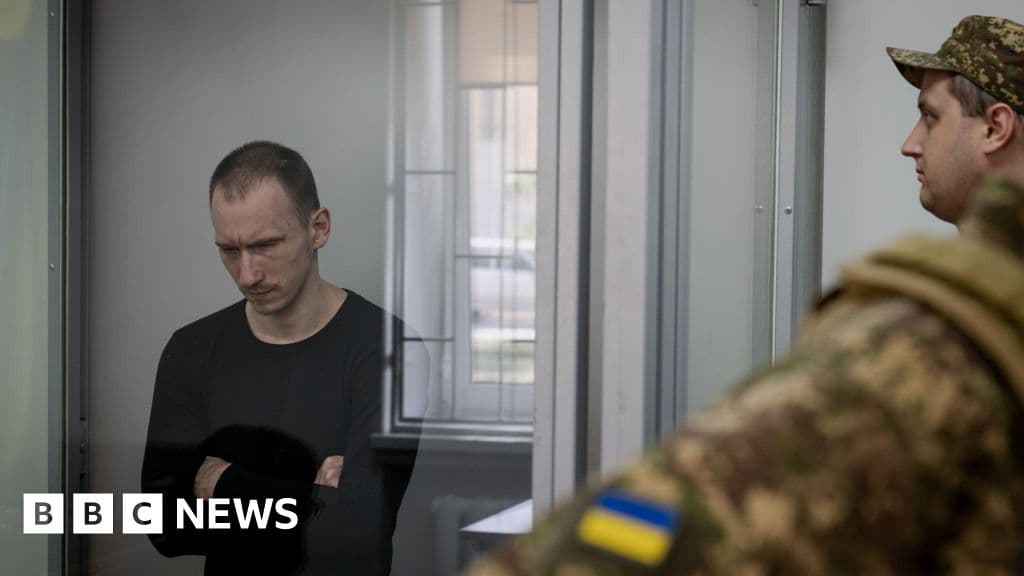
A court in the Ukrainian city of Zaporizhzhia on Thursday, November 6, 2025, sentenced Russian soldier Dmitry Kurashov to life in prison for the execution of a surrendered Ukrainian prisoner of war. This landmark verdict, delivered by Judge Olena Tugarova, is the first life sentence handed down by a Ukrainian court for the killing of a POW since Russia's full-scale invasion began in February 2022, according to Ukraine's SBU Security Service. The ruling establishes a significant legal precedent for holding individuals accountable for atrocities committed during the conflict and resonates with ongoing justice reform discussions in Kenya and East Africa.
Dmitry Kurashov, 27, a rifleman in the Russian "Storm-V" assault unit, was found guilty of fatally shooting 41-year-old Ukrainian soldier Vitalii Hodniuk on Friday, January 6, 2024. The incident occurred near the village of Pryiutne in the Zaporizhzhia region during an assault on Ukrainian positions. According to the prosecution, led by Nikita Manevsky, Hodniuk had run out of ammunition, laid down his weapon, and surrendered with his hands raised. Kurashov then ordered him to kneel before shooting him at point-blank range with an AK-47, a clear violation of the Geneva Conventions. Ukraine's national police confirmed that witness testimony from other captured Russian soldiers, expert reports, and video footage corroborated the deliberate nature of the killing. Kurashov, who had previous criminal convictions for theft in Russia and had joined the military in exchange for amnesty, was captured by Ukrainian forces later the same day. Though he initially pleaded guilty, he later retracted his confession, claiming he hoped for a prisoner exchange—a version of events refuted by his own unit members.
This verdict arrives at a pivotal moment for Kenya's judicial system. In September 2025, Kenyan judicial experts, including Chief Justice Martha Koome, publicly called for the establishment of a fully operational International Crimes Division within the High Court. Proponents argue such a division is essential for tackling impunity for grave offenses like war crimes and crimes against humanity, ensuring justice for victims within the region. Kenya's International Crimes Act of 2008 already grants the High Court jurisdiction over such crimes, but the push for a specialized division signals a renewed commitment to domestic accountability.
Historically, Kenya has maintained a cautious stance on universal jurisdiction, emphasizing the primary role of national courts while reaffirming its commitment to fighting impunity, as stated in its declarations to the United Nations. The nation's complex relationship with the International Criminal Court (ICC), following the 2007/2008 post-election violence, has heavily influenced its perspective on international justice. The Kurashov verdict in Ukraine serves as a powerful example of a national judicial system taking the lead in prosecuting war crimes, aligning with the principle of complementarity that Kenya has long advocated for.
The issue is further compounded by recent reports of Kenyan nationals being deceptively recruited and trafficked to fight for Russian forces in Ukraine. In a statement on Monday, October 27, 2025, Prime Cabinet Secretary Musalia Mudavadi confirmed that Nairobi is engaged in high-level diplomatic talks with Moscow to repatriate these citizens, whom the government considers victims of human trafficking. This direct involvement of Kenyan citizens underscores the conflict's tangible impact on the nation and heightens the relevance of accountability measures for war-related crimes.
The life sentence for Kurashov is a symbolic victory for Ukraine, which is investigating over 322 cases of alleged executions of surrendered servicemen by Russian forces, as reported by the Ukrainian Prosecutor General's Office. While Russia has consistently denied that its troops commit war crimes, the United Nations Human Rights Monitoring Mission has noted an alarming rise in such allegations. This trial, conducted with the defendant present, stands in contrast to many war crimes proceedings which are often held in absentia. The verdict reinforces the principle that individual soldiers can and will be held responsible for their actions on the battlefield, regardless of orders or the broader conflict. For East Africa, a region that has contended with cross-border conflicts and debates around the jurisdiction of bodies like the East African Court of Justice, this case highlights the critical role of robust national courts in upholding international humanitarian law.
Keep the conversation in one place—threads here stay linked to the story and in the forums.
Sign in to start a discussion
Start a conversation about this story and keep it linked here.
Other hot threads
E-sports and Gaming Community in Kenya
Active 9 months ago
The Role of Technology in Modern Agriculture (AgriTech)
Active 9 months ago
Popular Recreational Activities Across Counties
Active 9 months ago
Investing in Youth Sports Development Programs
Active 9 months ago