We're loading the full news article for you. This includes the article content, images, author information, and related articles.
US Secretary of State delivers stark message on geopolitical shifts ahead of key Munich Security Conference address.
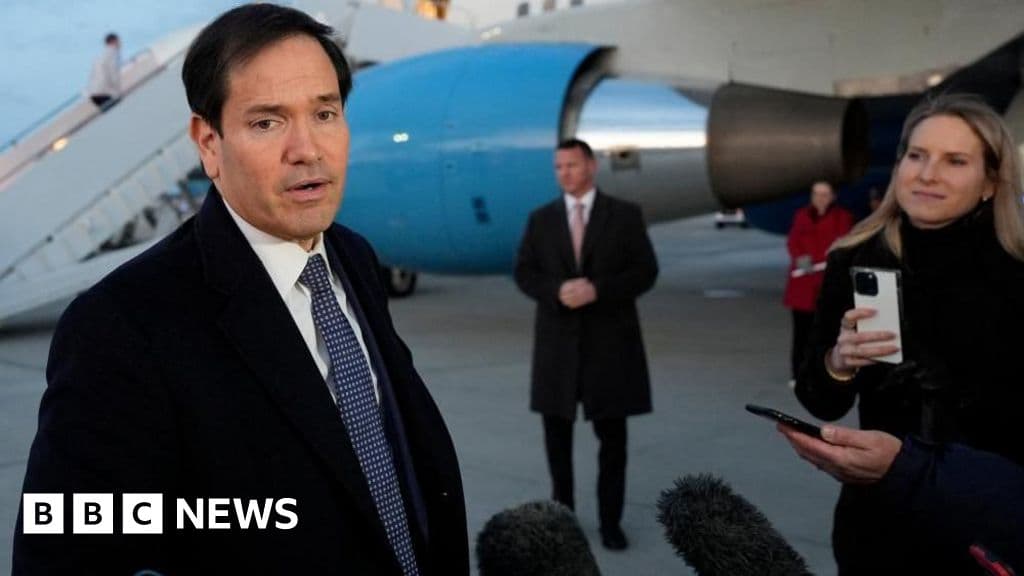
The diplomatic air in Munich is thick with tension as US Secretary of State Marco Rubio prepares to deliver a hard truth to European leaders: the comfortable security architecture of the past is obsolete.
This blunt assessment forces Europe to confront a reality where US protection is no longer guaranteed. It accelerates the continent's urgent need for strategic autonomy, fundamentally altering the dynamics of the NATO alliance and the broader Western partnership. Rubio’s comments serve as the opening salvo in what promises to be a contentious weekend of high-stakes diplomacy.
"The world is changing very fast right in front of us," Rubio declared upon his arrival. His words reflect the "America First" doctrine that has been reinvigorated under the current administration. The implication is clear: the United States will no longer bear the primary burden of global security. Europe must pay its way or face the consequences.
This message is not entirely new, but the tone has shifted from request to demand. The US delegation is expected to push for concrete commitments on defence spending, moving beyond the 2 per cent of GDP target that has long been a point of contention. For Germany and France, this means painful budget decisions at a time of domestic economic fragility.
The spectre of President Trump’s threat to annex Greenland continues to loom large. It is a symbol of an American foreign policy that views alliances as real estate deals rather than shared values. This incident has rattled the Scandinavian nations and served as a wake-up call to the rest of Europe that no territory or treaty is sacrosanct.
While Rubio is seen as more of a traditionalist than Vice President JD Vance, he is ultimately the messenger for a disruptive president. His task in Munich is to smooth over the roughest edges of Trump’s rhetoric while ensuring that the core message of "sovereignty" and "national interest" lands with impact.
As the conference begins, the question is not whether the transatlantic relationship can be saved, but what form it will take in this "new era." The era of automatic alignment is over. In its place, a more transactional, interest-based partnership is emerging.
For Europe, Rubio’s warning is a clarifying moment. The "old world" of American benevolence is gone. The new world requires a Europe that is strong enough to stand on its own two feet, regardless of who sits in the Oval Office.
Keep the conversation in one place—threads here stay linked to the story and in the forums.
Sign in to start a discussion
Start a conversation about this story and keep it linked here.
Other hot threads
E-sports and Gaming Community in Kenya
Active 9 months ago
The Role of Technology in Modern Agriculture (AgriTech)
Active 9 months ago
Popular Recreational Activities Across Counties
Active 9 months ago
Investing in Youth Sports Development Programs
Active 9 months ago



