We're loading the full news article for you. This includes the article content, images, author information, and related articles.
Reigning champion Elikana Rono leads Kenya's medal charge at the 25th Summer Deaflympics, but his quest for a second gold unfolds amid significant budget cuts and controversy surrounding Team Kenya's preparations.

NAIROBI, KENYA – Reigning men’s 800m Deaflympics champion Elikana Kiprop Rono is set to defend his title at the 25th Summer Deaflympics in Tokyo, Japan, leading a Kenyan contingent determined to assert its athletics prowess on the world stage. The games, scheduled to run from Friday, November 15 to Wednesday, November 26, 2025, will see the 25-year-old athlete aim for a historic back-to-back victory, a feat that would cement his dominance in the middle-distance event.
Rono secured his maiden international gold medal at the 2021 Deaflympics held in Caxias do Sul, Brazil, in May 2022, where he clocked an impressive 1:54.75. His victory was a highlight of Kenya's most successful outing at the games, where the nation topped the African charts and finished 12th globally with a record haul of 24 medals: five gold, seven silver, and 12 bronze.
As he prepares for Tokyo, Rono, who will be joined in the 800m by compatriots John Koech and Brian Kiptoo, has expressed confidence in Team Kenya's strategy to sweep the podium. "We have come up with an elaborate plan aimed at ensuring that Kenya dominate the race," Rono stated in a recent interview, acknowledging the stiff competition he faced from Spanish runner Jaime Martinez in Brazil.
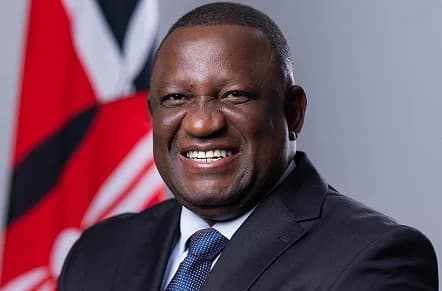
However, the journey to Tokyo for the broader Kenyan team has been fraught with challenges. The Ministry of Youth Affairs, Creative Economy and Sports confirmed a drastic 58% budget cut for the Deaflympics contingent, reducing the allocated funds from a proposed KSh 1 billion to KSh 419 million. This announcement, made on Tuesday, October 28, 2025, by Cabinet Secretary Salim Mvurya before the Senate Committee on Labour and Social Welfare, has had severe repercussions.
The funding shortfall forced the ministry to slash the number of participating disciplines from a planned twelve to just five: athletics, women's basketball, men's handball, golf, and swimming. Seven teams, including women's volleyball, women's football, cycling, and badminton, were dropped just weeks before the games, sparking allegations of mismanagement, favouritism, and betrayal from the affected federations. Initially, reports in early October suggested Kenya would debut in seven new sports, including cycling and badminton, but these plans were scuttled by the budget constraints.
During the Senate hearing, CS Mvurya attributed the challenges to internal wrangles within the Kenya Sports Federation of the Deaf (KSFD) and outstanding debts to the International Committee of Sports for the Deaf (ICSD), which he confirmed the ministry had since cleared. He assured the committee that safeguards were in place for the KSh 419 million budget and that 179 athletes were in residential training camps at Kasarani and Nyayo Stadiums.
Despite the administrative hurdles, Kenya's history at the Deaflympics, which dates back to 1997, provides a strong foundation for optimism. The nation has consistently improved its medal tally over the years, culminating in the record-breaking performance in Brazil. The athletics team, in particular, remains a cornerstone of Kenya's medal hopes.
In addition to Rono's title defence, the team features other seasoned athletes and promising newcomers. The squad was finalised after national trials at the Ulinzi Sports Complex in September 2025. To ensure fair play, the entire contingent has undergone intensive anti-doping education facilitated by the Anti-Doping Agency of Kenya (ADAK), a move welcomed by athletes and coaches aiming to protect Kenya's reputation.
As the Tokyo games approach, which also mark the 100th anniversary of the Deaflympics, the focus shifts to the resilience of athletes like Elikana Rono. His personal quest for a second gold medal now carries the added weight of national expectation, serving as a potential beacon of success amid a turbulent preparation period. The performance of the streamlined Team Kenya will be closely watched, not only as a measure of sporting achievement but also as a reflection of the state of support for disability sports in the country.
Keep the conversation in one place—threads here stay linked to the story and in the forums.
Sign in to start a discussion
Start a conversation about this story and keep it linked here.
Other hot threads
E-sports and Gaming Community in Kenya
Active 9 months ago
The Role of Technology in Modern Agriculture (AgriTech)
Active 9 months ago
Popular Recreational Activities Across Counties
Active 9 months ago
Investing in Youth Sports Development Programs
Active 9 months ago
Key figures and persons of interest featured in this article