We're loading the full news article for you. This includes the article content, images, author information, and related articles.
Robert Duvall, the Oscar-winning titan of cinema best known as the Corleone family's consigliere in The Godfather has died at 95, leaving behind a legacy of matchless versatility.
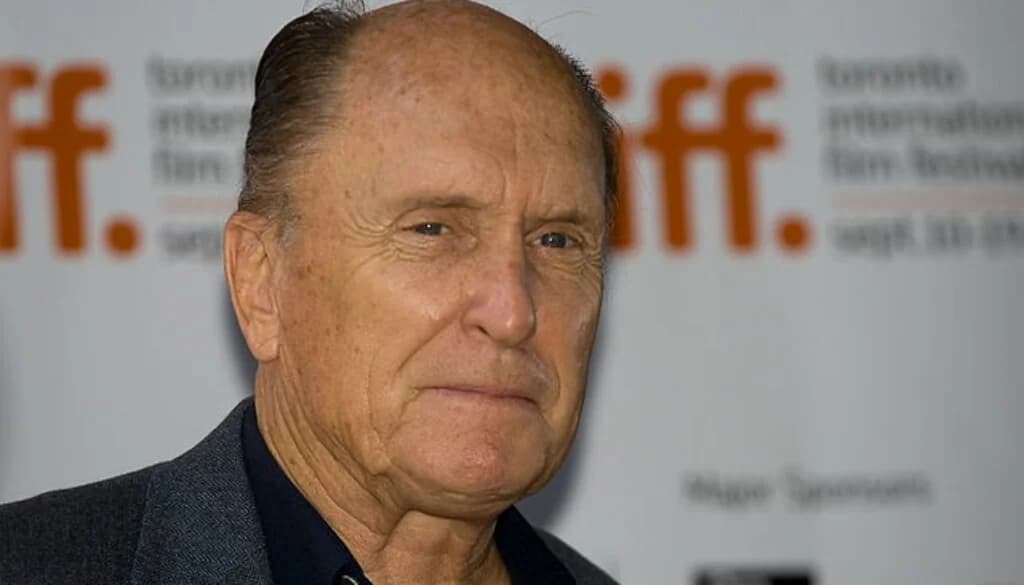
Hollywood has lost its most chameleonic giant. Robert Duvall, the actor who taught the world that silence could be louder than a scream, has died at his Virginia farm at the age of 95. From the Corleone compound to the open range, his seven-decade legacy leaves an indelible mark on the art of storytelling.
Robert Duvall, the Oscar-winning actor whose ability to vanish into his characters made him one of the most respected figures in the history of American cinema, has died. He was 95. His passing was confirmed by his wife, Luciana Pedraza, who stated that the screen legend died peacefully at their home in Middleburg, Virginia, on February 15, 2026. For a man who played consiglieres, cowboys, and dictators with equal verisimilitude, his exit was as understated as his finest performances—quiet, dignified, and surrounded by the land he loved.
Duvall’s death marks the severing of one of the last living links to the "New Hollywood" era of the 1970s, a period of gritty, character-driven filmmaking that redefined global cinema. While he may not have possessed the matinee idol looks of his contemporaries like Robert Redford or the explosive volatility of Al Pacino, Duvall commanded the screen with a terrifying, quiet authority. His face, weathered and intense, was a canvas upon which the anxieties and ambitions of the 20th century were painted.
To the Kenyan audience, Duvall is perhaps best immortalized as Tom Hagen, the adopted son and level-headed lawyer of the Corleone crime family in Francis Ford Coppola’s The Godfather (1972) and The Godfather Part II (1974). In a Nairobi video library culture that revered the mafia genre for its themes of loyalty and family, Duvall’s Hagen was the intellectual anchor—the man who spoke in whispers while others shouted. He was the distinct counterpoint to the hot-headed Sonny Corleone, proving that true power often resides in the ability to remain calm in the eye of the storm.
Yet, Duvall refused to be typecast. In 1979, he delivered one of the most quoted lines in film history as the surf-obsessed, napalm-loving Lieutenant Colonel Bill Kilgore in Apocalypse Now. "I love the smell of napalm in the morning," he declared, embodying the surreal madness of the Vietnam War. That role earned him an Oscar nomination and showcased his range: he could play the rational lawyer and the warmongering lunatic with equal conviction. It is this versatility that makes his filmography read like a history of modern American film: To Kill a Mockingbird (1962), M*A*S*H (1970), Network (1976), and The Great Santini (1979).
Duvall finally won the Academy Award for Best Actor for his role in Tender Mercies (1983), where he played Mac Sledge, a washed-up country singer finding redemption in rural Texas. He wrote his own songs for the film, singing them with a fragility that broke hearts worldwide. He didn't just act; he inhabited. He famously prepared for roles by observing the minutiae of human behavior—the way a person walked, the cadence of their speech, the slump of their shoulders.
In his later years, Duvall remained active, refusing to retire to the shadows. He directed and starred in The Apostle (1997), a tour de force performance as a charismatic but flawed Pentecostal preacher. The film was a passion project that he self-financed when Hollywood studios balked, proving his dedication to complex, difficult stories. His portrayal of relentless faith and human failing resonated deeply in religious nations like Kenya, where the line between the pulpit and the personal is often blurred.
Tributes have begun to pour in from across the globe, including from the Kenyan film fraternity, who recognize Duvall as a "textbook actor"—a man whose technique was invisible. He did not act for the applause; he acted for the truth. In an industry obsessed with celebrity, Duvall was obsessed with craft. He once famously criticized the "lazy" acting of some of his peers, believing that the audience deserved nothing less than total immersion.
As we bid farewell to Robert Duvall, we lose more than an actor; we lose a witness to the human condition. He showed us that villains could be loving fathers, that heroes could be deeply flawed, and that the quietest man in the room is often the one you should be watching. His body of work remains a masterclass, a library of emotions that will continue to educate and entertain long after the screen has gone dark.
Keep the conversation in one place—threads here stay linked to the story and in the forums.
Sign in to start a discussion
Start a conversation about this story and keep it linked here.
Other hot threads
E-sports and Gaming Community in Kenya
Active 9 months ago
The Role of Technology in Modern Agriculture (AgriTech)
Active 9 months ago
Popular Recreational Activities Across Counties
Active 9 months ago
Investing in Youth Sports Development Programs
Active 9 months ago



