We're loading the full news article for you. This includes the article content, images, author information, and related articles.
As Nairobi grapples with seasonal deluges, President Ruto pledges state intervention. Yet, questions persist over long-term urban planning and mitigation.
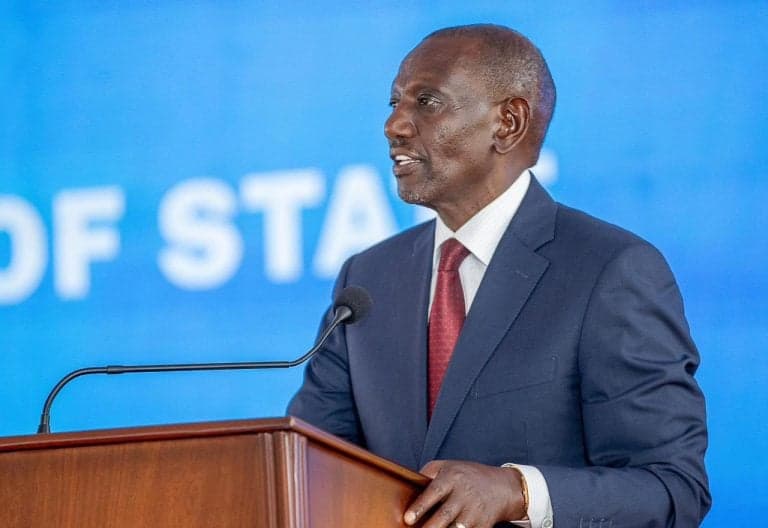
Rainwater cascaded through the streets of Nairobi this weekend, turning arterial roads into riverbeds and submerging low-lying residential zones in an all-too-familiar display of urban vulnerability. As residents across the capital scrambled to salvage possessions from rising tides, President William Ruto issued a directive for immediate government intervention, promising enhanced support for the thousands of citizens displaced by the deluge.
This latest meteorological crisis serves as a brutal reminder that for Nairobi, the onset of the long rains is not merely a seasonal shift, but a recurring test of the city's structural integrity. With livelihoods hanging in the balance and economic activity across the central business district grinding to a halt, the government faces mounting pressure to move beyond emergency relief and address the intractable policy failures that leave the city drowning in inches of water. At stake is not only the safety of vulnerable populations in informal settlements but the functional viability of Kenya's primary economic engine.
The meteorological data for March 2026 suggests that the intensity of these rains exceeds the capacity of the current drainage architecture, much of which was designed for a significantly smaller urban population. According to the Kenya Meteorological Department, the increased precipitation is a direct consequence of shifting weather patterns, exacerbated by urban heat island effects that disrupt local humidity cycles. The result is a phenomenon where the city’s drainage network, plagued by decades of poor maintenance and encroaching construction, is effectively bypassed.
These figures highlight a structural dependency on emergency aid rather than investment in climate-resilient infrastructure. While the President’s pledge to provide support is welcome by those currently wading through flooded corridors, urban planning experts argue that without a fundamental overhaul of land-use policies, the cycle of destruction will continue unabated.
The challenge of mitigating Nairobi’s floods is inseparable from the complexities of land ownership and enforcement. For years, the National Environment Management Authority has issued warnings against construction on riparian land, yet enforcement has remained inconsistent at best, and politically fraught at worst. The current situation demands that the executive branch balance the urgent humanitarian need for shelter with the hard reality that many of the most heavily affected areas were never zoned for residential occupancy.
Professor Samuel Kariuki, a specialist in urban sustainability at the University of Nairobi, notes that the government is operating in a reactive state. He argues that spending KES 200 million on emergency relief is a necessary moral obligation, but it pales in comparison to the projected KES 5 billion required for a comprehensive overhaul of the city’s storm-water drainage system. The question for the administration is whether it can summon the political capital required to remove structures illegally erected on floodplains, a move that would displace thousands but arguably save lives and property in the long term.
Nairobi is not alone in its struggle. Mega-cities across the developing world, from Jakarta to Lagos, are currently recalibrating their urban strategies to cope with extreme weather driven by climate instability. Successful case studies from cities that have mitigated similar risks often share a common strategy: the integration of "green infrastructure." This involves the restoration of wetlands and the creation of urban parks designed specifically to act as natural retention basins for excess water.
For the Kenyan government, the path forward requires a shift from viewing flooding as a localized disaster to treating it as a national economic threat. This involves:
As the skies over Nairobi remain overcast and additional rainfall is predicted for the coming week, the immediate focus is indeed on saving lives. However, the true measure of the government’s response will be determined not by the speed of its initial relief efforts, but by whether this event serves as the catalyst for the structural reforms that the capital has ignored for far too long. Citizens are left to wonder if the next season will bring the same devastation, or if the current crisis will finally force a break from the cycle of recurring ruin.
Keep the conversation in one place—threads here stay linked to the story and in the forums.
Sign in to start a discussion
Start a conversation about this story and keep it linked here.
Other hot threads
E-sports and Gaming Community in Kenya
Active 10 months ago
Popular Recreational Activities Across Counties
Active 10 months ago
The Role of Technology in Modern Agriculture (AgriTech)
Active 10 months ago
Investing in Youth Sports Development Programs
Active 10 months ago



