We're loading the full news article for you. This includes the article content, images, author information, and related articles.
A groundbreaking Sh7.3 billion pact backed by the UN and IKEA Foundation aims to reverse ecological collapse in the nation’s breadbasket.
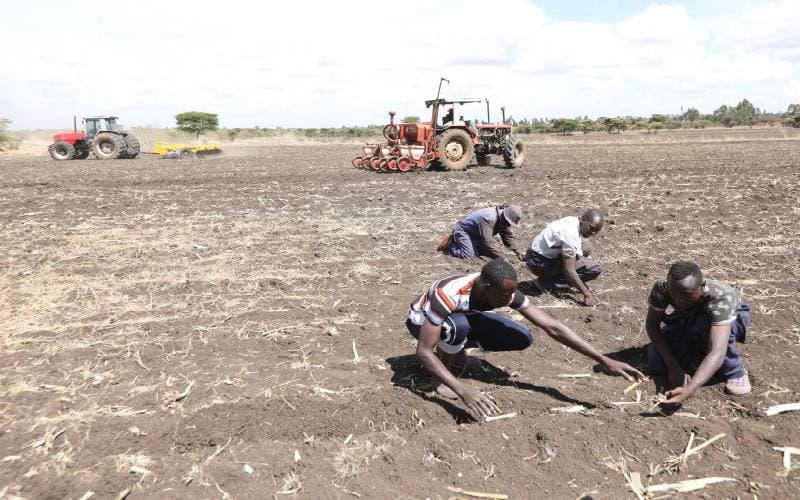
In a historic move to avert a looming ecological and economic disaster, ten governors from Kenya’s breadbasket have signed a pact to overhaul the region’s food systems. The Sh7.35 billion (USD 57 million) initiative, backed by the United Nations and the IKEA Foundation, seeks to reverse years of environmental degradation that threatens to starve the nation.
The "True Value of Food Project" comes at a critical juncture. Data from the United Nations Environment Programme (UNEP) reveals a terrifying reality: the river networks in the Mau Forest Complex—the water tower that feeds these counties—have shrunk from 7,000 kilometers in the 1960s to a mere 4,000 kilometers today. This collapse in water infrastructure is not just an environmental statistic; it is a direct threat to the 28.5% of Kenya’s total agricultural output that these counties provide.
Led by Professor Jacqueline McGlade of Strathmore University, the project aims to expose and mitigate the "hidden costs" of food production—soil acidification, water depletion, and health burdens—that are currently unaccounted for in market prices. "We are currently borrowing from the future to eat today," McGlade warned stakeholders in Nairobi. "If we do not change how we value our food systems, we will bankrupt our soil and our children."
The ten counties involved—Baringo, Bomet, Elgeyo Marakwet, Kericho, Nakuru, Nandi, Narok, Trans Nzoia, Uasin Gishu, and West Pokot—represent the spine of Kenya’s food security. The initiative will focus on:
The stakes could not be higher. With erratic rainfall patterns already wreaking havoc on maize yields in Trans Nzoia, this project is less about policy and more about survival. By integrating the economic value of nature into county planning, these leaders hope to create a resilient model that can withstand the climate shocks of the next decade. Success here means a fed nation; failure implies a hungry, unstable future.
As the project rolls out, the eyes of the agricultural world are on the Rift Valley. It is a bold experiment in sustainability that attempts to prove one can indeed put a price on nature—and that the cost of doing nothing is far too high to pay.
Keep the conversation in one place—threads here stay linked to the story and in the forums.
Sign in to start a discussion
Start a conversation about this story and keep it linked here.
Other hot threads
E-sports and Gaming Community in Kenya
Active 10 months ago
The Role of Technology in Modern Agriculture (AgriTech)
Active 10 months ago
Popular Recreational Activities Across Counties
Active 10 months ago
Investing in Youth Sports Development Programs
Active 10 months ago



