We're loading the full news article for you. This includes the article content, images, author information, and related articles.
New government data exposes a deadly divide: while Wajir remains the safest, Nairobi and Nakuru are grappling with a disturbing surge in homicides and femicide.
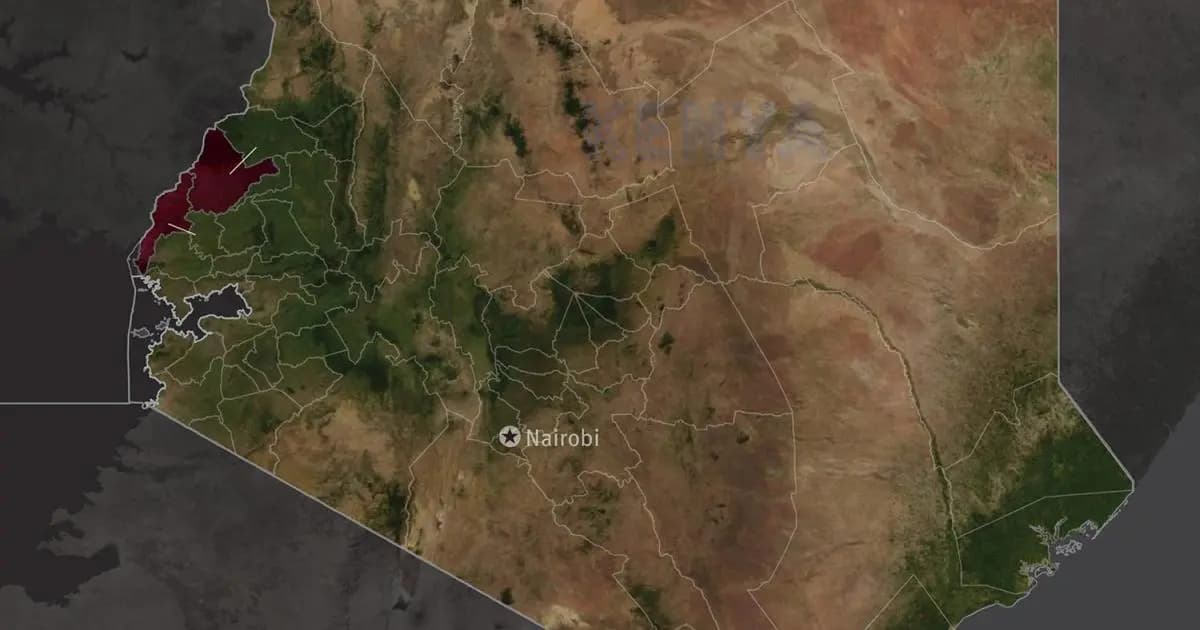
For the family of Jane Wambui Njoroge, a dedicated clinical officer in Naivasha, the statistics released this morning are not just numbers on a page—they are a painful echo of a life stolen. In July, Jane’s body was discovered in a shallow grave within her own compound, allegedly murdered by a trusted domestic worker. Her death is one of over 3,000 homicides recorded in the last year, a grim tally that anchors the newly released Economic Survey 2025.
The report, unveiled today by the Kenya National Bureau of Statistics (KNBS) in Nairobi, paints a stark picture of public safety. While overall crime rates have seen a marginal decline, the intensity of violent crime in specific urban centers has reached alarming levels. The data reveals a clear geographic split: if you live in Nairobi, Nakuru, or Kiambu, your risk of falling victim to homicide is significantly higher than in the arid north.
According to the report, five counties account for a disproportionate share of the country's murder cases. Nairobi continues to lead the grim ranking, driven by its high population density and inequality. However, it is the rise of Nakuru and Meru that has security analysts most concerned.
"We are seeing a shift from opportunistic crime to interpersonal violence," noted John Kinuthia, a security analyst and chairperson of a Naivasha-based gender violence monitor. "In counties like Nakuru, the home is becoming as dangerous as the street. The case of Jane Wambui is tragic, but it is not isolated."
The 2025 data highlights a disturbing trend that has sparked national outrage: the targeted killing of women. The report indicates that a significant percentage of homicides in Nakuru and Nairobi were domestic in nature. The tragic death of Jane Wambui, and the discovery of other victims in similar circumstances earlier this year, underscores a crisis that legislation alone has failed to curb.
While the Directorate of Criminal Investigations (DCI) has improved its homicide clearance rate—solving more cases than in previous years—the preventative mechanisms remain weak. "Detectives are doing their job after the fact," said a senior police source who spoke on condition of anonymity. "But we need community policing and social interventions to stop these disputes before they turn fatal."
In a surprising contrast, the counties often associated with insecurity in the public imagination—such as Wajir and Mandera—were ranked as the safest in terms of reported homicides and general crime. Wajir County recorded the lowest number of total crimes reported to police, with just 358 incidents in the entire year.
However, experts warn that these low figures may reflect a different reality: the use of traditional justice systems (Maslaha) to resolve conflicts outside the police stations. "In the north, a murder might be resolved through camel compensation rather than a court case," explains socio-economist Dr. Hassan Malik. "So while the police docket looks clean, the reality on the ground is nuanced."
As the sun sets on another year, the numbers serve as a cold wake-up call. For the government, the challenge is no longer just about funding the police—it is about addressing the social fractures in Nairobi and Nakuru that are turning arguments into funerals.
Keep the conversation in one place—threads here stay linked to the story and in the forums.
Sign in to start a discussion
Start a conversation about this story and keep it linked here.
Other hot threads
E-sports and Gaming Community in Kenya
Active 10 months ago
Popular Recreational Activities Across Counties
Active 10 months ago
The Role of Technology in Modern Agriculture (AgriTech)
Active 10 months ago
Investing in Youth Sports Development Programs
Active 10 months ago



