We're loading the full news article for you. This includes the article content, images, author information, and related articles.
After 3,200 years in the dust, two 14-meter pharaohs rise again in Luxor—a masterclass in heritage tourism that Kenya can learn from.
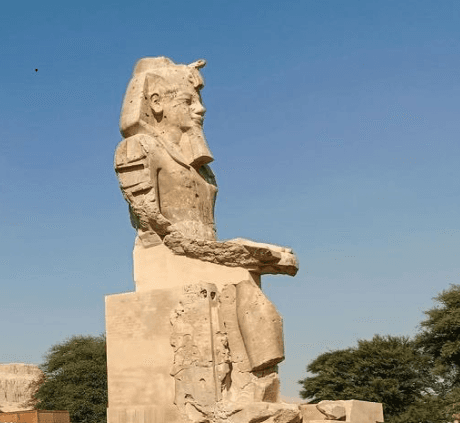
LUXOR — The earth shook in 1200 BC, toppling the giants of Thebes and burying a king’s legacy in the dust. On Sunday, December 14, 2025, they stood tall once more.
In a spectacle that merged ancient grandeur with modern economic ambition, Egypt unveiled two restored colossal statues of Pharaoh Amenhotep III on the West Bank of Luxor. Standing 14 meters high and carved from alabaster, these twin monuments are not just a triumph of archaeology—they are the latest weapons in Egypt’s aggressive campaign to dominate global tourism.
For centuries, these statues lay in thousands of fragmented pieces, victims of a catastrophic earthquake that leveled the Funerary Temple of Amenhotep III three millennia ago. Their resurrection is the result of a painstaking 20-year mission led by the Egyptian-German archaeological team under Dr. Hourig Sourouzian.
“Today we are celebrating the finishing and the erecting of these two colossal statues,” said Mohamed Ismail, Secretary-General of the Supreme Council of Antiquities, speaking at the site. He described the project as an attempt to “revive how this funerary temple looked a long time ago.”
The restoration process was less like construction and more like solving a three-dimensional jigsaw puzzle weighing hundreds of tons. The team recovered dispersed blocks from fields and sand, reassembling the King—who ruled during Egypt’s “Golden Age” (1390–1353 BC)—to once again flank the temple entrance alongside the famous Colossi of Memnon.
While the history is mesmerizing, the motive is monetary. Egypt is currently chasing a target of 30 million tourists annually by 2028. For context, the country welcomed approximately 15 million visitors in the first nine months of 2025 alone.
Minister of Tourism and Antiquities Sherif Fathy, who presided over the ceremony, was clear about the stakes. He framed the unveiling as a critical step in “solidifying Luxor’s standing as a premier global cultural destination.”
The numbers back him up. In 2024, Egypt’s tourism sector generated a record $15.3 billion (approx. KES 1.98 trillion). This revenue stream provides a crucial buffer for the Egyptian economy, funding infrastructure and stabilizing the currency.
For a Kenyan observer, the events in Luxor offer a sobering contrast. While Egypt aggressively monetizes its history—turning every stone and statue into a visitor attraction—Kenya often struggles to fully leverage its own rich heritage beyond the beach-and-bush circuit.
Consider the data:
While Kenya boasts world-class heritage sites like Fort Jesus and the Gedi Ruins, they lack the high-profile restoration and marketing machinery seen in Luxor. Analysts argue that if Kenya applied similar rigor to its historical assets, the tourism sector could reduce its reliance on seasonal wildlife migration.
“These works represent a major achievement,” Minister Fathy noted as the sun set over the West Bank. “They reaffirm Egypt’s commitment to protecting its cultural heritage.”
It is a commitment that pays dividends. As the alabaster giants of Amenhotep III catch the morning sun for the first time in 3,000 years, they serve as a reminder: heritage is not just about the past. It is a bankable asset for the future.
Keep the conversation in one place—threads here stay linked to the story and in the forums.
Sign in to start a discussion
Start a conversation about this story and keep it linked here.
Other hot threads
E-sports and Gaming Community in Kenya
Active 9 months ago
The Role of Technology in Modern Agriculture (AgriTech)
Active 9 months ago
Popular Recreational Activities Across Counties
Active 9 months ago
Investing in Youth Sports Development Programs
Active 9 months ago