We're loading the full news article for you. This includes the article content, images, author information, and related articles.
A massive wave of Russian strikes across eleven Ukrainian regions has claimed five lives and severely damaged critical energy infrastructure.
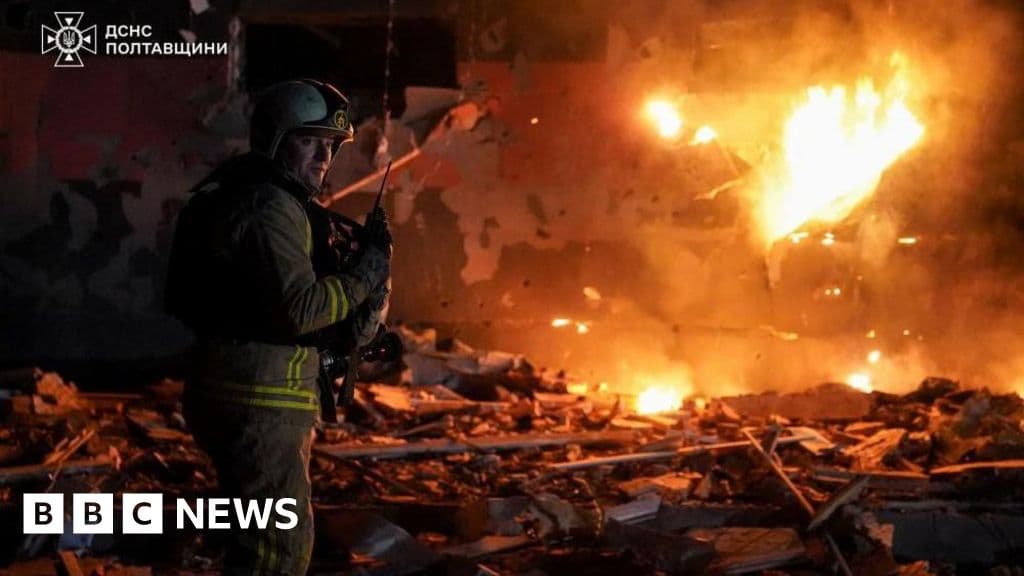
The dawn over Kharkiv on Tuesday brought not the first light of day, but the relentless, mechanical hum of an aerial swarm that shattered the silence and left a nation reeling. In a strategic escalation that marks one of the most intense bombardments in the last ten days, Russian forces launched an unprecedented wave of missiles and suicide drones across eleven Ukrainian regions, claiming at least five lives and plunging critical infrastructure into darkness.
This is not merely another chapter in an ongoing conflict it is a fundamental shift in the geometry of the war. By deploying hundreds of unmanned aerial vehicles in a single coordinated operation, Moscow has forced a re-evaluation of Ukraine’s defense exhaustion. For the citizens of Kharkiv, Zaporizhzhia, Kherson, and Poltava, the reality of the war is measured in destroyed power stations and the loss of life, including a 61-year-old woman killed when a drone struck an electric train in Kharkiv. The strategic focus on energy infrastructure suggests a deliberate attempt to degrade Ukraine’s capacity to function as an independent state, extending the reach of the conflict far beyond the front lines.
The scale of the attack has sent shockwaves through military analysis circles. The Ukrainian Air Force, in a formal statement released on Telegram, detailed a harrowing composition of the aerial assault that highlights the evolving nature of the battlefield. The sheer volume of incoming threats—particularly the drone swarms—appears designed to saturate and exhaust Ukrainian air defense systems, forcing them to expend high-value interceptors on lower-cost, disposable hardware.
While the Ukrainian Air Force reported a high interception rate for the drone fleet, the sheer saturation meant that dozens of munitions struck their intended targets. This tactic of "saturation bombing" creates a dilemma for Ukrainian commanders: prioritize the defense of major metropolitan centers and leave industrial hubs exposed, or risk thin coverage across the entire country. The damage to eleven regions simultaneously confirms that the Russian strategy has pivoted toward broad-spectrum degradation of domestic stability.
The implications of this strike extend well beyond Ukraine’s borders. The targeting of energy infrastructure resulted in the immediate disconnection of Moldova’s key power link with Europe, a development that President Maia Sandu of Moldova described as a situation remaining fragile. This serves as a stark reminder that the energy grid of Eastern Europe is interconnected when a substation in Ukraine fails, the ripple effect is felt in neighboring capitals.
For the average consumer in Chisinau or Kyiv, the threat of blackouts is no longer a seasonal annoyance—it is a chronic, existential vulnerability. As Russia continues to chip away at the transformer stations and distribution hubs, the cost of reconstructing these systems grows exponentially. Current estimates suggest that the long-term cost to stabilize the regional energy grid will run into the billions of dollars, creating a fiscal burden that will require sustained international financial assistance for years to come.
Readers in Nairobi might ask why a conflict in Eastern Europe warrants such intense scrutiny. The answer lies in the globalized nature of energy and commodity markets. When critical energy infrastructure is targeted in a major food-producing and industrial nation, the resulting volatility ripples through global supply chains. For Kenya, where inflationary pressures are frequently tied to global fuel prices and the cost of imported inputs, a massive destabilization in Eastern Europe acts as an accelerant for price hikes.
Energy instability in Eastern Europe creates upward pressure on global oil and gas prices. If energy costs rise, shipping and logistics costs for Kenyan exporters—particularly in the horticulture and tea sectors—inevitably follow suit. Furthermore, the destruction of infrastructure in Ukraine threatens the stability of food exports, potentially tightening the supply of grain on the global market. While the conflict feels geographically distant, the economic tether is tight. Policymakers at the Central Bank of Kenya and within the Ministry of Finance closely monitor these surges, as they directly dictate the cost of living for millions of Kenyans who are already navigating a complex macroeconomic environment.
The humanitarian toll of this latest offensive is the most immediate tragedy. President Volodymyr Zelensky, who had warned of a forthcoming massive strike in his nightly address, now faces the grim reality of a citizenry that has become accustomed to the sound of sirens. The death toll, while currently confirmed at five, is expected to climb as rescue teams pick through the rubble of residential and infrastructure sites across the targeted regions.
The resilience of the Ukrainian public remains a focal point of international observation, yet there are growing concerns about the limits of that endurance. With energy access becoming increasingly erratic, the approaching months will prove critical. If the current trajectory of these high-frequency, high-volume strikes continues, the international community will be forced to reconsider not just the quantity of military aid, but the specific nature of the defense systems provided to secure civilian infrastructure from aerial saturation.
As the smoke clears over Kharkiv and authorities begin the arduous process of damage assessment, the broader question remains: can the current defense architecture hold, or is the region entering a new, darker phase of attrition where infrastructure is the primary casualty? The answer will define the security landscape of the coming year.
Keep the conversation in one place—threads here stay linked to the story and in the forums.
Sign in to start a discussion
Start a conversation about this story and keep it linked here.
Other hot threads
E-sports and Gaming Community in Kenya
Active 10 months ago
The Role of Technology in Modern Agriculture (AgriTech)
Active 10 months ago
Popular Recreational Activities Across Counties
Active 10 months ago
Investing in Youth Sports Development Programs
Active 10 months ago



