We're loading the full news article for you. This includes the article content, images, author information, and related articles.
ODM Deputy Leader Godfrey Osotsi rejects forced support for President Ruto, deepening the rift within the opposition party ahead of 2027.
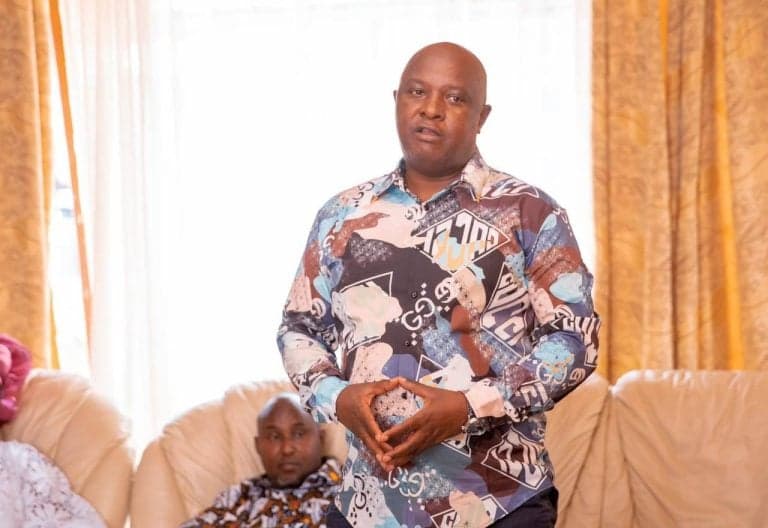
The shotgun wedding between ODM and UDA is facing a rocky reception. Vihiga Senator and ODM Deputy Party Leader Godfrey Osotsi has drawn a line in the sand, categorically ruling out any "forced support" for President William Ruto, exposing the widening cracks within the Orange party.
As the top brass of ODM cozies up to the government in the name of a "broad-based" arrangement, Osotsi has emerged as the voice of the defiant grassroots. His refusal to blindly follow the handshake script complicates the carefully laid plans for a 2027 coalition, proving that you can sign a deal in the boardroom, but you still have to sell it in the village.
Speaking with characteristic fire, Osotsi rejected the notion that ODM is now a subsidiary of the ruling party. "We are an independent party with a distinct ideology," he thundered. "We cannot be forced to clap for a government that is overtaxing our people." His stance resonates with the party’s loyal base, who feel disoriented by the sudden shift from resistance to collaboration.
Osotsi’s friction with the pro-government faction—led by figures who have already taken Cabinet slots—highlights a battle for the soul of ODM. Is it still the party of the people, or has it become a shield for the state?
Osotsi is a numbers man, and his calculation is simple: hugging an unpopular government is political suicide. He warned that if Ruto does not deliver by March 2026, the deal is off. This ultimatum throws a spanner in the works for the UDA strategists who assumed the opposition was neutralized.
"We donated experts to save the country from anarchy, not to become cheerleaders," Osotsi clarified. This distinction is crucial. It allows him to keep one foot in the opposition while his colleagues enjoy the trappings of power.
As 2027 draws nearer, the pressure on "rebels" like Osotsi to fall in line will intensify. But for now, he stands as a reminder that in Kenyan politics, loyalty is expensive, and the price has not yet been fully paid. The Orange party house is not just divided; it is under renovation, and the architects cannot agree on the blueprint.
Keep the conversation in one place—threads here stay linked to the story and in the forums.
Sign in to start a discussion
Start a conversation about this story and keep it linked here.
Other hot threads
E-sports and Gaming Community in Kenya
Active 10 months ago
The Role of Technology in Modern Agriculture (AgriTech)
Active 10 months ago
Popular Recreational Activities Across Counties
Active 10 months ago
Investing in Youth Sports Development Programs
Active 10 months ago
Key figures and persons of interest featured in this article