We're loading the full news article for you. This includes the article content, images, author information, and related articles.
Russian President Vladimir Putin, in his annual press conference, reiterated that peace is possible only on Moscow's stringent terms, leaving little room for immediate diplomatic breakthroughs.
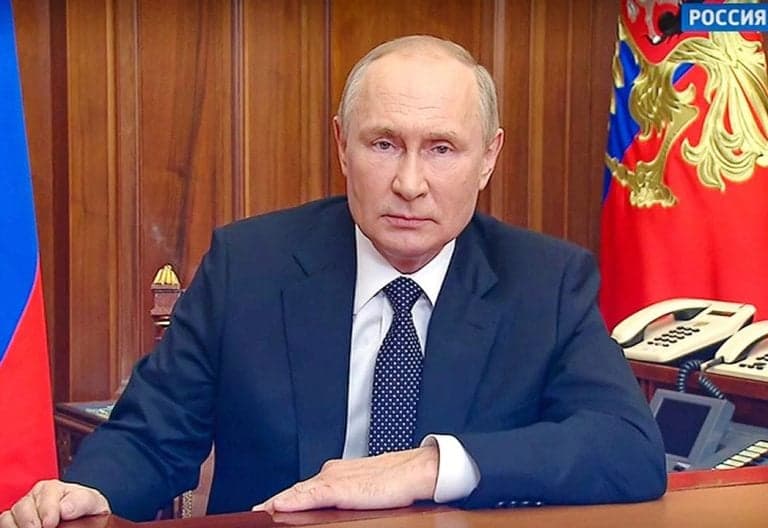
Russian President Vladimir Putin on Friday declared that Moscow is ready for a peaceful end to the war in Ukraine, but firmly restated a set of uncompromising demands that Kyiv has consistently rejected. Speaking at his marathon year-end news conference, Putin emphasized that Russia's core conditions, first laid out in June 2024, remain unchanged.
This uncompromising stance signals that despite ongoing diplomatic overtures, the nearly four-year conflict is far from a resolution that would satisfy both sides. For Kenyans, the continuation of the war means sustained pressure on the prices of essential goods, as the conflict continues to disrupt global supply chains.
President Putin's conditions for a ceasefire and the start of negotiations are extensive and touch on Ukraine's sovereignty and territorial integrity. He insisted that any peaceful resolution must address what he termed the "root causes" of the crisis. The key demands include:
Ukrainian President Volodymyr Zelenskyy has repeatedly stated these terms are unacceptable, viewing them as a demand for capitulation. Western leaders have echoed this sentiment, with U.S. and European officials arguing that Putin is in no position to make such demands on a sovereign nation.
While the frontlines are thousands of kilometres away, the economic war hits home. The conflict has significantly disrupted global supplies of wheat, fertilizer, and fuel, commodities crucial to Kenya's economy. Kenya imports a significant portion of its wheat from both Russia and Ukraine. The war-induced price shocks have been a major driver of the high cost of living, affecting everything from the price of bread to transport fares. President William Ruto has acknowledged the war's immense impact on the disruption of supply chains for grains and fertilisers.
The Kenyan government has shifted its foreign policy to a more neutral stance on the conflict, aligning with the African Group's non-aligned position, a change from its initial strong condemnation of the invasion. This diplomatic shift comes as the country navigates the complex economic and geopolitical fallout. More directly, the conflict has drawn in Kenyan nationals, with reports suggesting over 200 may be fighting for Russia, lured by recruitment networks.
Despite Putin's assertion that he sees "certain signals" from Kyiv about a readiness for dialogue, his public demands leave little common ground. International reactions have been skeptical, with leaders from Germany, Poland, and the U.S. insisting that any meaningful negotiations can only begin after a complete and unconditional ceasefire—a step Moscow has not agreed to. While diplomatic efforts, including a U.S.-led peace plan, are ongoing, the gap between the two sides' fundamental positions remains vast. Putin claimed his forces have seized the "strategic initiative" on the battlefield, suggesting he sees little reason to soften his terms now.
For now, the prospect of a lasting peace remains distant. As world leaders continue to navigate the impasse, the economic consequences will continue to ripple outwards, felt keenly in the markets and homes of Nairobi and across Kenya.
Keep the conversation in one place—threads here stay linked to the story and in the forums.
Sign in to start a discussion
Start a conversation about this story and keep it linked here.
Other hot threads
E-sports and Gaming Community in Kenya
Active 9 months ago
The Role of Technology in Modern Agriculture (AgriTech)
Active 9 months ago
Popular Recreational Activities Across Counties
Active 9 months ago
Investing in Youth Sports Development Programs
Active 9 months ago



