We're loading the full news article for you. This includes the article content, images, author information, and related articles.
President Ruto disburses KES 708 million to over 10,000 youth entrepreneurs via the NYOTA program, aiming to spark a grassroots business revolution.
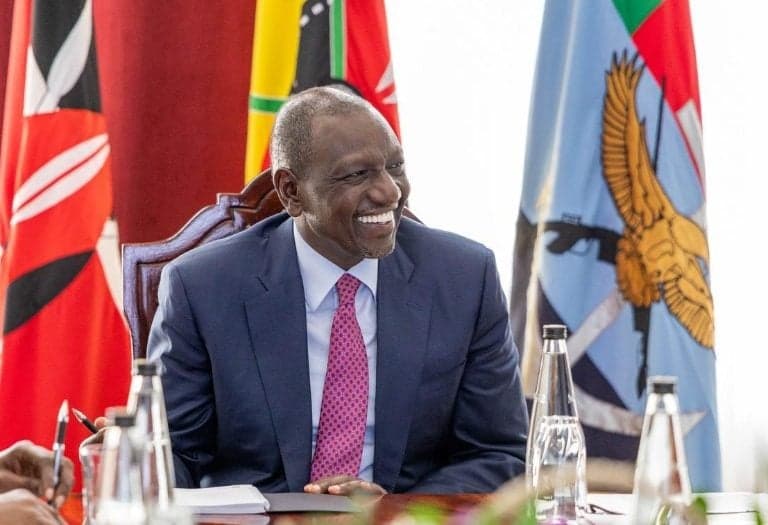
President William Ruto has launched an aggressive financial offensive against youth unemployment, disbursing over KES 708 million to youth groups across the country. In a high-energy event in Meru, the Head of State termed the "NYOTA" program a game-changer that will transform "job seekers into job creators."
The National Youth Opportunities Towards Advancement (NYOTA) project is the government’s answer to the ticking time bomb of youth joblessness. By injecting direct capital into the hands of 10,337 young entrepreneurs, the state hopes to ignite a grassroots economic revolution. Each beneficiary will receive KES 25,000—a sum that might seem modest to the corporate class but is a lifeline for a young person in Nyeri or Kilifi looking to stock a kiosk or buy a welding machine.
The disbursement model is strictly digital, leveraging Kenya’s world-leading mobile money ecosystem. [...](asc_slot://start-slot-17)Of the KES 25,000, KES 22,000 hits the beneficiary’s "Pochi la Biashara" for immediate business use, while KES 3,000 is automatically channeled to NSSF. This "forced savings" component is a masterstroke, integrating the informal sector into the social security net—a long-term goal of the Kenya Kwanza administration.
"We are not just giving you fish; we are giving you the net and the boat," Ruto told the cheering crowd at Kinoru Stadium. The President urged the youth to exploit these grants with discipline, warning that this is not "free money" for luxury, but seed capital for the future. He cited success stories from the first cohort, where young Kenyans turned similar grants into thriving agribusinesses.
Economists predict that this injection of nearly three-quarters of a billion shillings will have a multiplier effect on the local economy. When a young carpenter in Meru buys timber, the lumberyard benefits, the transporter earns, and the taxman eventually collects. It is Bottom-Up economics in its purest form.
However, the challenge remains sustainability. Will these businesses survive past the first year? The government’s monitoring mechanisms will be put to the test. But for today, 10,000 young Kenyans have a reason to hope, and KES 25,000 to start building a dream.
Keep the conversation in one place—threads here stay linked to the story and in the forums.
Sign in to start a discussion
Start a conversation about this story and keep it linked here.
Other hot threads
E-sports and Gaming Community in Kenya
Active 9 months ago
The Role of Technology in Modern Agriculture (AgriTech)
Active 9 months ago
Popular Recreational Activities Across Counties
Active 9 months ago
Investing in Youth Sports Development Programs
Active 9 months ago