We're loading the full news article for you. This includes the article content, images, author information, and related articles.
Five years after a catastrophic port explosion shattered Beirut, Pope Leo XIV's visit amplifies a nation's cry for truth and accountability amid a stalled investigation.
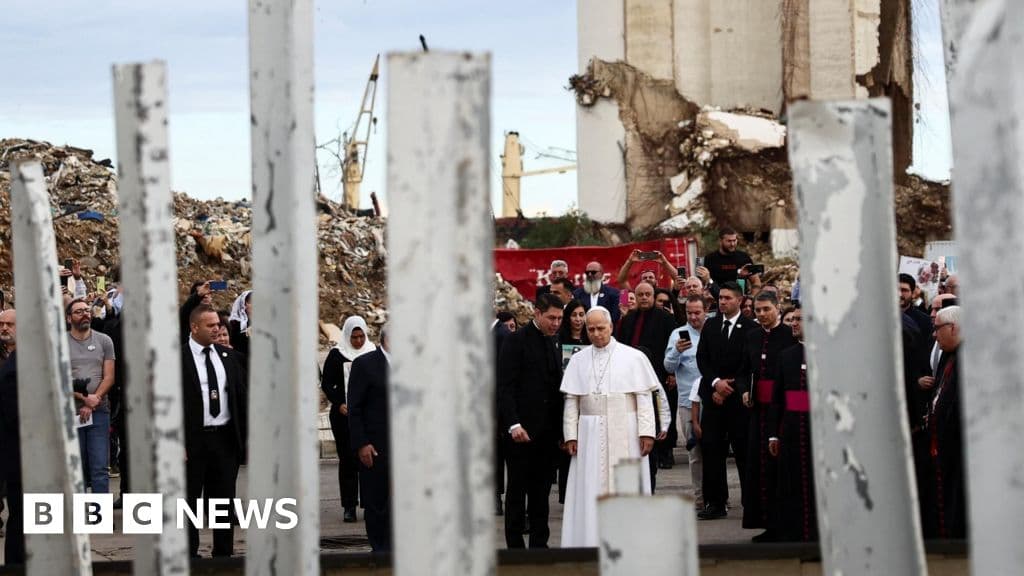
Pope Leo XIV delivered a powerful, silent prayer at the site of the Beirut port explosion Tuesday, a solemn demand for justice on the final day of his visit to Lebanon. Before the hollowed-out grain silos that have become a monument to the tragedy, he met with relatives of the 218 people killed in the blast of August 4, 2020.
The Pope's visit injects renewed urgency into a case that has become a symbol of systemic failure. Five years on, no one has been held accountable for one of the largest non-nuclear explosions in history, a disaster that wounded over 7,000 and left much of the capital in ruins.
The domestic investigation has been repeatedly obstructed by political interference, with officials using legal challenges and claims of immunity to avoid scrutiny. "We know that he raises his voice for justice, and we need justice for our brothers and all the victims of this explosion," noted Cecile Roukoz, who lost her brother Joseph in the disaster.
The explosion was triggered when a fire detonated 2,750 tonnes of ammonium nitrate, a highly combustible material used in fertilisers and explosives, which had been stored unsafely at the port for nearly six years. It is widely believed that senior officials were aware of the immense danger but failed to act. For families of the victims, the Pope's presence is a crucial acknowledgment of their pain. Tatiana Hasrouty, who lost her father, Ghassan, explained, "He's trying to help us find the truth... We, the families, now, after five years, we need people to look at us."
Later, the Pope remarked he was "deeply moved" by the visit and shared "the thirst for truth and justice, of so many families, of an entire country."
The tragedy in Beirut serves as a stark global reminder of the catastrophic consequences of negligence in handling hazardous materials. While distant, the echoes of such a failure raise critical questions for every nation, including Kenya. The proper storage and management of industrial and agricultural chemicals at vital hubs like the Port of Mombasa is governed by regulations such as the Occupational Safety and Health Act of 2007. This act mandates safe work systems and the provision of information and training to prevent workplace accidents, forming a critical line of defense against such a disaster occurring on home soil.
The path to accountability remains uncertain. However, with the world's attention drawn once more to Beirut's waterfront, the families' quest for justice has been cast into the global spotlight, a burden shared by a pontiff and amplified for all to see.
Keep the conversation in one place—threads here stay linked to the story and in the forums.
Sign in to start a discussion
Start a conversation about this story and keep it linked here.
Other hot threads
E-sports and Gaming Community in Kenya
Active 9 months ago
The Role of Technology in Modern Agriculture (AgriTech)
Active 9 months ago
Popular Recreational Activities Across Counties
Active 9 months ago
Investing in Youth Sports Development Programs
Active 9 months ago



