We're loading the full news article for you. This includes the article content, images, author information, and related articles.
Islamist groups in Bangladesh mobilize for the February elections, aiming to capitalize on the political vacuum and reshape the country’s future.
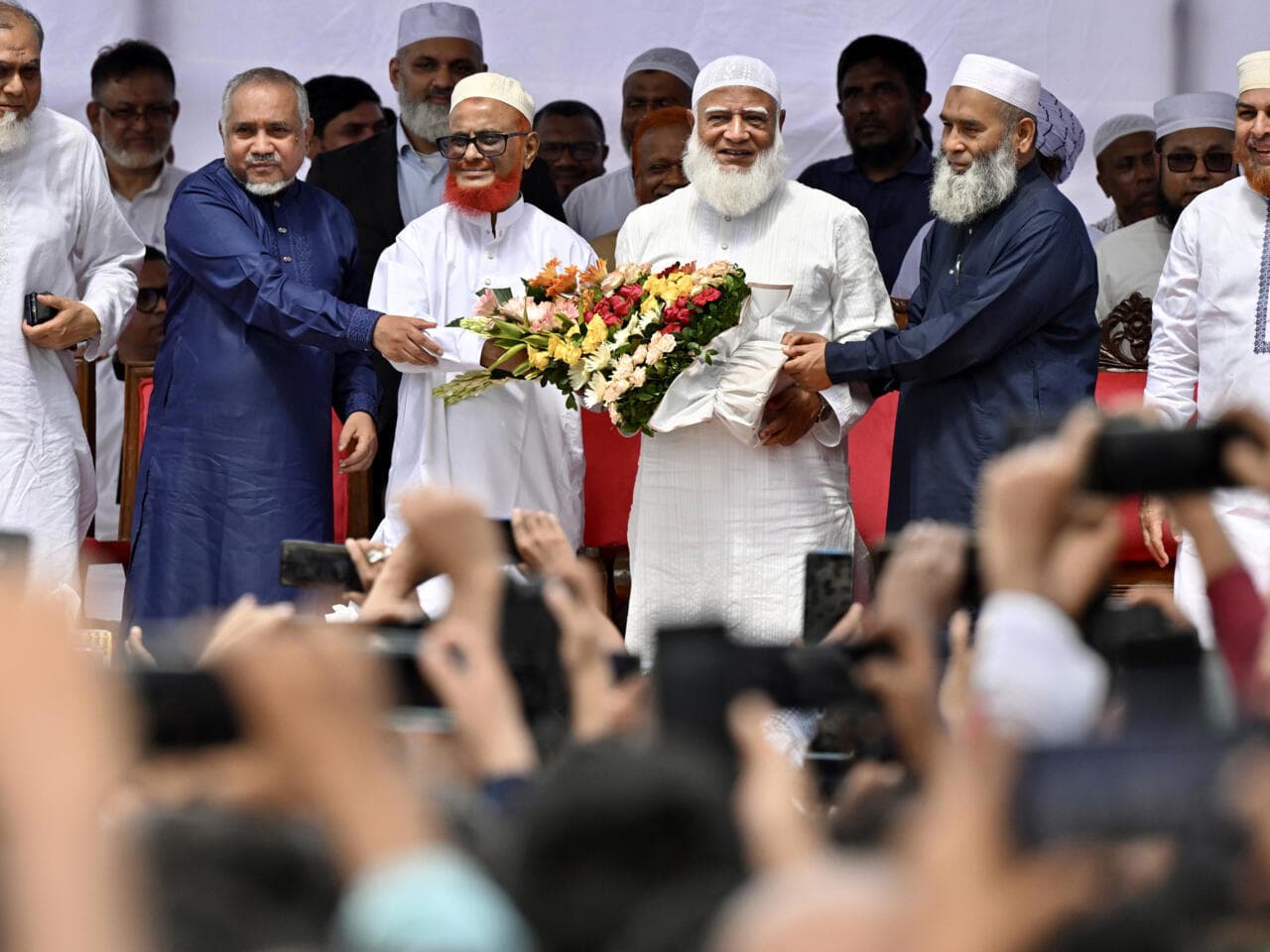
After years on the political margins, Islamist parties in Bangladesh are mounting their most ambitious comeback in decades, emboldened by a rapidly shifting political landscape ahead of February’s national elections.
The collapse of the previous secular-dominated order has created a power vacuum—one that religious parties believe they are uniquely positioned to fill. From Dhaka to regional strongholds, Islamist groups have re-emerged with mass rallies, sharpened messaging, and a promise to restore moral order in a country exhausted by corruption, economic strain, and political instability.
At the forefront of this resurgence is Jamaat-e-Islami, the most organised Islamist movement in Bangladesh. Once sidelined by bans, court rulings, and sustained state pressure, the party is now mobilising openly, framing itself as a disciplined alternative to what it calls decades of elite misrule.
The upcoming elections—widely viewed as a reset moment—follow the dramatic weakening of the previous governing structure, long associated with secular nationalism and strongman politics. With traditional parties fractured and public trust eroded, Islamist groups see a rare opening to reinsert themselves into mainstream politics.
At recent rallies, Jamaat leaders have promised “justice, accountability, and Islamic governance,” tapping into popular anger over graft, unemployment, and perceived moral decay. Organisers claim attendance in the tens of thousands, a visible contrast to years when Islamist mobilisation was tightly constrained.
“This is the first time in a generation that the political field feels genuinely open,” said a Dhaka-based political analyst. “Islamist parties are moving quickly because they know such moments don’t last.”
The resurgence has alarmed secular activists, civil society groups, and minority communities, who fear that a stronger Islamist presence could roll back hard-won social freedoms, women’s rights, and religious pluralism.
Regionally, the developments are being watched closely—especially in India, which has long viewed Bangladesh’s political stability and secular orientation as central to its eastern security calculus. Indian analysts worry that a shift toward religious conservatism could alter Dhaka’s foreign policy posture and embolden hardline elements across the border.
Western diplomats have also expressed concern privately, emphasising the need for elections that preserve constitutional protections and inclusive governance.
Yet for millions of Bangladeshi voters, the Islamist appeal is not primarily ideological—it is pragmatic.
Decades of corruption scandals, allegations of vote manipulation, and elite capture have left many citizens deeply cynical. Islamist groups, with their tight organisational discipline and reputation—fair or not—for internal accountability, are being perceived by some voters as less corrupt than traditional parties.
“They may be controversial, but at least they look organised,” said one voter in Chittagong. “The others have failed us.”
This sentiment mirrors patterns seen elsewhere, where religious movements gain traction not through theology alone, but by positioning themselves as clean alternatives in broken political systems.
Despite the momentum, analysts caution that Islamist parties still face structural limits. Bangladesh’s constitution enshrines secular principles, and the electorate remains diverse and ideologically mixed. A full Islamist takeover remains unlikely—but increased parliamentary influence is now a realistic prospect.
The greater risk, experts argue, is polarisation.
“If Islamists gain ground quickly without broad consensus, it could harden divisions—religious, ideological, and regional,” said one South Asian governance specialist. “That carries long-term costs for stability.”
As February approaches, Bangladesh stands at a crossroads. The elections will not only determine who governs, but what kind of political identity the country projects—at home and abroad.
For Islamists, it is a moment they have been preparing for quietly, patiently, and now visibly. For their opponents, it is a warning that exclusion and repression do not eliminate movements—they postpone them.
Whether this resurgence translates into lasting power or remains a protest-driven surge will depend on voters who are weighing faith, fear, frustration, and hope in equal measure.
Keep the conversation in one place—threads here stay linked to the story and in the forums.
Sign in to start a discussion
Start a conversation about this story and keep it linked here.
Other hot threads
E-sports and Gaming Community in Kenya
Active 9 months ago
The Role of Technology in Modern Agriculture (AgriTech)
Active 9 months ago
Popular Recreational Activities Across Counties
Active 9 months ago
Investing in Youth Sports Development Programs
Active 9 months ago