We're loading the full news article for you. This includes the article content, images, author information, and related articles.
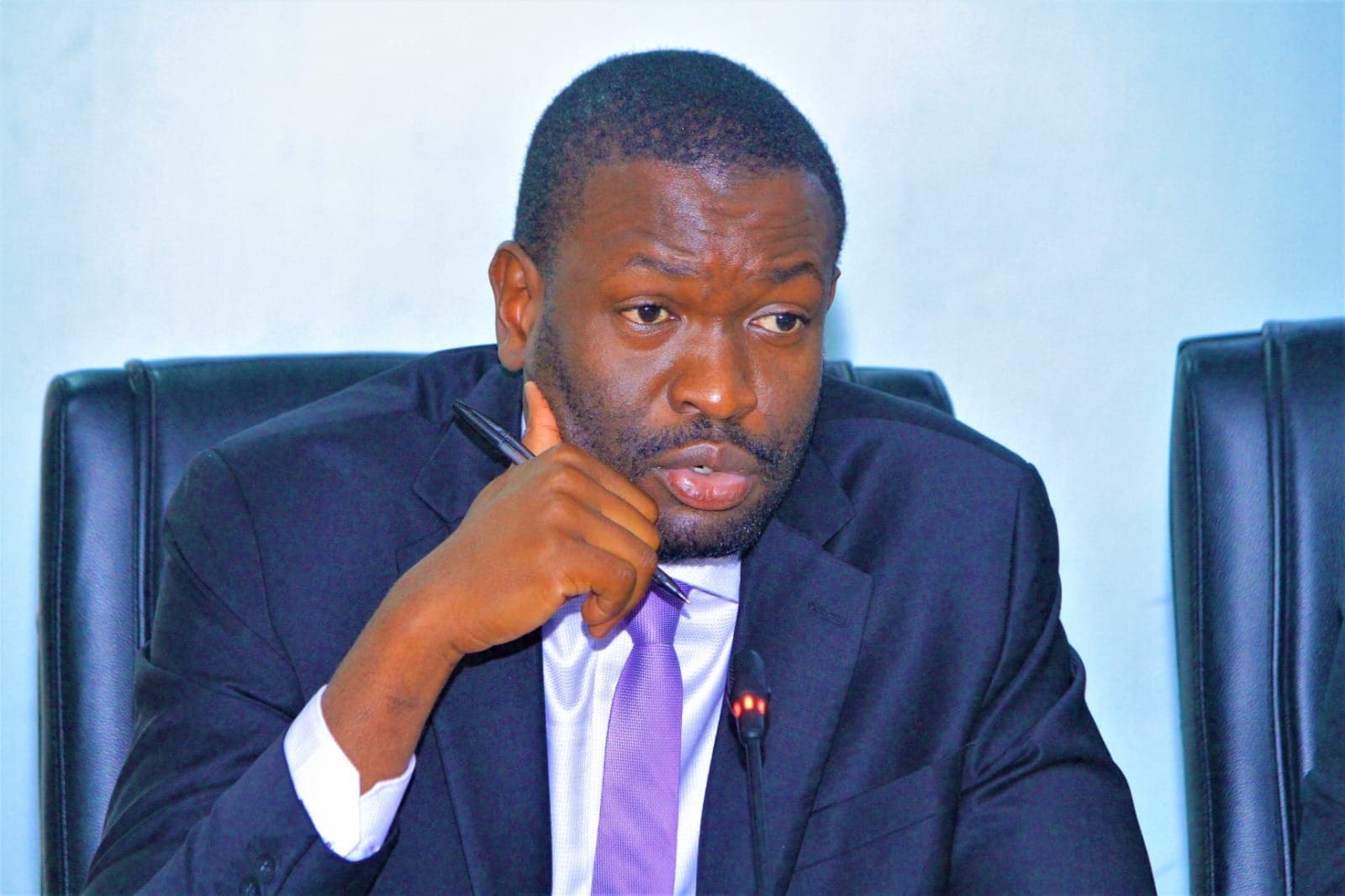
Edwin Sifuna and the ODM party are questioning the motive behind the heavy police presence at a recent parallel NDC, citing constitutional violations.

The scene outside the venue hosting the parallel National Delegates Conference (NDC) was less a security operation and more a show of raw executive muscle. Heavily armed officers, some in riot gear and others in plain clothes, formed a tight cordon around the perimeter, creating a bunker-like atmosphere that immediately sparked outrage. Edwin Sifuna, the Secretary General of the Orange Democratic Movement (ODM), did not mince his words, condemning the deployment as an unnecessary and intimidatory display of force. For observers of Kenyan politics, the incident marks a dangerous escalation in the use of security apparatus to police internal party democracy.
This incident is not merely about a specific political party’s gathering it strikes at the heart of the fundamental rights of assembly and association protected under the 2010 Constitution. When state security agencies are utilized to encircle political opponents or monitor internal party dissent, the thin line between maintaining public order and suppressing political competition evaporates. For the citizens of Nairobi and the wider Kenyan public, this brings into sharp focus the precarious state of democratic neutrality within the National Police Service.
In his address, Sifuna argued that the heavy security presence served no legitimate public safety purpose, characterizing it instead as a deliberate attempt to cow delegates and signal state preference in a party feud. The deployment of significant manpower to monitor an internal political meeting suggests a deviation from the core mandate of the National Police Service: to protect life and property, not to regulate political party affairs. The optics of the operation have reignited a long-standing debate regarding the politicization of the police service.
Historically, the use of police to influence political outcomes has been a recurring stain on Kenya’s democratic trajectory. From the era of the single-party state to the more recent cycles of contested elections, the police service has frequently been accused of acting as the enforcement wing of the ruling political interest. While reforms following the 2010 Constitution sought to insulate the police from partisan influence, structural challenges remain. The ease with which security commands can be mobilized against political gatherings suggests that the independence of the Inspector General of Police is, in practice, constrained by executive influence.
The tension surrounding this parallel NDC serves as a microcosm for the broader challenges facing democratic participation in Kenya. To understand the stakes, one must look at the constitutional guarantees often sidelined by such displays of force:
These figures and legal provisions paint a stark picture. When security forces move from protecting the peace to managing political conflict, they inadvertently signal to the public that the state is not a neutral arbiter, but a participant in political infighting. This shift has material consequences for the nation, including the discouragement of political participation, the narrowing of civic space, and the erosion of international investor confidence, which relies on the stability and neutrality of national institutions.
Kenya is often touted as a beacon of democratic stability in East Africa, a reputation that has enabled it to attract significant foreign direct investment—amounting to over USD 1.5 billion (approximately KES 195 billion) in various sectors annually. However, incidents involving the weaponization of state security against political rivals serve as a chilling reminder that democratic gains are reversible. Comparable situations in neighboring nations have demonstrated how the gradual creep of political policing can lead to broader systemic instability. When the police force is seen as the enforcer of the status quo, political actors are incentivized to bypass formal processes, potentially leading to increased radicalization of political discourse and, in worst-case scenarios, civil unrest.
Economists at the University of Nairobi have frequently warned that political instability, often catalyzed by the heavy-handedness of state agencies, remains one of the primary risks to Kenya’s GDP growth. A stable political environment requires that opposition parties, or factions within ruling parties, feel that their activities are protected by the law, not threatened by it. The show of force at the NDC, while localized, serves as a bellwether for the upcoming political season, indicating that the authorities remain willing to utilize state machinery to stifle internal dissent.
The controversy surrounding the security presence at the parallel NDC highlights a persistent contradiction in the Kenyan political landscape: the desire for a modern, liberal democracy competing against the entrenched habits of authoritarian control. If the National Police Service is to retain the public trust necessary to maintain law and order, it must demonstrate a commitment to neutrality that transcends political administrations. The leadership of the police service must articulate, with clarity, the operational basis for such deployments to avoid the perception of bias. Failing that, the institution risks becoming a casualty of the very political conflicts it is meant to oversee. The question remains whether the state will choose to protect the fundamental rights of its citizens, or continue to prioritize the interests of the powerful at the expense of the democratic process.
Keep the conversation in one place—threads here stay linked to the story and in the forums.
Sign in to start a discussion
Start a conversation about this story and keep it linked here.
Other hot threads
E-sports and Gaming Community in Kenya
Active 10 months ago
The Role of Technology in Modern Agriculture (AgriTech)
Active 10 months ago
Popular Recreational Activities Across Counties
Active 10 months ago
Investing in Youth Sports Development Programs
Active 10 months ago
Key figures and persons of interest featured in this article