We're loading the full news article for you. This includes the article content, images, author information, and related articles.
The National Assembly has formally invited the public to county hearings on Sessional Paper No. 3 of 2025, the policy document that outlines the Government’s proposal to sell a 15% stake in Safaricom to Vodacom Group (through Vodafone Kenya).
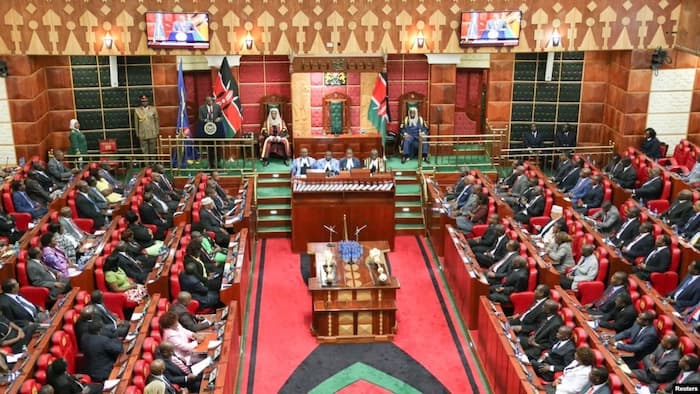
Kenya’s plan to partially divest its shareholding in Safaricom has entered its most politically sensitive phase: public participation.
The National Assembly has formally invited the public to county hearings on Sessional Paper No. 3 of 2025, the policy document that outlines the Government’s proposal to sell a 15% stake in Safaricom to Vodacom Group (through Vodafone Kenya).
Despite public chatter framing the transaction as “done,” the process is still moving through constitutional and parliamentary guardrails—especially public participation under Article 118 and committee review.
Under the proposal, the Government would sell six billion Safaricom shares (not “six million”) at KSh 34 per share, a valuation that places the stake at roughly KSh 204 billion—figures that match both the policy proposal and independent reporting.
If executed as structured, Vodacom’s holding would rise to 55%, while the Government would reduce its position to 20%, with the public retaining 25%.
A notice circulated by Parliament shows joint committees convening hearings nationwide to collect views on the economic, strategic, and public-interest implications of reducing the State’s stake in the country’s most strategically significant telco. (The notice also indicates that a copy of the sessional paper is available through Parliament.)
Public hearing schedule (all sessions start 10:00 a.m.) — as per the parliamentary notice:
3 Feb 2026: Nairobi (KICC), Mandera (Mandera Social Hall), Machakos (Mavoko NG-CDF Office), Nyandarua (Engineer Town)
4 Feb 2026: Nakuru (Rongai NG-CDF Office), Wajir (IFAD Hall), Kitui (Kitui Multi-Purpose Hall), Nyeri (Nyeri Cultural Center Hall)
5 Feb 2026: Kericho (ACK Church Hall), Kirinyaga (CDF Hall, Kirinyaga Central)
6 Feb 2026: Baringo (KSG Kabarnet), Kisumu (Tom Mboya Labour College), Embu (IFAD Hall), Murang’a (MUST)
7 Feb 2026: Kakamega (Mahgiri Hall, Kakamega Town)
9 Feb 2026: West Pokot (Meteleo County Hall, Kapenguria), Tharaka Nithi (Katwana County Hall), Kiambu (Kiambu National Polytechnic), Vihiga (Praise Center Church, Mbale)
10 Feb 2026: Uasin Gishu (County Hall), Nandi (Kipchoge Sport Complex), Meru (Kamude Hall)
11 Feb 2026: Kisii (Agricultural Training College), Taita Taveta (Mwatate CDF Hall)
12 Feb 2026: Kajiado (Maasai Technical Institute Hall), Samburu (Maralal Vocational Center)
13 Feb 2026: Homa Bay (Governor’s Park), Mombasa (Tononoka Social Hall)
14 Feb 2026: Kilifi (Coast Development Authority Social Hall), Kwale (Kwale Cultural Center, Matuga)
A major political pressure point is what the money would do once raised. Multiple reports indicate lawmakers are pushing for safeguards so proceeds do not disappear into routine recurrent spending—an argument framed around converting a one-off asset sale into long-term national value.
The policy argument from Treasury is straightforward: cash raised from divestiture can ease deficit strain without piling on costly external borrowing, while still leaving the State with a significant residual stake.
The sharpest resistance is not emotional—it is mathematical.
A court petition filed by activists Tony Gachoka and Fredrick Ogola/Ogolla challenges the process on grounds including transparency and valuation. They argue the shares are undervalued—claiming “intrinsic value” is far higher—and warn of a massive loss to taxpayers if sold at KSh 34.
The High Court has already become part of the story, adding legal risk to a transaction that is politically explosive even before implementation.
This is not just a corporate transaction. It is a national governance decision about:
Strategic control of critical communications infrastructure
Public value versus short-term fiscal relief
Transparency and pricing discipline in disposal of State assets
Credibility of ring-fencing—whether Kenya can actually lock proceeds into development outcomes
In that sense, the hearings are not a formality—they are the legitimacy test. If the Government persuades Kenyans that pricing is fair, safeguards are enforceable, and proceeds will build productive infrastructure, the proposal survives politically. If not, it risks becoming another flashpoint where fiscal urgency collides with public trust.
Keep the conversation in one place—threads here stay linked to the story and in the forums.
Clutch & Culture
28 days ago
Hey
Streamline Official
1 month ago
1️⃣ On Use of Proceeds: Guardrails, Not Promises Kenyans are asking for hard safeguards, not goodwill assurances. How should the Sh204 billion be protected from misuse? Should proceeds be legally ring
Other hot threads
E-sports and Gaming Community in Kenya
Active 10 months ago
The Role of Technology in Modern Agriculture (AgriTech)
Active 10 months ago
Popular Recreational Activities Across Counties
Active 10 months ago
Investing in Youth Sports Development Programs
Active 10 months ago
Key figures and persons of interest featured in this article