We're loading the full news article for you. This includes the article content, images, author information, and related articles.
Hungarian Prime Minister Viktor Orban secured crucial energy deals in a defiant Moscow visit, fracturing European unity and highlighting the harsh economic realities facing nations like Kenya amid the ongoing war in Ukraine.
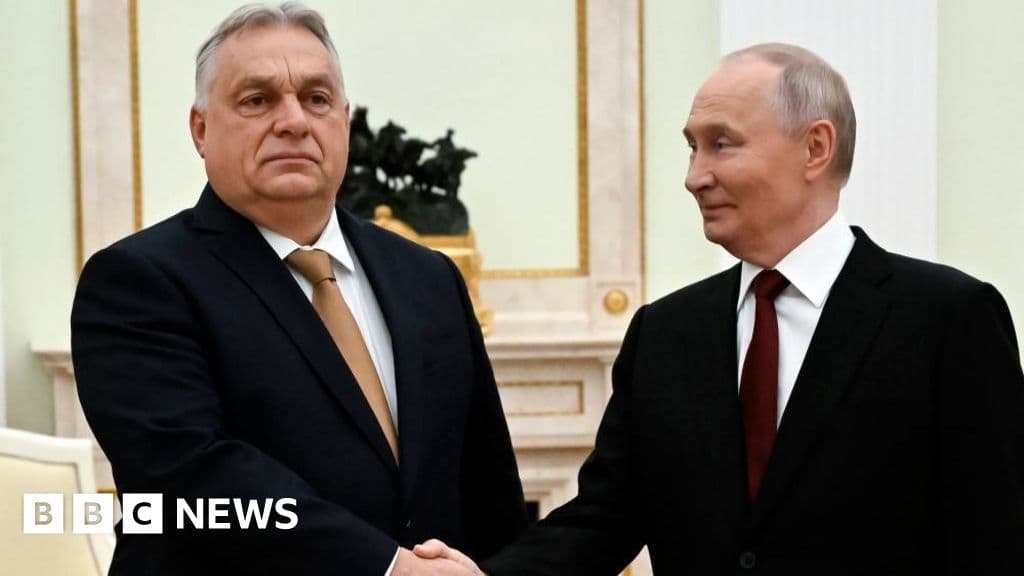
In a move that challenges Western solidarity, Hungarian Prime Minister Viktor Orban met with Russian President Vladimir Putin in Moscow on Friday, cementing energy deals that guarantee continued oil and gas supplies to his country.
The high-stakes meeting underscores a deepening rift within the European Union over its Russia policy. For Kenyans, it presents a stark contrast in fortunes: while one European nation secures its energy future by engaging Moscow, households in Nairobi continue to face high fuel and food prices, a direct consequence of the global supply chain disruptions caused by Russia's war in Ukraine.
During the Kremlin talks, both leaders hailed their pragmatic relationship. Putin praised Orban's "balanced position" on Ukraine, while the Hungarian leader emphasized that Russian energy is fundamental to his nation's security. The agreements ensure the delivery of contracted volumes of oil and gas and accelerate the construction of the controversial Russian-built Paks II nuclear power plant. This year alone, Hungary has received over 7 billion cubic meters of natural gas and 8.5 million tons of crude oil from Russia.
The visit drew sharp criticism from other EU leaders. German Chancellor Friedrich Merz noted that Orban was acting "without a European mandate." EU officials were quick to state that the Hungarian Prime Minister was not representing the bloc in any capacity and that official contact with President Putin, who is under an International Criminal Court indictment, is against the EU's formal position.
While Hungary insulates its economy, the ripple effects of the conflict continue to batter Kenya's. The war has been a significant driver of inflation, disrupting imports of essential commodities and increasing the cost of living. Kenya's government has previously acknowledged the immense impact of the war on the supply chains for grains, fuel, and fertilizers.
The situation highlights the different paths countries are taking to navigate the geopolitical crisis:
This diplomatic balancing act is further complicated by recent reports of Kenyan citizens being deceptively recruited into the conflict, prompting high-level talks between Nairobi and Moscow to ensure their repatriation.
As Orban's government doubles down on its Russian ties, it presents a challenging case study in national interest versus international alliance. For Kenyans, it's a potent reminder of how decisions made in faraway capitals can directly impact the price of unga and the cost of the daily commute.
Keep the conversation in one place—threads here stay linked to the story and in the forums.
Sign in to start a discussion
Start a conversation about this story and keep it linked here.
Other hot threads
E-sports and Gaming Community in Kenya
Active 9 months ago
The Role of Technology in Modern Agriculture (AgriTech)
Active 9 months ago
Popular Recreational Activities Across Counties
Active 9 months ago
Investing in Youth Sports Development Programs
Active 9 months ago



