We're loading the full news article for you. This includes the article content, images, author information, and related articles.
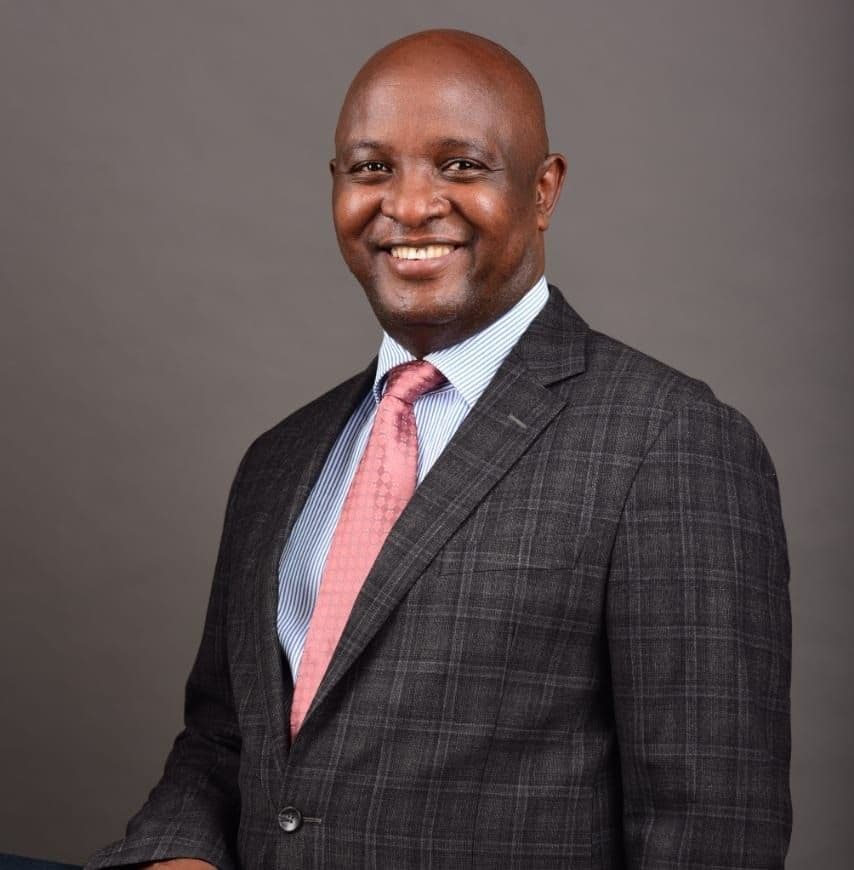
The Orange Democratic Movement’s Special Delegates Convention has appointed Oburu Oginga as Party Leader, signaling a shift in internal power dynamics.

The Orange Democratic Movement (ODM) underwent a seismic leadership shift today as the Special Delegates Convention (SDC) officially endorsed Senator Oburu Oginga as the party leader, bringing an abrupt end to the tenure of Godfrey Osotsi. The move, executed with overwhelming support during the emergency session in Nairobi, marks a definitive pivot in the internal mechanics of one of Kenya’s most formidable political organizations. As the party grapples with the demands of an evolving electoral landscape, this consolidation of authority signals a move toward a more centralized command structure.
This transition is not merely an administrative reshuffle it is a fundamental recalibration of power that ripples across Kenya's political spectrum. With the next general election looming in 2027, the party’s decision to elevate Oginga—a veteran operative with deep institutional memory—over Osotsi suggests an urgent desire to minimize internal friction and consolidate the party's base. For the millions of Kenyans who view the ODM as a primary vehicle for political change, this shift raises critical questions about the future trajectory of the party’s ideology and its capacity to sustain a cohesive opposition front.
The Special Delegates Convention, held under strict security, served as the theater for this dramatic restructuring. Under the ODM party constitution, the SDC holds the supreme authority to ratify changes in the national executive, making its endorsement of Oginga a legally binding finality. The process was swift, leaving little room for procedural challenges from the faction aligned with the outgoing leadership. Political observers note that the efficiency of the maneuver reflects a tightly controlled strategy designed to neutralize opposition before it could coalesce into a broader rebellion.
The removal of Godfrey Osotsi, who has frequently found himself at odds with the party's inner circle, removes a significant source of ideological friction. Osotsi’s recent public stances on fiscal policy and regional representation had increasingly alienated him from the party’s established guard. In his place, the appointment of Oginga represents a return to a more traditional, consensus-driven leadership style that prioritizes loyalty to the party hierarchy over individual political expression.
Senator Oburu Oginga brings a depth of experience that is arguably unmatched in the current political landscape. Having served in various capacities since the inception of the party, his elevation is viewed by party loyalists as a guarantee of continuity. Analysts at the University of Nairobi suggest that Oginga’s role will be less about revolutionary policy shifts and more about acting as a stabilizing anchor, ensuring that the party remains disciplined as it navigates the volatile waters of Kenyan coalition politics.
However, the transition is not without its critics. Detractors argue that by sidelining dissenting voices like Osotsi, the ODM risks becoming an insular entity, disconnected from the needs of a younger, more dynamic electorate. The tension between the party's historical guard and the younger generation of politicians who seek more participatory democracy within the party is palpable. This structural tension mirrors a global trend, where legacy political parties struggle to balance the need for command-and-control stability with the democratic pressures for decentralization and fresh leadership.
The implications of this leadership change extend far beyond the party headquarters. As the ODM seeks to solidify its position as the premier opposition force, the ability to maintain internal unity is paramount. The party has historically relied on the strong, central personality of its leadership to command allegiance across diverse regional voting blocs. If Oginga fails to contain the fallout from Osotsi’s ouster, the party could face localized fragmentation, particularly in regions where Osotsi maintains a loyal following.
Moreover, the fiscal implications are significant. The party’s ability to mobilize resources—estimated in the hundreds of millions of shillings annually—depends on a predictable and unified leadership. With the government’s recent implementation of new tax policies, the economic burden on the average Kenyan has intensified, making the opposition’s ability to articulate a coherent economic alternative critical to their electoral success. Whether this new leadership structure can deliver that alternative remains the central question for the coming months.
As the dust settles on today’s convention, the focus shifts to how the party will integrate its new leadership into the national political discourse. The decision to remove Osotsi may have cleared the path for Oginga, but it has also drawn a line in the sand, daring detractors to choose between individual ambition and the collective strength of the party. The coming weeks will reveal if this consolidation will result in a more potent political machine or a more isolated entity in an increasingly crowded political arena.
Keep the conversation in one place—threads here stay linked to the story and in the forums.
Sign in to start a discussion
Start a conversation about this story and keep it linked here.
Other hot threads
E-sports and Gaming Community in Kenya
Active 10 months ago
The Role of Technology in Modern Agriculture (AgriTech)
Active 10 months ago
Popular Recreational Activities Across Counties
Active 10 months ago
Investing in Youth Sports Development Programs
Active 10 months ago
Key figures and persons of interest featured in this article