We're loading the full news article for you. This includes the article content, images, author information, and related articles.
In a desperate bid to stem the exodus of doctors, Abuja unveils a massive Ksh 10.9 billion rehabilitation plan for 18 universities, targeting a four-fold increase in nursing admissions.
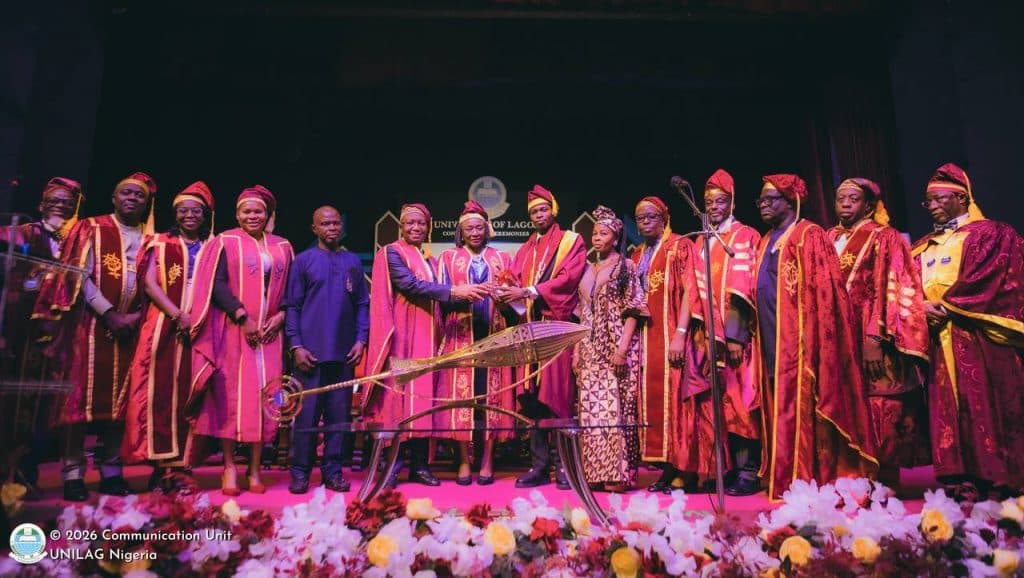
The Federal Government of Nigeria has declared a state of emergency on its medical education infrastructure, announcing a colossal N120 billion (approx. Ksh 10.9 billion) war chest to rehabilitate 18 medical schools across the West African nation. The intervention, revealed during the 56th convocation of the University of Lagos (UNILAG), marks Abuja’s most aggressive move yet to counter the debilitating 'Japa' syndrome that is draining the continent's most populous nation of its healthcare workforce.
Delivered by Minister of Education Dr. Tunji Alausa on behalf of President Bola Tinubu, the directive is not merely about bricks and mortar; it is a strategic attempt to rewrite the country's social contract with its youth. With Nigerian doctors and nurses fleeing to the UK, Canada, and the US in record numbers, the administration is betting that modernizing the training ground will convince the next generation to stay.
"We cannot build a nation on an empty hospital ward," Dr. Alausa told a hushed audience at the UNILAG auditorium. The N120 billion injection is channeled through the Tertiary Education Trust Fund (TETFund) High Impact Intervention Project. The first phase targets 18 universities—three from each of Nigeria’s six geopolitical zones—ensuring that the revitalization is national, not just a Lagos affair.
The mandate is specific and ambitious: quadruple the admission quota for nursing schools and upgrade facilities for medicine, dentistry, and pharmacy. The government argues that by flooding the system with qualified professionals, it can mitigate the impact of migration while improving local health outcomes.
The Nigerian crisis mirrors Kenya's own struggle with healthcare retention, where doctors have frequently downed tools over pay and conditions. For observers in Nairobi, Abuja’s move is a test case: can money alone fix a systemic brain drain? The "Japa" wave—a Yoruba slang for "to run away"—has seen thousands of Nigerian medics leave for the NHS in the UK, leaving local hospitals understaffed and overwhelmed.
President Tinubu’s speech struck a tone of urgency. He announced that the 2026 TETFund cycle would expand this intervention to an additional 12 medical schools. Furthermore, a separate N100 billion (Ksh 9 billion) fund has been set aside to rehabilitate faculties of engineering and technology, signaling a broader push to harden the country’s STEM (Science, Technology, Engineering, and Mathematics) capabilities.
"This is an investment in our sovereignty," Alausa declared. "When we train a doctor who leaves, we subsidize the healthcare of a rich nation. When we train a doctor who stays, we secure the future of a Nigerian child."
As the applause faded at UNILAG, the hard work began. With inflation biting and the Naira fluctuating, the real value of this N120 billion will be tested by the speed of execution. For the thousands of aspiring medics in Lagos, Kano, and Enugu, however, the promise of a modern classroom is the first glimmer of hope in a long time.
Keep the conversation in one place—threads here stay linked to the story and in the forums.
Sign in to start a discussion
Start a conversation about this story and keep it linked here.
Other hot threads
E-sports and Gaming Community in Kenya
Active 9 months ago
The Role of Technology in Modern Agriculture (AgriTech)
Active 9 months ago
Popular Recreational Activities Across Counties
Active 9 months ago
Investing in Youth Sports Development Programs
Active 9 months ago



