We're loading the full news article for you. This includes the article content, images, author information, and related articles.
The new Nancy Grace Roman Space Telescope, a KES 554 billion successor to Hubble, will peer into the universe's emptiest regions to hunt for dark energy, the mysterious force driving cosmic expansion.
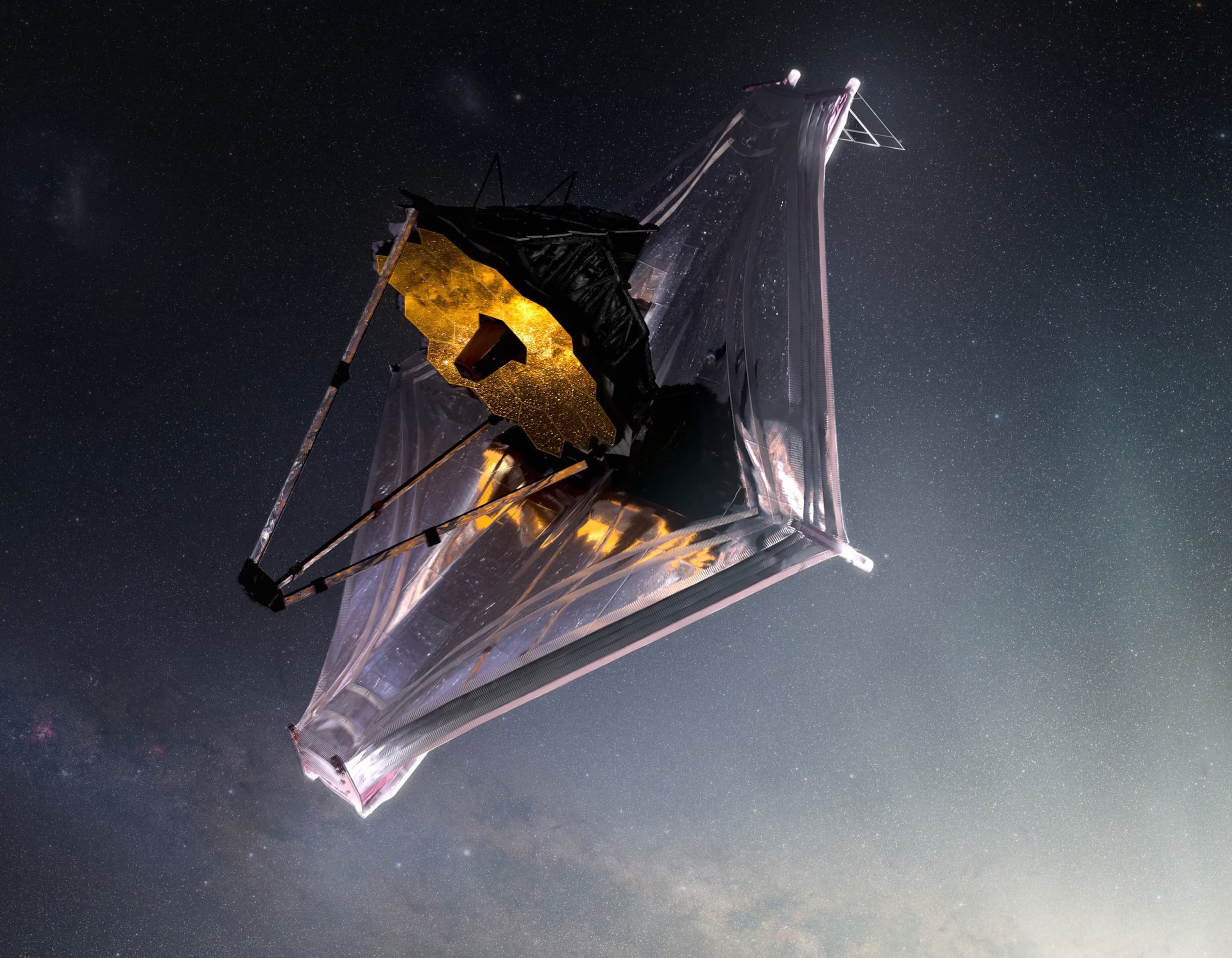
In a bold quest to understand one of the universe's deepest secrets, NASA's newly assembled Nancy Grace Roman Space Telescope will soon turn its powerful gaze to vast, empty patches of space. This mission, scheduled for a May 2027 launch, aims to shed light on the invisible force known as dark energy.
This KES 554 billion ($4.3 billion) observatory is not just another eye on the sky; it represents a monumental leap in our ability to map the cosmos. For Kenyans, this grand scientific endeavor resonates with our own growing ambitions in space, exemplified by the launch of the Taifa-1 satellite, and underscores a shared human drive to explore the unknown.
The telescope's primary target will be cosmic voids—immense regions between galaxy clusters that are largely devoid of matter. Scientists theorize that because these areas are so empty, they are dominated by dark energy, the enigmatic pressure accelerating the universe's expansion. By studying the subtle ways these voids grow and influence the few galaxies on their edges, researchers hope to finally characterize this powerful force.
The mission's High-Latitude Wide-Area Survey will meticulously map these voids. "With Roman, we can better look at the galaxies that populate voids, which ultimately will give us greater understanding of the cosmological parameters like dark energy that are sculpting voids,” noted Giulia Degni, an astrophysicist at Roma Tre University involved in the research.
Named after pioneering NASA astronomer Nancy Grace Roman, the telescope is an engineering marvel. While its 2.4-meter primary mirror is the same size as Hubble's, its capabilities are vastly superior in key ways.
This immense survey capability will not only probe dark energy but also revolutionize exoplanet hunting and our understanding of how galaxies form and evolve.
While the Roman telescope orbits nearly 1.5 million kilometers from Earth, its mission of discovery has relevance here at home. Kenya's own journey into space, marked by the launch of the Taifa-1 earth observation satellite, demonstrates a national commitment to leveraging science and technology for development. Taifa-1, designed by Kenyan engineers, provides crucial data for agriculture and environmental management.
The Roman mission, though focused on fundamental questions about the universe, inspires the next generation of Kenyan scientists and engineers. It serves as a powerful reminder that the quest for knowledge, whether aimed at improving crop yields from orbit or understanding the origins of the universe, is a vital engine for progress.
As humanity prepares to look into the void, the discoveries made by the Roman telescope will belong to everyone. They will reshape our textbooks, challenge our understanding of reality, and perhaps, finally, illuminate the darkness that shapes our universe.
Keep the conversation in one place—threads here stay linked to the story and in the forums.
Sign in to start a discussion
Start a conversation about this story and keep it linked here.
Other hot threads
E-sports and Gaming Community in Kenya
Active 10 months ago
The Role of Technology in Modern Agriculture (AgriTech)
Active 10 months ago
Popular Recreational Activities Across Counties
Active 10 months ago
Investing in Youth Sports Development Programs
Active 10 months ago



