We're loading the full news article for you. This includes the article content, images, author information, and related articles.
NASA eyes an April 2026 launch for Artemis II, a landmark 10-day crewed mission to orbit the Moon, paving the way for humanity's eventual return to the surface.
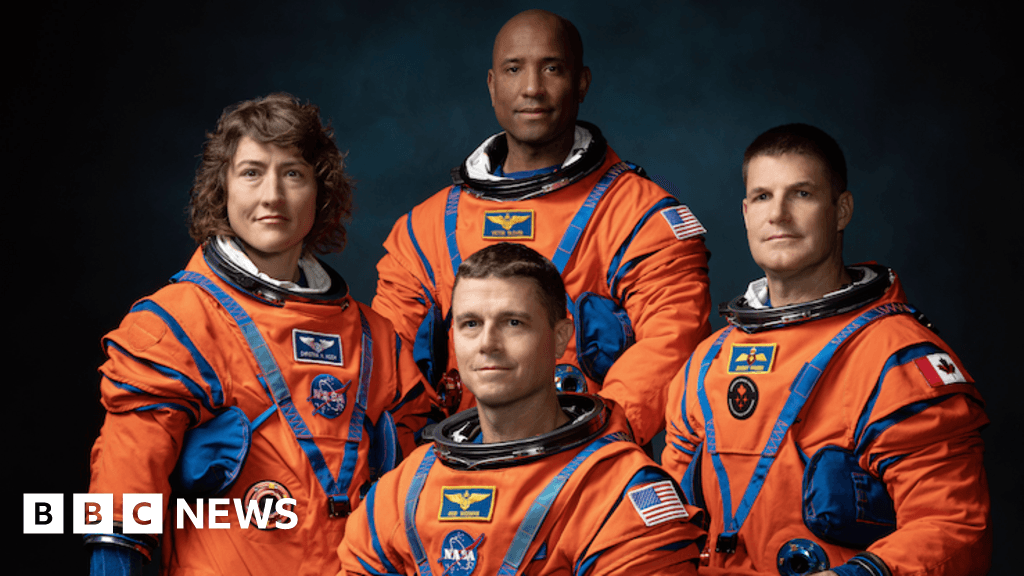
Four astronauts sit atop the most powerful rocket ever built, waiting for the precise alignment of orbital mechanics that will slingshot them beyond the reach of low Earth orbit and into the profound silence of deep space. This is the promise of Artemis II, a mission that does not merely aim to replicate the feats of the Apollo program, but to fundamentally rewrite the rules of human endurance and technical capability in the cosmos. For the first time in over half a century, a crewed spacecraft is poised to venture around the Moon, marking a critical threshold in the broader human endeavor to establish a permanent presence in the lunar neighborhood.
This mission represents the highest stakes in aerospace engineering, where the margin for error is measured in milliseconds and millimeters. The upcoming attempt, tentatively scheduled for early April 2026, serves as the ultimate test of the Orion spacecraft’s life-support systems, navigation, and thermal protection. For the international community, including signatories to the Artemis Accords like Kenya, the success of this mission is not just about national prestige it is a vital step toward a new era of space exploration where lunar resources and deep-space logistics will eventually underpin the global economy and scientific research agendas for decades to come.
The path to the launchpad has been defined by extreme caution, a direct consequence of the lessons learned from the Apollo and Space Shuttle eras. Recent delays, including the scuttling of a potential February launch following the discovery of a helium leak and the aborting of a wet dress rehearsal due to a hydrogen fuel connection issue, underscore the complexity of the Space Launch System (SLS). NASA engineers have insisted that these delays are not failures but evidence of a robust safety culture, prioritizing the lives of the crew over arbitrary calendar deadlines.
The technical architecture of the SLS rocket involves managing cryogenic propellants at temperatures so low they challenge the integrity of seals and valves. Helium, used to pressurize these systems, is notorious for its ability to escape through microscopic gaps. The decision to scrub previous windows demonstrates a departure from the "faster, better, cheaper" ethos that once plagued space agencies, moving instead toward a model where risk mitigation is the primary driver of development. Experts at the Jet Propulsion Laboratory suggest that the upcoming April windows represent the most favorable orbital alignment for the next phase of the mission, requiring an exact synchronization between the rotation of the Earth and the transit time to the Moon.
The four individuals assigned to this mission—Commander Reid Wiseman, Pilot Victor Glover, Mission Specialist Christina Koch, and Canadian Space Agency specialist Jeremy Hansen—are undergoing rigorous training that simulates the isolation and psychological strain of deep space travel. Unlike their predecessors who landed on the lunar surface, the Artemis II crew will spend their ten days in a confined environment, testing the limits of the Orion capsule’s psychological and biological support systems. The data collected from their physiological reactions to radiation and microgravity will be indispensable for the longer, more complex Artemis III mission, which intends to place the first woman and person of color on the lunar surface.
The inclusion of Jeremy Hansen, representing the Canadian Space Agency, highlights the cooperative nature of this initiative. By integrating international partners, NASA is effectively building a global coalition for space exploration, contrasting sharply with the nationalistic space race of the 20th century. This multilateral approach ensures shared costs and shared technological breakthroughs, creating a ripple effect that benefits industries far removed from the aerospace sector, including agriculture and telecommunications, which rely heavily on orbital satellite data.
For observers in Nairobi and across East Africa, the Artemis program serves as a tangible signal of the future of the digital economy. Kenya’s formal commitment to the Artemis Accords in December 2024 was not merely symbolic it was a recognition that the future of economic development is increasingly linked to space-based assets. Precision agriculture, climate monitoring, and disaster mitigation rely on the very technologies that are being tested and refined through deep-space exploration. As the global space sector continues to mature, nations that actively participate in the international framework of lunar exploration will find themselves better positioned to access high-bandwidth communications and advanced remote sensing capabilities.
The Artemis II mission is more than a voyage it is a proving ground for the infrastructure of the future. By validating the technologies that will eventually allow for a sustainable lunar base, NASA is effectively building the foundation for a permanent extension of human civilization beyond Earth. As the countdown clock approaches the April windows, the world is not merely watching a rocket launch it is witnessing the first major step toward a sustainable, multi-planetary future.
The true measure of this mission will not be found in the successful splashdown, but in the durability of the systems the crew leaves behind in the annals of spaceflight. If the Orion capsule proves its mettle in the harsh environment of lunar orbit, the doors will be wide open for the subsequent missions that aim to turn the Moon into a gateway for Mars. The question is no longer whether humanity will return to the lunar surface, but what we will do once we have truly mastered the art of living beyond our home planet.
Keep the conversation in one place—threads here stay linked to the story and in the forums.
Sign in to start a discussion
Start a conversation about this story and keep it linked here.
Other hot threads
E-sports and Gaming Community in Kenya
Active 10 months ago
The Role of Technology in Modern Agriculture (AgriTech)
Active 10 months ago
Popular Recreational Activities Across Counties
Active 10 months ago
Investing in Youth Sports Development Programs
Active 10 months ago



