We're loading the full news article for you. This includes the article content, images, author information, and related articles.
NASA successfully activates water systems at Stennis Space Center, a critical step for testing the Exploration Upper Stage of the Artemis IV mission.
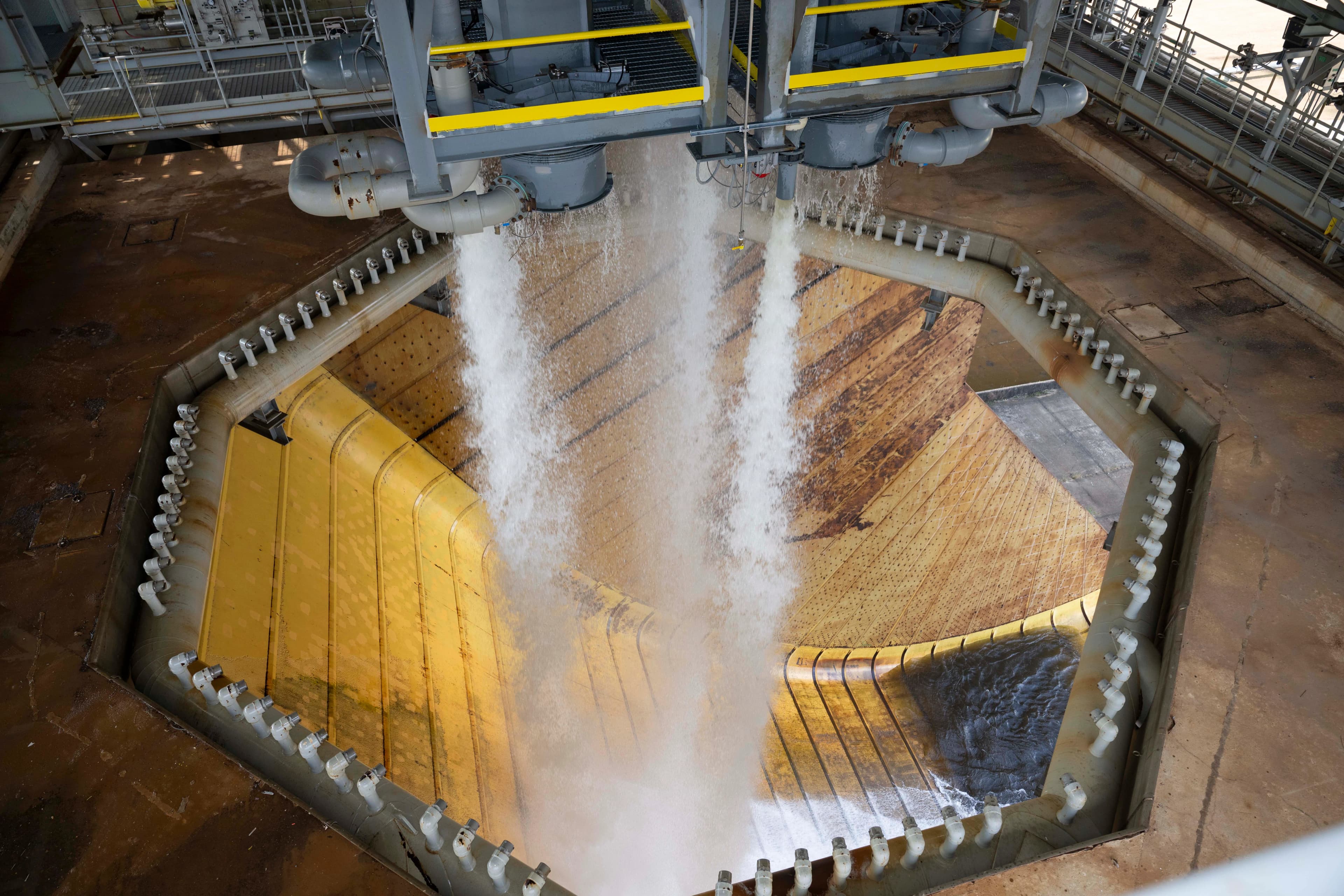
A critical water system activation at the Thad Cochran Test Stand (B-2) has successfully captured vital data, marking a pivotal step toward the Artemis IV mission. This engineering feat at NASA’s Stennis Space Center near Bay St. Louis, Mississippi, signals the agency’s relentless march toward deep space exploration.
This test is not merely a routine check; it represents the backbone of the upcoming Green Run test series for the Exploration Upper Stage (EUS). The data gathered from this activation validates the new cooling systems designed to withstand the fury of the four RL10 engines that will power the evolved Block 1B version of the Space Launch System (SLS). As NASA prepares to return humans to the Moon and aim for Mars, the success of these ground systems is the difference between a successful launch and a catastrophic failure.
The activation on January 30 was a stress test of immense proportions. Engineers pushed the high-pressure industrial water system to its absolute limit, a necessary rehearsal for the thermal violence of a launch. While a typical test for a single RS-25 engine might utilize a fraction of the facility`s power, the Exploration Upper Stage requires all eleven pumps—ten diesel and one electric—firing in unison. This synchronized mechanical symphony is required to deluge the stand with water, protecting the infrastructure from the super-heated exhaust.
The modifications to the B-2 stand are a masterclass in fluid dynamics and thermal management. Crews have integrated water-cooled diffusers that act as a heat shield, alongside water-cooled fairings that meticulously direct the engine exhaust. A newly installed purge ring supplies a mix of cooling water and gaseous nitrogen, safeguarding the flexible seal that allows the engines to gimbal. This capability is crucial, as it allows the rocket to steer itself during the ascent, a maneuver that must be tested rigorously on the ground before it is attempted in the void of space.
The data collected is already shaping the future. Project Engineer Nick Nugent noted that the exercise allows the team to finalize valve timing and determine redline pressures. It was a "shakedown run" in the truest sense, exposing the system to full loads to ensure no weak points remain. The Exploration Upper Stage, currently being assembled by Boeing at the Michoud Assembly Facility in New Orleans, will rely on this infrastructure to prove its flight readiness.
Once the stage arrives at Stennis, it will undergo a final 24-hour stress test. This marathon check will verify that every facility component, from the fuel lines to the acoustic suppression systems, is ready for the "Green Run"—the hot fire of all four engines. This is the same rigorous verification process that the core stage of the Artemis I rocket underwent, a campaign that laid the foundation for that mission`s historic success.
As the hardware takes shape and the ground systems come online, the abstract goal of Artemis IV becomes concrete steel and roaring water. The road to the lunar surface runs directly through the bayous of Mississippi, where the machinery of exploration is being fine-tuned one valve, one pump, and one million gallons of water at a time.
Keep the conversation in one place—threads here stay linked to the story and in the forums.
Other hot threads
E-sports and Gaming Community in Kenya
Active 8 months ago
The Role of Technology in Modern Agriculture (AgriTech)
Active 8 months ago
Popular Recreational Activities Across Counties
Active 8 months ago
Investing in Youth Sports Development Programs
Active 8 months ago