We're loading the full news article for you. This includes the article content, images, author information, and related articles.
Administrator Jared Isaacman navigates a KES 19.5 billion political minefield, suggesting a modern spacecraft could satisfy Texas senators instead of risking the historic Discovery.
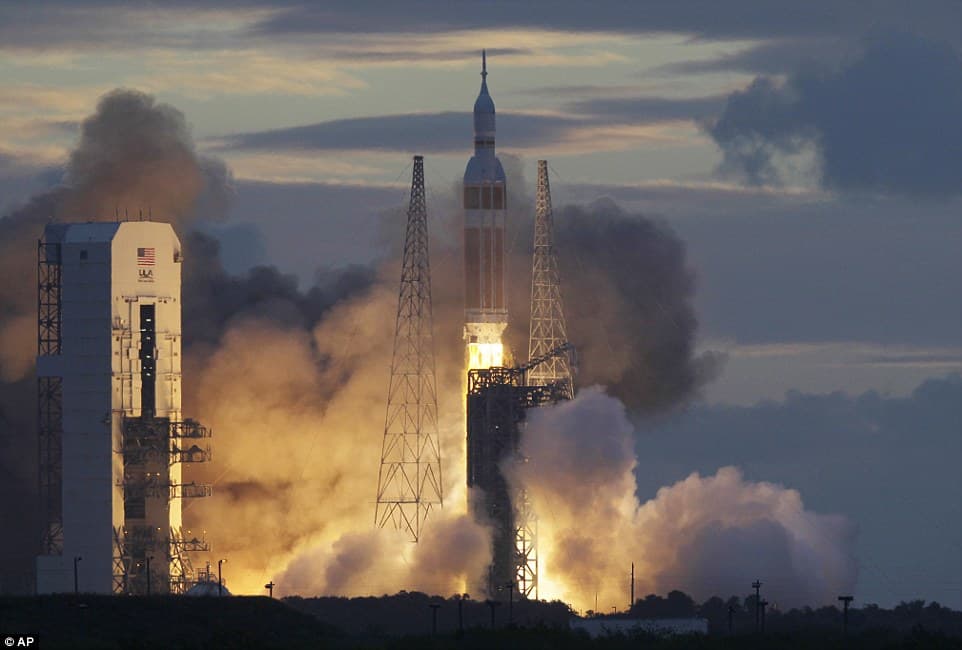
Jared Isaacman is proving that navigating the corridors of Capitol Hill requires as much precision as docking with the International Space Station. Facing intense political pressure to relocate a fragile national treasure, the newly confirmed NASA Administrator has executed a deft maneuver that could save American taxpayers a fortune and preserve space history.
At the heart of the standoff is a controversial push by Texas senators to move the Space Shuttle Discovery from the Smithsonian to Houston—a logistical nightmare estimated to cost up to $150 million (approx. KES 19.5 billion). However, Isaacman has revealed a strategic pivot: utilizing a legislative loophole to substitute the aging shuttle with a modern Orion capsule, balancing heritage preservation with fiscal sanity.
For months, Senators John Cornyn and Ted Cruz have championed the “bring Discovery home” campaign. While the sentiment appeals to Texan pride, the logistics are perilous. Moving the retired orbiter is not merely expensive; it risks structural damage to an artifact that defines a generation of spaceflight.
To put the financial stakes in perspective, the projected $150 million relocation cost is roughly equivalent to the cost of constructing a major highway interchange in Nairobi. Isaacman, speaking to CNBC on December 23, injected a dose of pragmatism into the emotional debate.
“If we can’t do that [move Discovery] without damaging the space shuttle and within budget, we have spacecraft going around the Moon with Artemis 2, 3, 4 and 5,” Isaacman noted, signaling that a newer vessel might serve as the consolation prize.
The potential for a switcheroo lies in the specific wording of H.R. 1, the budget reconciliation bill signed into law in July. While the original legislation from the Texas senators explicitly named Discovery, the final law is far more ambiguous.
The legislation allocates $85 million (approx. KES 11 billion) for a “space vehicle transfer” but sets broad criteria rather than naming a specific ship. According to the bill, the chosen vehicle must:
While Discovery fits this description, so do the Orion capsules destined for upcoming lunar missions. This ambiguity gives NASA the leverage it needs to fulfill the letter of the law without stripping the Smithsonian of its crown jewel.
The saga took a murky turn in August when NASA, under then-Acting Administrator Sean Duffy, reportedly selected a vehicle but refused to disclose it publicly. Senator Cornyn’s office insisted it was a shuttle, but the lack of official confirmation left the door ajar for Isaacman’s recent pivot.
By floating the Orion capsule as an alternative, Isaacman is offering Houston a piece of the future rather than a relic of the past. It is a solution that honors the Johnson Space Center's critical role in the Artemis program while avoiding the destruction of history for the sake of display.
Isaacman remained firm on his commitment to Texas, even if the payload changes. “One way or another, we’re going to make sure Johnson Space Center gets its historic spacecraft right where it belongs,” he affirmed.
Keep the conversation in one place—threads here stay linked to the story and in the forums.
Sign in to start a discussion
Start a conversation about this story and keep it linked here.
Other hot threads
E-sports and Gaming Community in Kenya
Active 9 months ago
The Role of Technology in Modern Agriculture (AgriTech)
Active 9 months ago
Popular Recreational Activities Across Counties
Active 9 months ago
Investing in Youth Sports Development Programs
Active 9 months ago