We're loading the full news article for you. This includes the article content, images, author information, and related articles.
Small-scale traders operating at Nairobi’s Uhuru market are grappling with total financial ruin following an unannounced overnight demolition of their stalls along Jogoo Road.
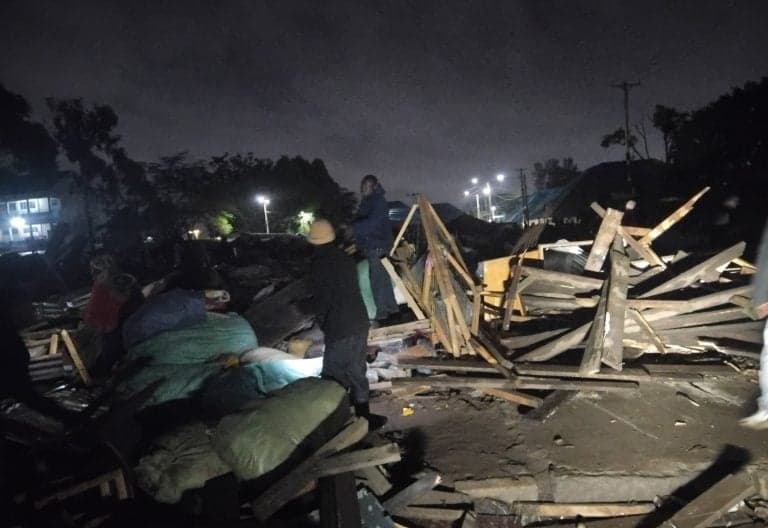
Small-scale traders operating at Nairobi’s Uhuru market are grappling with total financial ruin following an unannounced overnight demolition of their stalls along Jogoo Road.
Under the cover of darkness, heavy machinery tore through the makeshift structures that have served as the economic lifeline for hundreds of families, leaving nothing but twisted metal and rubble in the morning light.
The destruction of Uhuru market is more than a clearing of roadside encroachment; it is a violent disruption of the informal economy that sustains Nairobi’s working class. As these traders survey the wreckage of their livelihoods, the broader conversation regarding urban planning, SME protection, and the right to conduct business in the city has reached a boiling point.
The informal sector, often referred to as the "hustle economy," contributes over 80% of employment in Kenya. When such markets are cleared without prior consultation or a relocation plan, the impact is catastrophic. For many traders, this was not just a stall; it was their only source of capital, stocked with goods purchased on credit.
The lack of due process in this demolition has sparked outrage among local civil society groups, who argue that the County Government failed to adhere to the constitutional requirement for meaningful public participation. While the Nairobi City County has cited urban renewal and safety protocols for the cleanup, the timing and execution have drawn heavy criticism.
This is a recurring pattern in the city, where development projects frequently collide with the desperate need for affordable trading spaces. The legal void surrounding the rights of informal traders leaves them vulnerable to arbitrary evictions, creating an environment of perpetual anxiety for small business owners across the capital.
As the traders begin the slow process of filing grievances, the focus shifts to the county administration and their obligation to provide alternative trading hubs. Simply displacing the informal sector without providing structural solutions merely shifts the problem to another street corner.
The economic impact of this single night of demolition is quantified by the following realities:
The tragedy of the Jogoo Road demolition highlights a disconnect between the city’s vision for a "modern" Nairobi and the economic reality of its citizens. Urban renewal cannot come at the expense of the most vulnerable participants in the economy, particularly when those participants are the engine of local growth.
Moving forward, the traders are demanding immediate compensation and a seat at the table regarding the allocation of new market stalls. The survival of the informal sector is not just a local issue; it is a test of the county government’s commitment to an inclusive urban strategy that supports, rather than crushes, the spirit of enterprise.
“We were not asked to move; we were erased,” remarked one affected trader, standing amidst the ruins of what was, until yesterday, a thriving community hub.
Keep the conversation in one place—threads here stay linked to the story and in the forums.
Sign in to start a discussion
Start a conversation about this story and keep it linked here.
Other hot threads
E-sports and Gaming Community in Kenya
Active 9 months ago
The Role of Technology in Modern Agriculture (AgriTech)
Active 9 months ago
Popular Recreational Activities Across Counties
Active 9 months ago
Investing in Youth Sports Development Programs
Active 9 months ago



