We're loading the full news article for you. This includes the article content, images, author information, and related articles.
Nairobi ODM delegates have formally endorsed Winnie Odinga for the deputy party leader role, signaling a major shift in the party’s power structure.
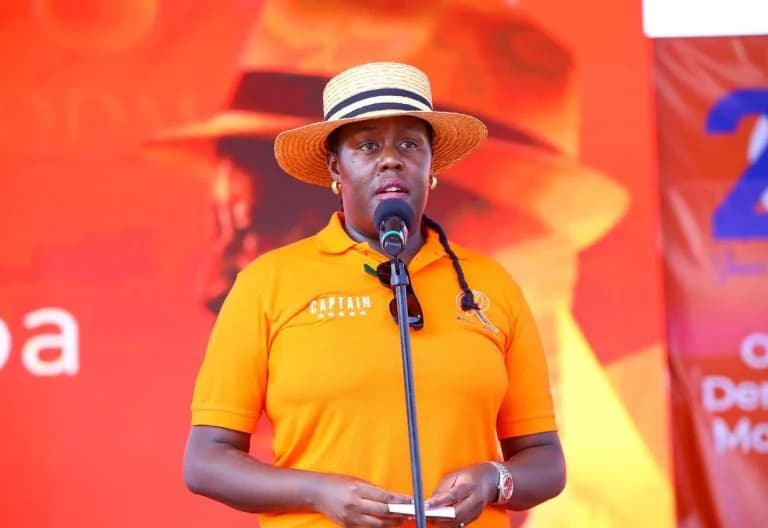
Nairobi’s Orange Democratic Movement delegates have formally mobilized, casting their weight behind Winnie Odinga for the deputy party leader position, a calculated maneuver that accelerates the party’s generational transition ahead of the 2027 electoral cycle. The endorsement, orchestrated by Nairobi county leadership, moves beyond internal party housekeeping. It represents a pivotal consolidation of power within the Odinga political orbit, testing the party's cohesion as it faces existential questions about its future without its founding patriarch. With the deputy leader role traditionally serving as a bridge to national prominence, this nomination places Odinga at the center of the upcoming political realignment.
The endorsement was led by influential Nairobi ODM figures, most notably George Aladwa, whose sway over the capital’s grassroots politics is a critical barometer for the party’s national health. Aladwa and his delegation framed the move as both a recognition of past service and a strategic imperative for the future. By locking in Nairobi early, the party aims to secure the capital’s support base, a region that has historically provided the electoral momentum required for successful presidential bids. For the Nairobi contingent, backing the younger Odinga is framed as a continuity play—a way to preserve the legacy of the party while infusing it with the energy of a new political demographic.
However, the move has ignited significant internal debate regarding the party’s direction. Critics and observers point out that the centralization of influence within the Odinga family could alienate other loyalists who have spent decades climbing the party ranks. The challenge for the ODM leadership is to balance this desire for familial continuity with the democratic expectations of a diverse membership that is increasingly demanding meritocratic leadership paths.
Winnie Odinga’s tenure at the East African Legislative Assembly has been characterized by an aggressive, often confrontational style that stands in stark contrast to her father’s more diplomatic, coalition-building approach. Supporters argue that this assertive nature is exactly what the party needs to counter the current administration’s policies. Her legislative record, while limited in scope compared to seasoned parliamentarians, has been defined by a focus on youth empowerment and regional integration, topics that resonate with the younger Kenyan electorate.
The debate surrounding ODM’s leadership succession is not unique to Kenya it mirrors a global trend where political dynasties navigate the difficult transition from charismatic founding figures to the next generation. From the challenges faced by the Gandhi family in India to the broader scrutiny of political lineages in Latin America, parties relying on established names face a binary choice: transform into institutional entities that survive on policy merit, or risk fracturing when the charismatic pull of the founder fades. In Nairobi, the conversation is intensified by the high stakes of the 2027 general elections. The Kenyan economy, currently grappling with fiscal consolidation and a KES 25.4 trillion debt burden, requires a political class capable of coherent, long-term policy formulation. Voters are less concerned with party lineages than with the cost of living, energy prices, and unemployment rates currently stagnating at record levels.
Interviews with local party branch members reveal a fractured sentiment. While the Nairobi delegates have signaled a clear path, members in Nyanza and Western Kenya remain cautious, waiting to see if this endorsement will receive the tacit approval of the party patriarch. The tension is palpable. For many, the ODM party is not merely a political vehicle but an ideological home they fear that the rush to elevate new leadership without a broader consensus could provoke a mass exodus of veteran politicians who feel sidelined by the accelerated transition. The coming months will be critical. The party’s ability to manage this internal friction will determine whether it remains a unified opposition bloc or splinters into competing factions as the national campaign season officially commences.
As the ODM party machinery gears up for its national elections, the endorsement of Winnie Odinga acts as the first major salvo in a broader war for the party’s soul. Whether this decision stabilizes the party or exposes deep-seated fissures remains the primary question for political analysts. The endorsement is more than a nod to a name it is an indicator of where the party believes its future lies. As the electoral calendar tightens, the pressure on the ODM to finalize its leadership structure is mounting, and every decision made in the Nairobi offices reverberates across the country. The question is no longer just who will lead the party, but whether the party can survive its own evolution.
Keep the conversation in one place—threads here stay linked to the story and in the forums.
Sign in to start a discussion
Start a conversation about this story and keep it linked here.
Other hot threads
E-sports and Gaming Community in Kenya
Active 10 months ago
Popular Recreational Activities Across Counties
Active 10 months ago
The Role of Technology in Modern Agriculture (AgriTech)
Active 10 months ago
Investing in Youth Sports Development Programs
Active 10 months ago
Key figures and persons of interest featured in this article