We're loading the full news article for you. This includes the article content, images, author information, and related articles.
MP Onesmus Ngogoyo demands a national probe into unexplained deaths following the discovery of 33 bodies in a Kericho mass grave.
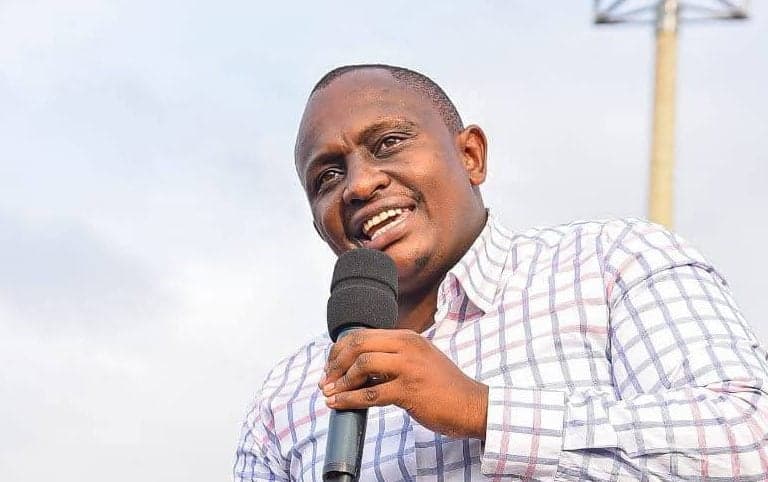
The discovery of thirty-three bodies at the Makaburini Cemetery in Kericho has shattered the quiet of the valley and echoed violently through the halls of Parliament, forcing a national reckoning over the integrity of public burial services and the broader crisis of unexplained fatalities. Kajiado North Member of Parliament Onesmus Ngogoyo has now formally demanded a sweeping, nationwide forensic investigation, asserting that the Kericho incident is not an isolated anomaly but a symptom of a deeply systemic failure that has left communities across the country in a state of mourning and uncertainty.
This demand for accountability arrives at a moment of heightened public sensitivity. As forensic teams and homicide detectives conclude the exhumation of remains from the Makaburini site, the grim realization of the scale of the tragedy—which includes twenty-five children and eight adults—has amplified public pressure on the government to explain how such a large volume of bodies could be interred without clear identification or documentation. The Kericho discovery has become the focal point for a legislator who argues that the lack of oversight in handling human remains reflects a wider disregard for the sanctity of life in Kenya.
The situation in Kericho evolved rapidly from what local authorities initially described as a routine disposal of unclaimed bodies into a complex criminal investigation. Following reports from local gravediggers who were allegedly hired by unknown individuals to handle the interments, a multi-agency team—led by the Homicide Investigations Bureau—secured the site. The subsequent exhumation process revealed the staggering demographic profile of the victims. Initial reports had suggested only a handful of bodies were involved however, the final count of thirty-three remains, characterized by varying stages of decomposition, has raised urgent questions regarding the chain of custody for these individuals.
The involvement of institutional staff from regional hospitals has particularly distressed the public. Preliminary investigations point toward an irregular transfer of unclaimed remains from the Nyamira County Referral Hospital. This link has triggered broader audits of how public mortuaries dispose of unclaimed bodies and whether established legal procedures are being circumvented, either through administrative negligence or malicious intent to conceal foul play.
For MP Onesmus Ngogoyo, the Kericho tragedy is a bridge to a darker, more pervasive issue: the rising frequency of unexplained deaths and enforced disappearances across Kenya. Speaking in a recent interview, Ngogoyo noted that the current administrative environment has seen an uptick in fatalities that lack immediate explanation or thorough investigation. This sentiment is shared by various human rights advocacy groups, who have spent the better part of the last two years documenting cases of extrajudicial killings, deaths in police custody, and the sudden vanishing of individuals in urban centers.
The legislator's call for an inquiry goes beyond the Kericho incident. It addresses a perceived culture of silence within government security and health sectors. Critics argue that when the state fails to account for those who die in its care—or in its jurisdictions—it erodes the social contract, creating a dangerous vacuum where criminal elements can operate with impunity. The demand for a parliamentary probe aims to compel the Ministry of Interior and the Ministry of Health to provide a full report on the national protocols for unclaimed remains and to explain the spike in bodies arriving at public mortuaries with no clear identification.
The impact of this discovery extends far beyond the immediate grief of the families of the deceased. It has reignited fears about the reliability of the justice system and the efficacy of the Independent Policing Oversight Authority (IPOA). Residents in counties across the Rift Valley and beyond have expressed profound anxiety, wondering if their own missing relatives might be among the unidentified victims buried in similar conditions elsewhere. The psychological toll on the nation is significant the inability of the state to promptly identify the thirty-three individuals in Kericho has led to widespread public outcry, with the Law Society of Kenya (LSK) calling for urgent forensic efforts to accord the victims their basic dignity.
This skepticism is fueled by historical precedent. In recent years, Kenya has grappled with several high-profile instances where mass graves or dumped bodies have led to protracted investigations that often yield few convictions or systemic changes. From the tragic discoveries in rivers to the harrowing revelations of mass graves linked to extremist cults, the pattern of late discovery and slow institutional response has left citizens feeling unprotected. The Kericho incident serves as a grim reminder that without rigorous oversight, public institutions can become accomplices—whether through action or inaction—in the dehumanization of the vulnerable.
As the government faces intensifying pressure to provide answers, the legislative push by Ngogoyo represents a critical test for the current administration. Will the investigation be limited to the individual suspects currently in custody, or will it expand into a holistic audit of the mortuary and burial management systems nationwide? The families of the twenty-five children and eight adults exhumed from Makaburini wait for clarity, while a nation waits to see if the rhetoric of accountability will translate into a structural shift in how Kenya treats the dead—and by extension, the living.
Keep the conversation in one place—threads here stay linked to the story and in the forums.
Sign in to start a discussion
Start a conversation about this story and keep it linked here.
Other hot threads
E-sports and Gaming Community in Kenya
Active 10 months ago
The Role of Technology in Modern Agriculture (AgriTech)
Active 10 months ago
Popular Recreational Activities Across Counties
Active 10 months ago
Investing in Youth Sports Development Programs
Active 10 months ago



