We're loading the full news article for you. This includes the article content, images, author information, and related articles.
NASA prepares to announce the fate of the Artemis II mission following a critical fueling test, with the crew in quarantine and the world waiting for the green light to return to the Moon.
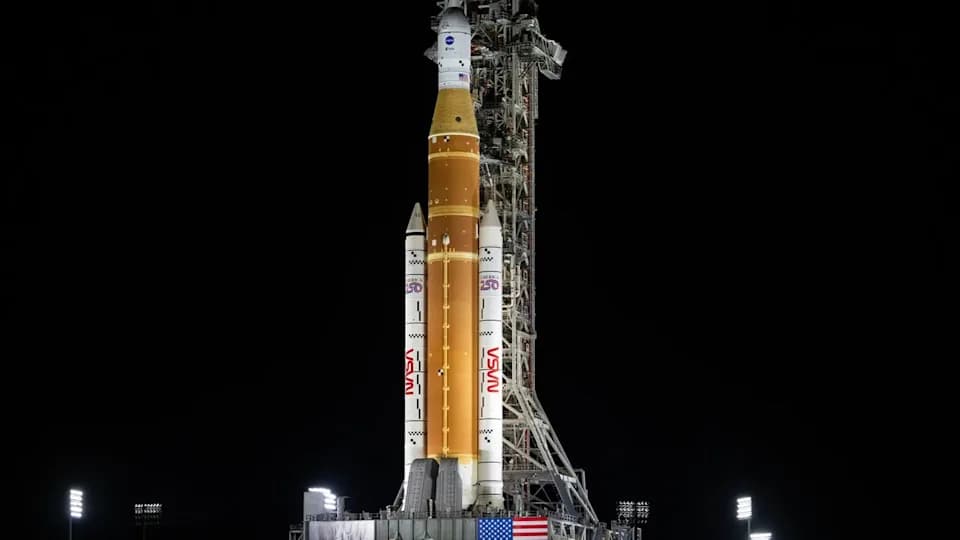
The countdown to humanity’s return to the Moon hangs in the balance. Following a critical "wet dress rehearsal" at the Kennedy Space Center, NASA leaders are set to face the press tomorrow to decide if the Artemis II mission is a go for launch. The stakes could not be higher: this is the final exam before the crew climbs aboard.
For the past few days, the colossal SLS rocket and the Orion spacecraft have stood on Launch Pad 39B, enduring a simulated countdown that tested every nerve of the engineering team. The exercise involved loading 700,000 gallons of supercooled propellant into the vehicle—a procedure that has historically been the Achilles' heel of the program. The question now is whether the hardware held up, or if the ghost of hydrogen leaks past has returned to haunt the agency.
The press conference scheduled for 12 p.m. EST (8 p.m. EAT) on Tuesday is the moment of truth. If the data looks clean, the four astronauts—who have been in strict quarantine in Houston since January 21—will fly their T-38 jets to Florida, signaling that launch is imminent. If not, the rocket rolls back to the Vehicle Assembly Building, and the dream is delayed.
This mission is more than a test flight; it is a statement of intent. Artemis II will carry humans around the Moon for the first time in over 50 years, paving the way for a sustained lunar presence and the eventual leap to Mars. Failure is not an option, but in the unforgiving business of spaceflight, it is always a possibility.
As the engineers crunch the numbers, the world watches. The SLS is the most powerful rocket ever built, a symbol of American engineering prowess. But symbols don’t fly on reputation; they fly on physics. Tomorrow, we find out if the physics are on our side.
For now, the rocket stands silent on the Atlantic coast, a towering promise of the future. Whether that future begins next week or next month depends on what the sensors say. NASA is ready to push the button, but only if the rocket says yes.
Keep the conversation in one place—threads here stay linked to the story and in the forums.
Sign in to start a discussion
Start a conversation about this story and keep it linked here.
Other hot threads
E-sports and Gaming Community in Kenya
Active 10 months ago
The Role of Technology in Modern Agriculture (AgriTech)
Active 10 months ago
Popular Recreational Activities Across Counties
Active 10 months ago
Investing in Youth Sports Development Programs
Active 10 months ago



