We're loading the full news article for you. This includes the article content, images, author information, and related articles.
Starehe MP says the Auditor General’s revelation of untraceable domestic debt proceeds is a "betrayal" of every hardworking Kenyan taxpayer.
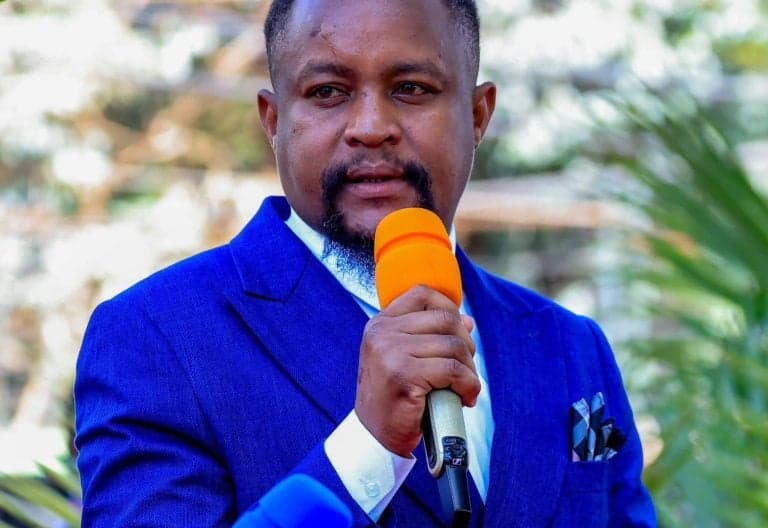
Starehe MP Amos Mwago has blown the whistle on what he terms a "heist of the highest order," demanding immediate clarity on the KSh 300 billion (approx. $2.3 billion) gap in domestic bond proceeds flagged by the Auditor General. Speaking in Nairobi on Saturday, the lawmaker warned that the unexplained discrepancy is not just an accounting error but a potential crime scene that burdens every Kenyan household with illegitimate debt.
The furor stems from a bombshell audit report released late last month by Auditor General Nancy Gathungu. The report, which scrutinized government borrowing between 2017 and 2023, revealed a disturbing anomaly: while the National Treasury raised KSh 2.97 trillion from domestic investors, only KSh 2.67 trillion was recorded as deposited into the Consolidated Fund. The whereabouts of the remaining KSh 300 billion remain unknown.
"We are being taxed to pay back money that never built a single classroom, never paved a road, and never dispensed a single pill in our hospitals," Mwago noted with palpable frustration. He emphasized that this sum represents a direct hit to the Wanjiku, who bears the brunt of the country’s aggressive tax regime aimed at servicing these very debts.
To put the figure in perspective, KSh 300 billion is roughly equivalent to:
"This is not pocket change. This is the future of our children being mortgaged for funds that vanished into thin air," Mwago added.
Mwago’s sharp rebuke adds weight to a growing storm of outrage initiated by Busia Senator Okiya Omtatah, who last week threatened legal action if the Treasury failed to explain the variance. Omtatah had characterized the missing funds as a "crisis of accountability," warning that the Treasury and Central Bank of Kenya (CBK) must be held personally liable.
The audit report highlighted that while some funds were used to roll over existing debt—a common practice known as refinancing—the documentation to support the KSh 300 billion gap was insufficient. In the world of public finance, money that cannot be traced to the Consolidated Fund is money that technically does not exist for public use, yet the liability to repay it remains real.
The controversy comes at a time when the government has been aggressively front-loading its borrowing strategy for the 2025/26 fiscal year, issuing long-term bonds to secure liquidity. Analysts warn that such glaring gaps in historical audits could spook the very institutional investors—pension funds and insurance companies—that the state relies on to buy its debt.
"If the government cannot account for what it borrowed yesterday, why should Kenyans trust it with what it borrows today?" Mwago posed. He called on the Public Accounts Committee (PAC) to summon Treasury officials immediately, insisting that "reconciliation errors" would not be accepted as an excuse.
As the political temperature rises, the Starehe MP issued a grim ultimatum. "We cannot continue business as usual in Parliament while billions remain unaccounted for. If this money is not found, we must refuse to approve any further borrowing caps. The tap must be turned off until the leak is fixed."
Keep the conversation in one place—threads here stay linked to the story and in the forums.
Sign in to start a discussion
Start a conversation about this story and keep it linked here.
Other hot threads
E-sports and Gaming Community in Kenya
Active 10 months ago
The Role of Technology in Modern Agriculture (AgriTech)
Active 10 months ago
Popular Recreational Activities Across Counties
Active 10 months ago
Investing in Youth Sports Development Programs
Active 10 months ago
Key figures and persons of interest featured in this article



