We're loading the full news article for you. This includes the article content, images, author information, and related articles.
A major gas field in Qatar has been hit by missile attacks, causing extensive damage to LNG infrastructure, sending global energy prices soaring.
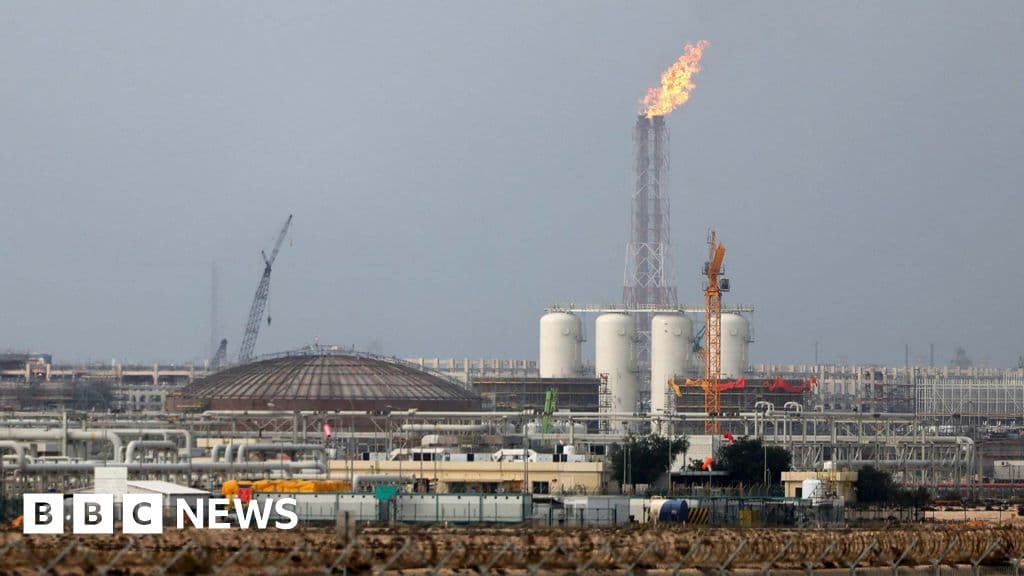
The silence of the desert night at Ras Laffan Industrial City was obliterated in the early hours of this week as a series of missile strikes tore through one of the world’s most critical energy arteries. The aerial assault on the Qatari facility, a central nervous system for the global supply of liquefied natural gas (LNG), has not only decimated infrastructure but has sent shockwaves through energy markets that are already fragile from months of intensifying regional conflict.
For global markets and local economies alike, this attack represents a significant escalation in the ongoing geopolitical contest between Iran and Israel, with the spillover now threatening the energy security of nations thousands of miles away. As production facilities managed by QatarEnergy and international partners including Shell, ExxonMobil, and Chevron remain shuttered, the immediate reality for global consumers is a looming period of supply scarcity and price volatility that could reverse recent inflationary gains.
Ras Laffan is not merely a production site it is a critical node in the global energy infrastructure. The facility accounts for a massive percentage of the world’s LNG throughput, supplying fuel for heating, industrial electricity generation, and cooking for millions of households across Asia and Europe. The attack, which confirmed reports state targeted key GTL (gas-to-liquids) facilities and LNG storage units, has incapacitated a mechanism that the global market relies upon to balance supply and demand.
Economic analysts at major financial institutions warn that the destruction of even a fraction of this capacity creates an immediate, artificial shortage that forces prices upward. Energy markets respond to uncertainty with extreme sensitivity the knowledge that such a vital hub can be targeted by kinetic weaponry alters the risk premium for every tanker currently moving on the high seas. Investors are now recalibrating their projections, factoring in the potential for extended shutdowns while repair teams attempt to assess the structural integrity of the damaged plants.
While the smoke rising over the Persian Gulf may seem a world away from East Africa, the economic reality for a Kenyan consumer is immediate and tangible. Kenya, which has been aggressively pursuing a transition to liquefied petroleum gas as a clean cooking alternative to charcoal and wood fuel, remains highly susceptible to global energy price shifts. The Energy and Petroleum Regulatory Authority (EPRA) in Nairobi has long acknowledged that local pump prices for gas are inextricably linked to international market indices.
Economists at the University of Nairobi suggest that if the disruption at Ras Laffan persists, the retail cost of LPG in Kenya could climb by as much as 15 to 20 percent in the coming quarter. For a family in an urban center like Nairobi or Mombasa, this translates to a direct hit on household disposable income. The crisis highlights a fundamental vulnerability: the country's reliance on global imports for its clean energy transition leaves its policy goals exposed to the volatility of conflicts in the Middle East.
This incident is not an isolated event but rather the latest manifestation of a rapidly expanding regional confrontation. The strikes against Qatar follow confirmed reports of Israeli operations targeting petrochemical infrastructure inside Iran. Military analysts argue that the targeting of Ras Laffan suggests a strategic shift by Iranian-aligned forces to extend the economic costs of the war beyond the immediate combatants. By striking Qatar—a country that balances complex diplomatic relations with both the West and regional powers—the scope of the conflict has effectively widened.
International energy experts note that the involvement of Western corporate giants further complicates the diplomatic response. With facilities owned by the UK's Shell and US companies like ExxonMobil and Chevron sustaining damage, the incident is no longer a purely regional matter. It has become a flashpoint for Western powers, forcing governments in London and Washington to balance their responses to the broader conflict against the necessity of securing the free flow of energy supplies that keep their own economies functioning.
The fragility exposed by the attack at Ras Laffan forces a reckoning regarding global energy policy. For decades, the consolidation of energy production into massive, centralized hubs has been viewed as a model of efficiency and scale. However, the events of this week demonstrate that this centralization creates a single point of failure that can be exploited in modern warfare. The sheer scale of the damage—characterized by the state-run firm as extensive—means that even after the immediate fires are extinguished, the technical complexities of restarting sophisticated LNG liquefaction trains will likely keep significant capacity offline for months.
As global energy policymakers assess the aftermath, the conversation is already shifting toward the diversification of supply chains and the security of critical national infrastructure. The dream of a smooth, predictable transition to natural gas as a bridge fuel is now contending with the harsh reality of kinetic vulnerability. Whether this leads to a frantic search for alternative suppliers or a reassessment of domestic energy production, one thing is certain: the era of assuming the global energy supply is inviolable has come to a violent end.
The smoke over the Qatari desert will eventually clear, but the damage to the global energy balance will linger long after the reconstruction crews depart. For the global consumer, the question is not just when the prices will return to normal, but whether a new baseline of instability has been permanently established.
Keep the conversation in one place—threads here stay linked to the story and in the forums.
Sign in to start a discussion
Start a conversation about this story and keep it linked here.
Other hot threads
E-sports and Gaming Community in Kenya
Active 10 months ago
The Role of Technology in Modern Agriculture (AgriTech)
Active 10 months ago
Popular Recreational Activities Across Counties
Active 10 months ago
Investing in Youth Sports Development Programs
Active 10 months ago



