We're loading the full news article for you. This includes the article content, images, author information, and related articles.
The new standardized fee structure for all public senior schools aims to eliminate illegal levies and ease parental burden, but school heads warn of potential operational shortfalls amid reduced government capitation.
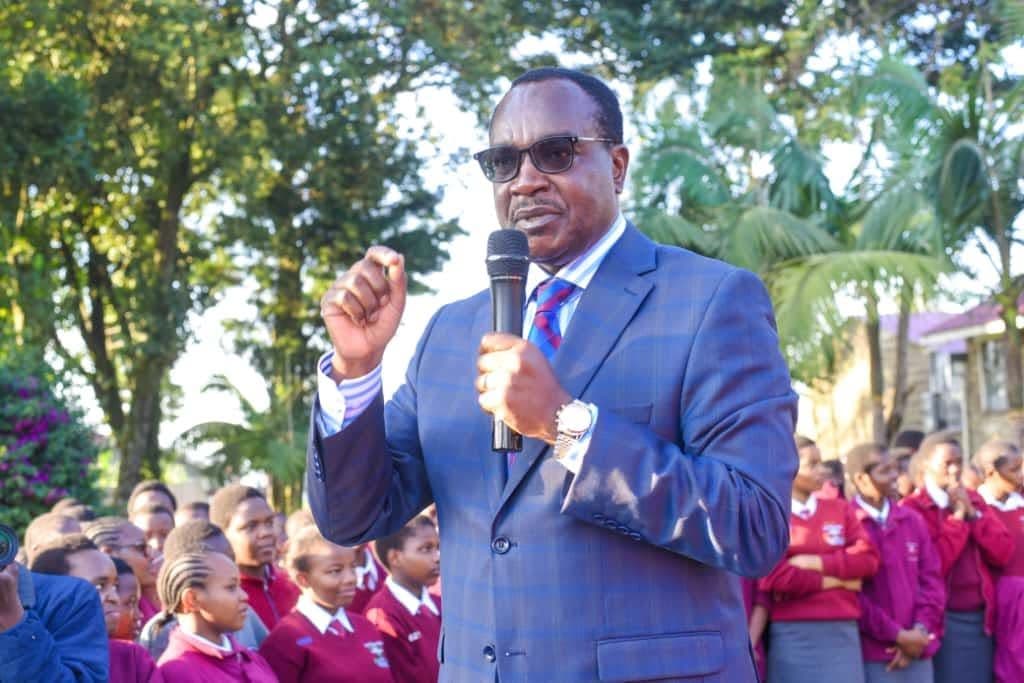
The Ministry of Education has formally announced a new standardized fee structure for all public senior secondary schools, set to take effect in January 2026. In a statement released Thursday, Education Cabinet Secretary Julius Ogamba confirmed that annual boarding fees will be capped at KSh 53,554. This directive eliminates the previous categorization of schools into national, extra-county, county, and sub-county tiers, each with different fee amounts. The policy aims to create a uniform system where all public senior schools are on the same level, promoting fairness and simplifying funding.
Under the outgoing system, parents paid KSh 53,554 for national schools and KSh 40,535 for extra-county and county schools. The new guidelines effectively align all boarding school fees with the former national school rate. Meanwhile, learners in day schools will be required to pay KSh 9,374 annually, and fees for special needs learners are set at KSh 37,210. CS Ogamba emphasized that this move is intended to make educational costs predictable for parents and to curb the persistent issue of illegal levies charged by schools. “The Government will continue to fulfil its constitutional duty of providing capitation for learners in senior school,” Ogamba stated, reassuring the public that no upward revision of fees has occurred beyond this standardization.
Despite the standardized fees, the government has also revised its funding contribution. The Free Day Secondary Education (FDSE) capitation per learner will be reduced from the current KSh 22,244 to KSh 12,870 annually. This significant cut has sparked immediate concern among education stakeholders, particularly school administrators, who question their ability to operate effectively with reduced government support.
Willie Kuria, the National Chairperson of the Kenya Secondary Schools Heads Association (KESSHA), has been a vocal advocate for increased funding, arguing that the previous amounts were already insufficient to meet rising operational costs. In a statement in June 2025, Kuria highlighted that the funding model had not been updated in nearly a decade, failing to account for a 46% inflation rise, and that over 90% of public schools were already facing a funding crisis. School heads now fear the reduced capitation will exacerbate financial strain, potentially compromising the quality of services such as meals, utilities, and teaching materials.
The announcement has drawn mixed reactions. The National Parents Association, now led by Chairperson David Silas Obuhatsa following a High Court ruling in 2022, has cautiously welcomed the move for its potential to end unauthorized charges but remains watchful of the implementation. Parents have long decried the burden of extra levies for various school projects, which often made education costs prohibitive.
However, teachers' unions have expressed reservations. The Kenya Union of Post Primary Education Teachers (KUPPET) has previously warned that delayed and insufficient government funding forces schools to charge extra fees to remain operational. Union officials argue that without a corresponding increase in capitation to match the real cost of running schools, the new fee structure may not be sustainable.
Kenya has a long history of grappling with education funding. Since the 1988 Kamunge Report, which introduced the policy of cost-sharing, parents have borne a significant portion of education costs. While the introduction of Free Primary Education in 2003 and later, subsidized secondary education, aimed to improve access, funding gaps and delays have remained persistent challenges.
The Ministry of Education has outlined strict guidelines for the new system's implementation. Schools are prohibited from charging any additional levies without written approval from the Cabinet Secretary, requested through County Education Boards. Boards of Management (BoMs) will be held responsible for the prudent use of funds and must present annual financial reports to Parents' Associations. Furthermore, schools are forbidden from sending students home for non-payment of boarding fees, in line with the Basic Education Act of 2013.
As the nation prepares for the first cohort of Competency-Based Curriculum (CBC) students to join senior school in 2026, the success of this new fee policy will hinge on the government's ability to ensure timely disbursement of the revised capitation and enforce strict compliance among schools. The coming months will be critical in determining whether this reform will genuinely ease the burden on Kenyan households or inadvertently strain school resources further.
Keep the conversation in one place—threads here stay linked to the story and in the forums.
Sign in to start a discussion
Start a conversation about this story and keep it linked here.
Other hot threads
E-sports and Gaming Community in Kenya
Active 9 months ago
The Role of Technology in Modern Agriculture (AgriTech)
Active 9 months ago
Popular Recreational Activities Across Counties
Active 9 months ago
Investing in Youth Sports Development Programs
Active 9 months ago



