We're loading the full news article for you. This includes the article content, images, author information, and related articles.
Rapper Octopizzo challenges ODM to shed its regional tag and embrace a national identity, signaling the rising influence of creatives in shaping Kenya’s political future.
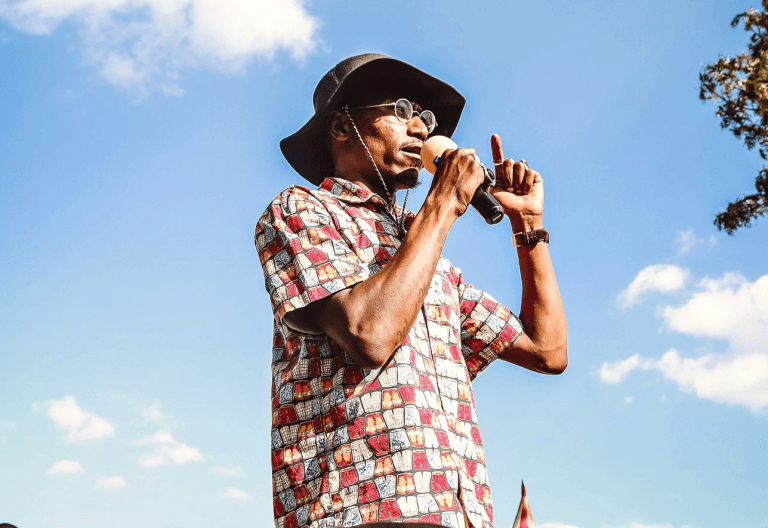
The long-running struggle over the soul of the Orange Democratic Movement (ODM) has taken a sharp cultural turn, moving beyond Parliament and party conclaves into Kenya’s creative space.
Hip-hop heavyweight Octopizzo (Henry Ohanga) has publicly challenged ODM’s leadership to confront what he describes as its biggest structural weakness: the perception that the party remains overly regional in character, anchored largely in Luo Nyanza, despite its national ambitions .
“You cannot claim to be a national movement when inclusivity does not reflect at the top,” Octopizzo said in remarks shared widely on social media and carried by local media platforms, urging ODM to embrace a genuinely multi-ethnic, pan-Kenyan identity if it hopes to win State House .
Concerns about ODM’s regional concentration are not new. Political analysts and rival parties have long argued that the party’s dominance in Nyanza has failed to translate into broad national appeal during presidential contests.
What makes Octopizzo’s intervention significant is who is delivering the message.
Unlike career politicians or party defectors, Octopizzo speaks from outside formal power structures, carrying credibility among urban youth, Gen Z voters, and the creative economy — constituencies that increasingly shape political narratives online and at the ballot box.
His comments echo a growing youth-driven demand for de-tribalised politics, particularly ahead of the 2027 elections, where digital influence is expected to rival traditional grassroots mobilisation.
Octopizzo’s remarks align with his expanding footprint in civic and political discourse. In late 2025, he publicly hinted at a possible run for the Kibra parliamentary seat in 2027, framing his interest around community empowerment and issue-based leadership rather than ethnic mobilisation .
This crossover — from cultural figure to political participant — reflects a broader trend in Kenya where artists and influencers are no longer just commentators, but agenda-shapers in national conversations.
ODM leaders have repeatedly rejected claims that the party is fractured or ethnically confined, insisting it remains a national movement with support across regions. However, internal debates about succession, coalition strategy, and youth relevance continue to simmer beneath the surface .
Octopizzo’s critique lands at a sensitive moment:
Gen Z voters are less tied to ethnic voting patterns
Digital platforms now shape political legitimacy as much as rallies
Cultural relevance increasingly determines who controls the narrative
For ODM, ignoring voices like Octopizzo’s risks reinforcing the very image the party has struggled to shake.
As Kenya edges closer to the next general election, the question confronting ODM is no longer just about leadership or coalitions — it is about identity.
Can the party transition from a historically rooted regional stronghold into a movement that convincingly mirrors Kenya’s diversity?
Octopizzo’s intervention does not offer a manifesto. It offers a warning.
In modern Kenyan politics, parties that fail to adapt culturally do not just lose elections — they lose relevance. And relevance, once lost among the youth, is rarely recovered.
The mic has been passed. Whether ODM listens may determine whether it remains a national contender — or a regional heavyweight trapped by its own history.
Keep the conversation in one place—threads here stay linked to the story and in the forums.
Sign in to start a discussion
Start a conversation about this story and keep it linked here.
Other hot threads
E-sports and Gaming Community in Kenya
Active 9 months ago
The Role of Technology in Modern Agriculture (AgriTech)
Active 9 months ago
Popular Recreational Activities Across Counties
Active 9 months ago
Investing in Youth Sports Development Programs
Active 9 months ago



