We're loading the full news article for you. This includes the article content, images, author information, and related articles.
The death of Nemesio Oseguera Cervantes, the notorious leader of the Jalisco New Generation Cartel, has triggered widespread violence across Mexico and threatens to disrupt global narcotics supply chains.
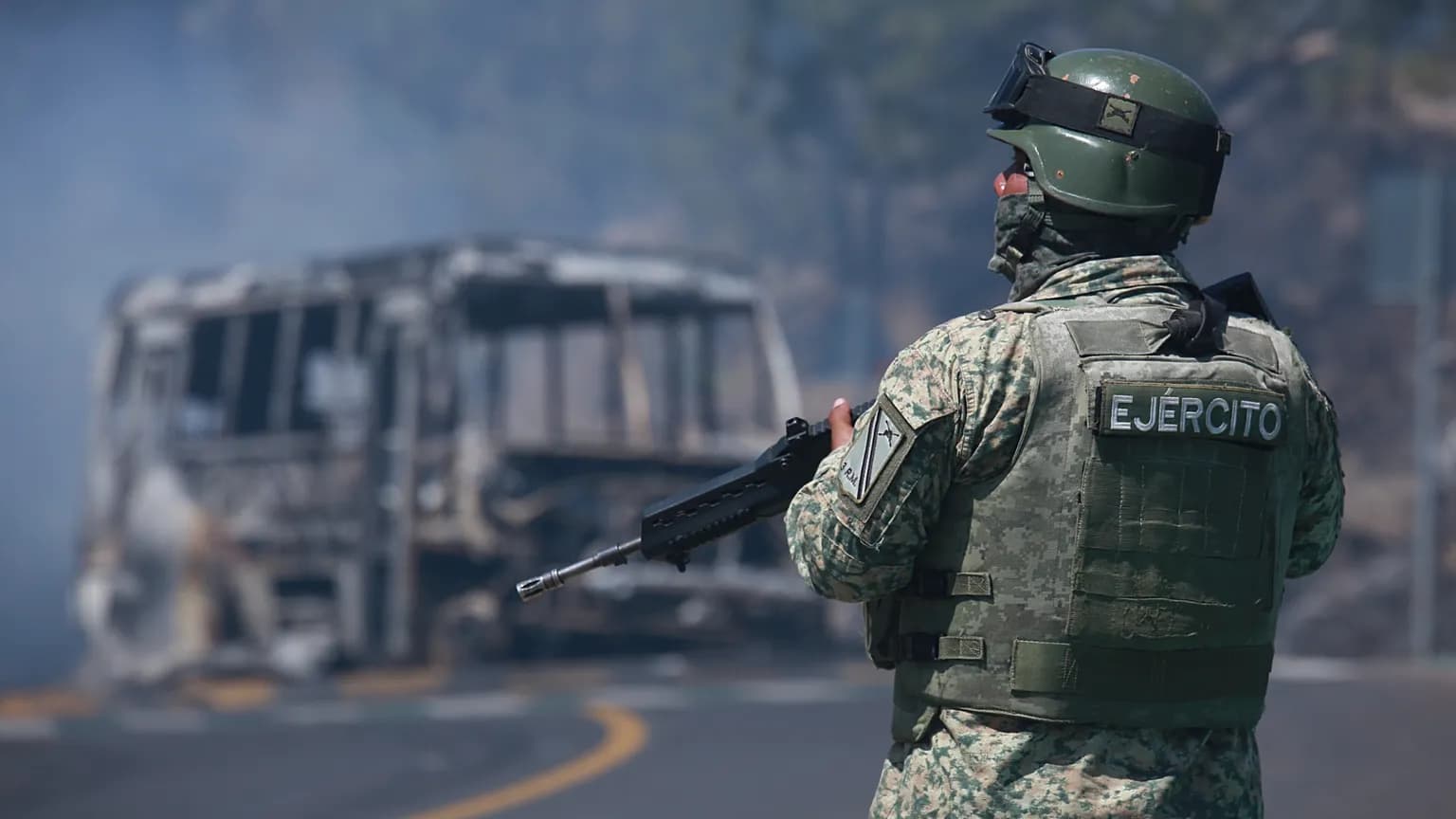
Plumes of black smoke choked the skies over Jalisco as military gunships clashed with cartel foot soldiers. Nemesio Oseguera Cervantes, the world’s most feared drug lord, is dead.
The demise of "El Mencho" is a tectonic shift in the global underworld. For East Africa—increasingly utilized as a critical transit hub for transnational syndicates moving heroin and methamphetamines—the sudden power vacuum in Mexico threatens to trigger violent realignments among local smuggling networks from Mombasa to Dar es Salaam.
In a dramatic, high-stakes military operation in the tourist region of Puerto Vallarta, Mexican special forces eliminated Nemesio Rubén Oseguera Cervantes, the 59-year-old mastermind behind the Jalisco New Generation Cartel (CJNG). According to the Mexican Ministry of Defense, El Mencho was severely wounded in a brutal firefight that claimed the lives of four cartel operatives. He died shortly after while being airlifted to Mexico City. The operation, supported by intelligence from the U.S. Joint Interagency Task Force, marks the end of a decades-long manhunt for a man the U.S. State Department had placed a $15m (approx. KES 1.95bn) bounty upon.
A former police officer turned ruthless kingpin, El Mencho built the CJNG from the splintered remains of the Milenio Cartel into a paramilitary empire. His organization became notorious for its horrifying brutality, corporate efficiency, and brazen willingness to engage state militaries directly. In 2015, his forces infamously shot down an army helicopter with a rocket-propelled grenade, a stark demonstration of their immense firepower.
The immediate aftermath of the assassination has been catastrophic for Mexican civil society. Within hours of the news breaking, CJNG loyalists initiated a scorched-earth campaign across more than half a dozen states. Narco-blockades—burning buses and commercial trucks used to choke off major highways—paralyzed transportation arteries in Jalisco, Michoacán, and Tamaulipas.
The violence aggressively spilled into critical infrastructure zones. Plumes of smoke were visible near the airports in Guadalajara and Puerto Vallarta, forcing the suspension of international flight operations. Major North American carriers, including Air Canada, Delta, and Southwest Airlines, abruptly cancelled routes, while the U.S. State Department issued severe "shelter in place" warnings for American citizens trapped in the crossfire.
El Mencho’s death is not merely a domestic Mexican issue; it is a massive disruption to the global narcotics supply chain. The CJNG controls vast swaths of the global methamphetamine and fentanyl markets, alongside significant cocaine routes into the United States, Europe, and increasingly, the African continent.
East Africa has long served as a strategic "smack track" for drugs originating in Asia and the Americas, destined for European markets. The port of Mombasa and porous coastal borders are deeply integrated into these global networks.
Mexican President Claudia Sheinbaum attempted to project calm, stating that the "vast majority of the national territory" remained peaceful. However, security analysts remain profoundly skeptical of the so-called "kingpin strategy." History dictates that removing a charismatic apex leader rarely destroys the underlying criminal enterprise; instead, it fractures it into smaller, more vicious, and unpredictable factions.
The CJNG is a deeply entrenched corporate hydra. It commands billions in revenue and thousands of heavily armed foot soldiers. The battle for El Mencho’s throne has just begun, and its violent ripples will be felt across oceans.
"When a giant falls, the earth shakes far beyond the forest; global drug markets are bracing for a period of unprecedented volatility and bloodshed," warned an international security consultant based in Nairobi.
Keep the conversation in one place—threads here stay linked to the story and in the forums.
Sign in to start a discussion
Start a conversation about this story and keep it linked here.
Other hot threads
E-sports and Gaming Community in Kenya
Active 9 months ago
The Role of Technology in Modern Agriculture (AgriTech)
Active 9 months ago
Popular Recreational Activities Across Counties
Active 9 months ago
Investing in Youth Sports Development Programs
Active 9 months ago



